
Listen to this Post
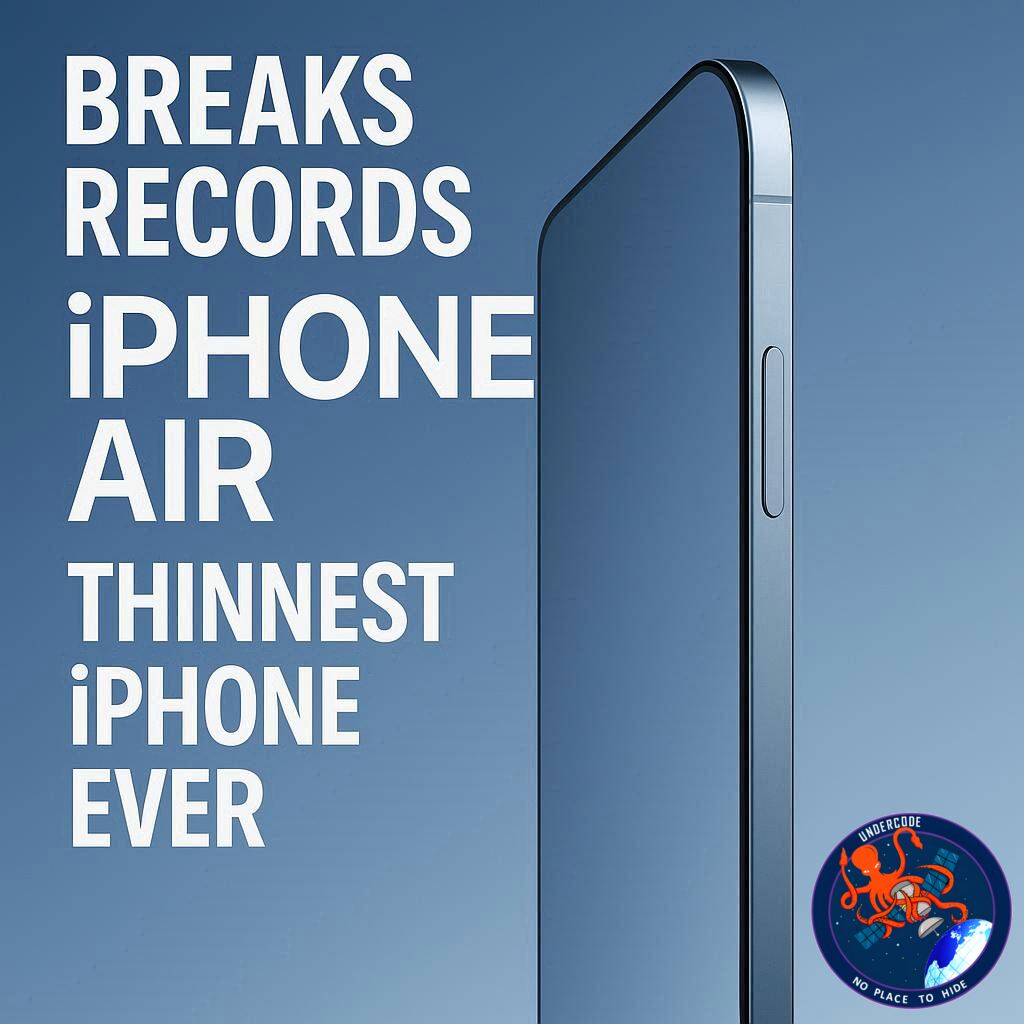
Introduction: A Slim Marvel Arrives
Apple has once again pushed the boundaries of smartphone design with the launch of the iPhone Air, now officially the thinnest iPhone ever. After 11 years, this sleek device surpasses the previous record-holder, the iPhone 6 from 2014, combining elegance and cutting-edge technology. But how does it truly stack up against both past and current competition? Let’s dive in.
The iPhone Air: Slimmest Yet Powerful
At just 5.6mm, the iPhone Air not only claims the title of the slimmest iPhone ever but also outshines much of today’s Android competition. Samsung’s latest Galaxy S25 Edge is slightly thicker at 5.8mm, while Google’s current Pixel lineup hasn’t made the cut, with its thinnest phone, the Pixel 2, measuring 7.8mm back in 2017.
Revisiting History: Phones That Shocked With Slimness
While the iPhone Air sets a modern benchmark, it isn’t the thinnest phone ever. Macworld’s David Price highlighted three older smartphones that were even slimmer:
Motorola Moto Z (5.2mm, 2016) – An often-forgotten slim device.
Oppo R5 (4.9mm, 2014) – The same year the iPhone 6 debuted, impressively sleek.
vivo X5Max (4.8mm, 2014) – The thinnest non-folding phone ever, making 2014 a legendary year for ultra-thin devices.
Price notably excludes folding phones from his comparison, emphasizing that real-world usability matters more than unfolded dimensions. However, for those curious, Honor Magic V5 and Oppo Find N5 are joint leaders among foldables, at a remarkable 4.2mm thickness.
Accessories That Enhance the iPhone Air
Apple and third-party brands have also embraced this ultra-thin design with complementary accessories:
iPhone lanyards and straps for secure handling.
Anker 511 Nano Pro ultra-compact charger.
Spigen MagFit case – adds MagSafe support without bulk.
Apple MagSafe Charger (25W) and Apple 30W charger for rapid, safe charging.
What Undercode Say: Analyzing the iPhone Air Phenomenon 🔍
The iPhone Air’s ultra-thin design reflects Apple’s dedication to blending form and function. Slimness isn’t merely cosmetic—it enhances portability, pocketability, and overall user experience. While competitors like Samsung and Oppo have flirted with similar dimensions, Apple’s ability to maintain premium build quality in a wafer-thin device is remarkable.
The trend toward thinner devices also suggests that consumer demand favors elegance and minimalism, without compromising on performance or battery life. Despite the Air’s slim frame, Apple continues to include high-end hardware, advanced cameras, and MagSafe compatibility, proving that thin can also mean powerful.
From a market perspective, this move may trigger renewed competition. Android manufacturers may feel compelled to push their design boundaries, potentially leading to a new wave of ultra-slim, high-performance smartphones. The historical context of ultra-thin phones shows that while the iPhone Air isn’t technically the thinnest ever, it represents a balance of modern technology, premium design, and everyday usability that rivals past models.
Analytically, this device also highlights a shift in materials engineering. Thinner phones require stronger glass, lighter yet robust metals, and compact internal layouts. Apple’s integration of all these elements ensures the device isn’t just a novelty but a functional masterpiece. Moreover, third-party accessory ecosystems are adapting, signaling the market’s recognition of thin devices as a mainstream trend, rather than niche curiosity.
In addition, the iPhone Air’s release could influence software development trends. Apps and interfaces may need minor optimizations to ensure touch precision and ergonomics remain comfortable on ultra-thin hardware. Manufacturers may also experiment with modular attachments that don’t compromise the slim aesthetic, offering a blend of flexibility and sleekness.
Financially, the Air’s premium design could justify higher pricing tiers, leveraging both brand loyalty and aspirational appeal. Consumers often equate thinness with elegance, so Apple could see this influencing both hardware sales and accessory revenue.
Finally, the iPhone Air sets a benchmark for the next decade of smartphones, combining the best elements of history, current technology, and user-centric design. It’s a reminder that innovation isn’t just about power or screen size—it’s also about crafting the perfect form factor for daily life.
Fact Checker Results ✅❌
✅ The iPhone Air is the thinnest iPhone ever at 5.6mm.
❌ It is not the thinnest phone ever; vivo X5Max (4.8mm) holds that record.
✅ Samsung Galaxy S25 Edge is slightly thicker at 5.8mm, confirming competitive context.
Prediction 🔮
The launch of the iPhone Air signals a new era of ultra-thin smartphones. Expect Android brands to innovate aggressively to match or surpass Apple’s slim design. Future devices may combine foldable technology and ultra-thin profiles, creating phones that are both powerful and incredibly sleek. Accessories will continue evolving to support these ultra-thin marvels without adding bulk, and consumers may soon prioritize thinness as much as performance in their buying decisions. 📱✨
🕵️📝✔️Let’s dive deep and fact‑check.
References:
Reported By: 9to5mac.com
Extra Source Hub:
https://www.quora.com
Wikipedia
OpenAi & Undercode AI
Image Source:
Unsplash
Undercode AI DI v2
🔐JOIN OUR CYBER WORLD [ CVE News • HackMonitor • UndercodeNews ]
📢 Follow UndercodeNews & Stay Tuned:
𝕏 formerly Twitter 🐦 | @ Threads | 🔗 Linkedin | 🦋BlueSky | 🐘Mastodon


