
Listen to this Post
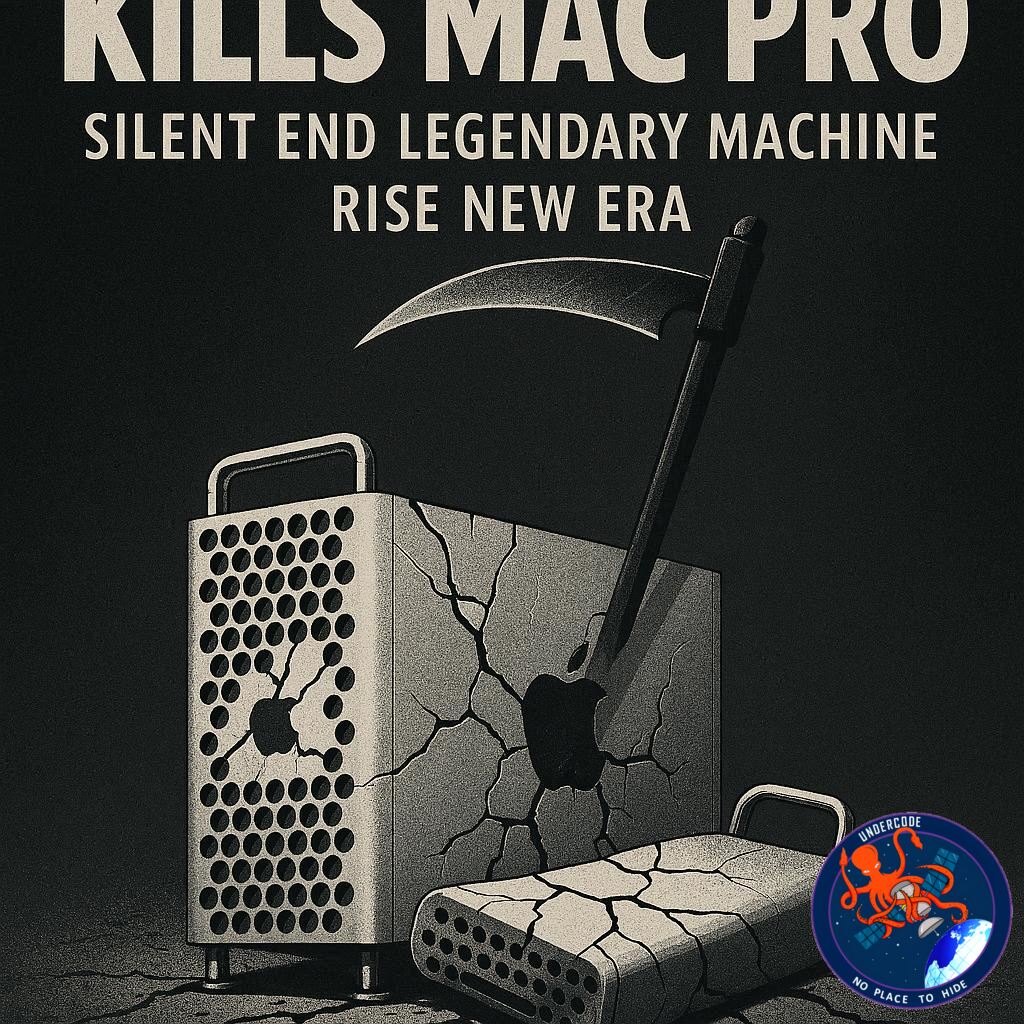
The End of the Mac Pro Era
Apple has officially brought the Mac Pro to an end, quietly removing it from its website and confirming that no future versions are planned. As of Thursday afternoon, the Mac Pro no longer appears anywhere on Apple’s online store, and its purchase page now redirects users to the general Mac lineup. This move signals a definitive conclusion to one of Apple’s most iconic professional desktop computers.
A Legacy That Spanned Generations
The Mac Pro has undergone multiple transformations over the years, evolving in both design and performance. Its most recent redesign debuted in 2019 alongside the Pro Display XDR, marking a return to a modular, expandable system after the controversial cylindrical design. Initially powered by Intel processors, the Mac Pro represented Apple’s commitment to high-end professional users who demanded raw performance and flexibility.
The Final Update That Wasn’t Enough
In June 2023, Apple refreshed the Mac Pro with its M2 Ultra chip, aligning it with the company’s transition to Apple Silicon. However, this update failed to generate long-term momentum. The machine remained unchanged afterward, continuing to carry a steep starting price of $6,999. Meanwhile, newer and more powerful chips were being introduced in other devices, leaving the Mac Pro lagging behind.
Mac Studio Emerges as the New Powerhouse
While the Mac Pro stagnated, the Mac Studio surged forward. Equipped with the M3 Ultra chip, the Mac Studio offers configurations featuring a 32-core CPU, an 80-core GPU, up to 256GB of unified memory, and a massive 16TB of storage. This level of performance effectively replaces what the Mac Pro once represented, but in a more compact and efficient form.
Apple’s Streamlined Desktop Strategy
With the discontinuation of the Mac Pro, Apple’s desktop lineup has become more focused. The company now offers a simplified range of desktop Macs, alongside three laptop options. This streamlined approach reflects Apple’s broader strategy of reducing overlap and ensuring each product serves a clear purpose.
A Stronger Lineup Than Ever Before
Apple’s current Mac lineup is arguably its strongest yet. From entry-level machines to high-performance desktops, the range now covers a wide spectrum of users. The addition of newer models like the MacBook Neo further strengthens the ecosystem, offering affordability without sacrificing performance.
Software Innovation Replaces Hardware Expansion
One of the key developments influencing this shift is the introduction of macOS Tahoe 26.2. This update brought a low-latency feature enabling RDMA over Thunderbolt 5, allowing multiple Macs to connect and scale performance collaboratively. For professionals, this offers a new way to achieve high computing power without relying on a single, massive machine like the Mac Pro.
The Writing Was on the Wall
Even before its discontinuation, signs pointed toward the Mac Pro’s demise. Its lack of updates, high price, and diminishing relevance in the face of more efficient alternatives made its future uncertain. Apple ultimately faced a choice: invest heavily in a niche product or pivot toward a more scalable solution.
A Difficult but Logical Decision
From a business perspective, discontinuing the Mac Pro makes sense. Continuing to sell an outdated machine at a premium price would have undermined customer trust. By focusing on the Mac Studio, Apple can deliver cutting-edge performance without the complexities of maintaining a separate, high-cost product line.
Loyalists Left Behind
Despite the logic behind the decision, not everyone is celebrating. Longtime Mac Pro users, particularly those who relied on its modularity and expandability, may feel abandoned. For them, the Mac Pro wasn’t just a computer—it was a symbol of professional-grade computing.
The Shift Toward Integration Over Modularity
Apple’s broader philosophy has increasingly leaned toward integration rather than customization. Unified memory, system-on-a-chip architecture, and tightly controlled hardware ecosystems are now central to Apple’s design language. The Mac Pro, with its modular roots, no longer fit neatly into this vision.
The Role of Pricing in the Decision
The Mac Pro’s high price point played a significant role in its decline. At $6,999, it was difficult to justify when alternatives like the Mac Studio offered comparable or superior performance at a lower cost. This pricing mismatch further accelerated its irrelevance.
A New Definition of “Pro”
Apple appears to be redefining what “pro” means in its lineup. Instead of focusing on physical expandability, the emphasis is now on raw performance, efficiency, and seamless integration. The Mac Studio embodies this new philosophy, offering immense power without the bulk.
The Future of High-End Computing at Apple
Looking ahead, Apple’s strategy suggests a future where multiple devices work together rather than relying on a single powerhouse machine. This distributed approach to computing could redefine workflows for professionals across industries.
What Undercode Says:
The Strategic Shift Behind Apple’s Decision
Apple’s move to discontinue the Mac Pro is less about abandoning professionals and more about redefining how professional computing is delivered. The company is betting heavily on efficiency-driven performance rather than brute-force modular systems.
The Rise of Silicon Dominance
Apple Silicon has fundamentally changed the landscape of computing within Apple’s ecosystem. Chips like the M3 Ultra outperform older architectures while consuming less power, making traditional workstation designs less necessary.
Modular Systems vs Integrated Performance
The Mac Pro represented a modular philosophy, allowing users to upgrade components over time. However, Apple’s integrated approach eliminates bottlenecks and delivers optimized performance, albeit at the cost of flexibility.
Market Demand and Practicality
The demand for ultra-expensive, highly modular desktops has declined. Most professionals now prefer powerful yet compact systems that can handle intensive tasks without requiring extensive customization.
Software as a Performance Multiplier
Features like RDMA over Thunderbolt 5 demonstrate Apple’s shift toward software-driven scalability. Instead of upgrading hardware, users can now link multiple systems to achieve higher performance levels.
Cost Efficiency and Consumer Appeal
From a financial standpoint, the Mac Studio offers better value. It delivers top-tier performance at a lower cost, making it more appealing to a broader audience.
The Emotional Impact on Users
While the decision is logical, it carries emotional weight. The Mac Pro was a symbol of power and prestige, and its removal marks the end of an era for many loyal users.
Industry-Wide Implications
Apple’s decision could influence the broader industry, encouraging other manufacturers to focus on integrated systems rather than modular workstations.
The Evolution of Professional Workflows
Modern workflows are increasingly cloud-based and distributed, reducing the need for a single, monolithic machine. Apple’s strategy aligns with this trend.
The Role of Innovation in Product Lifecycle
Every product has a lifecycle, and the Mac Pro has reached its natural conclusion. Innovation often requires letting go of legacy systems.
Balancing Legacy and Progress
Apple’s challenge has always been balancing its legacy with forward-thinking innovation. In this case, progress has taken precedence.
The Importance of Ecosystem Integration
Apple’s ecosystem is one of its greatest strengths. By focusing on interconnected devices, the company enhances overall user experience.
Performance Without Compromise
The Mac Studio proves that high performance doesn’t require a massive chassis. Efficiency and design innovation have replaced size and modularity.
A Calculated Risk
Discontinuing the Mac Pro is a calculated risk. While it may alienate some users, it positions Apple for long-term success.
The Future Is Compact and Connected
The trend is clear: smaller, more powerful devices that work together seamlessly. This is the direction Apple is heading.
Fact Checker Results
Accuracy of Apple’s Announcement
✅ Apple has officially removed the Mac Pro and confirmed no future plans, making the discontinuation factual and verified.
Performance Comparison Claims
✅ The Mac Studio with M3 Ultra does outperform the last Mac Pro in many scenarios, supporting the argument of replacement.
Market Interpretation
❌ The claim that all professionals prefer integrated systems is overstated; some industries still rely heavily on modular setups.
Prediction
The Next Phase of Apple’s Pro Strategy
Apple will continue investing in high-performance compact machines like the Mac Studio while expanding software-based scaling solutions. Over time, professionals will adapt to interconnected workflows rather than relying on single, upgradeable systems. The concept of a traditional workstation will gradually fade, replaced by networks of powerful, efficient devices working in unison.
🕵️📝✔️Let’s dive deep and fact‑check.
References:
Reported By: 9to5mac.com
Extra Source Hub (Possible Sources for article):
https://www.reddit.com
Wikipedia
OpenAi & Undercode AI
Image Source:
Unsplash
Undercode AI DI v2
Bing
🔐JOIN OUR CYBER WORLD [ CVE News • HackMonitor • UndercodeNews ]
📢 Follow UndercodeNews & Stay Tuned:
𝕏 formerly Twitter 🐦 | @ Threads | 🔗 Linkedin | 🦋BlueSky | 🐘Mastodon


