
Listen to this Post
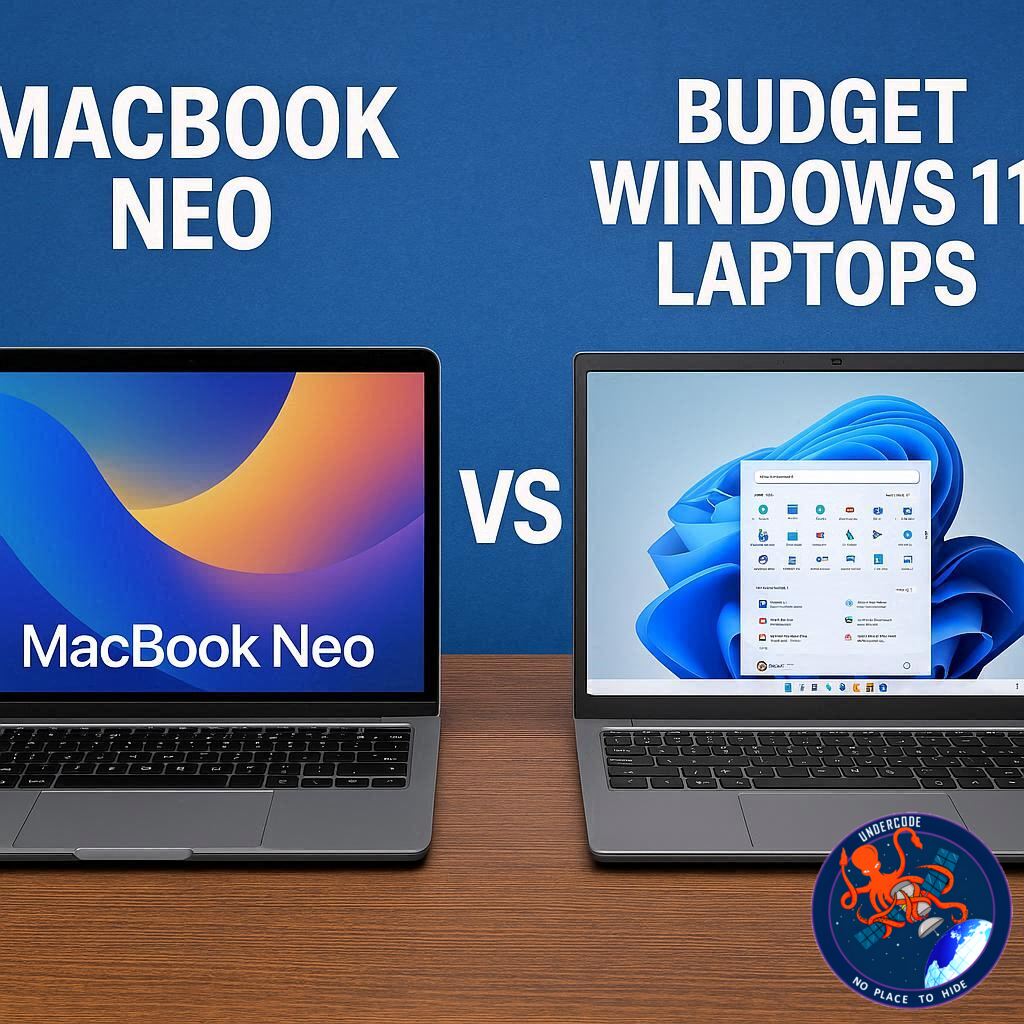
The Affordable Laptop Market Has Suddenly Become a Battlefield
Apple’s rumored MacBook Neo has rapidly transformed from a “budget experiment” into one of the most talked-about laptops in the industry. What initially looked like a low-cost entry into Apple’s ecosystem is now being treated as a direct threat by Microsoft and Windows laptop manufacturers alike. Reports suggesting Apple may double production of the MacBook Neo to 10 million units reveal something bigger than simple sales success. They signal a shift in the affordable laptop market, a category Apple traditionally struggled to dominate.
At the same time, Microsoft appears determined not to let Apple reshape this segment uncontested. A Microsoft-commissioned report comparing budget Windows 11 laptops against the MacBook Neo aggressively highlighted advantages for Windows devices, especially in battery life and CPU performance. Yet the report immediately faced criticism online for selective benchmarking and obvious bias.
The situation has created a fascinating technology rivalry. Apple is trying to prove premium design can exist at a lower price point, while Microsoft and its hardware partners are arguing that affordability should prioritize raw specifications and productivity performance instead. The debate is no longer just about operating systems. It has become a battle over what consumers truly value in a modern laptop.
Apple’s MacBook Neo Demand Appears Stronger Than Expected
According to industry chatter reported by Wccftech and sourced from former Bloomberg journalist Tim Culpan, Apple is reportedly preparing to increase MacBook Neo production from around 5 or 6 million units to nearly 10 million. That kind of expansion is not something companies do casually. Manufacturing capacity is expensive, especially during ongoing supply chain pressure and component shortages.
The strong demand reportedly aligns with comments from Apple CEO Tim Cook, who acknowledged that Neo demand had been “off the charts.” Supply shortages affecting both the MacBook Neo and Mac mini suggest Apple underestimated how attractive a cheaper MacBook would become in today’s market.
For years, Apple laptops were considered premium products with premium pricing. The Neo changes that perception. Consumers who previously avoided macOS because of price now suddenly have an accessible gateway into Apple’s ecosystem. That is a dangerous development for Windows manufacturers because ecosystem loyalty often begins with a first device purchase.
Microsoft’s Response Shows Real Concern
Microsoft’s response was unusually direct. The company reportedly commissioned Signal65 to compare affordable Windows 11 laptops against the MacBook Neo, emphasizing areas where Windows machines performed better.
According to the report, some Windows laptops delivered:
Up to 56% longer battery life
Up to 92% faster multi-threaded CPU performance
Better performance in productivity applications
Faster Adobe Photoshop results
Lower starting prices compared to Apple’s Neo
On paper, these numbers sound devastating for Apple. But critics quickly noticed the benchmarks appeared carefully selected to favor Windows systems.
Single-core performance comparisons were missing. Battery tests were reportedly conducted under conditions favoring larger-battery Windows devices. Display quality, speaker performance, and overall build quality were barely discussed. Those omissions became the center of online criticism.
The controversy reflects a long-standing issue in the PC industry. Benchmarks can tell the truth while still being strategically incomplete.
Benchmark Wars Rarely Tell the Full Story
Technology companies have always used benchmark numbers as marketing weapons. The problem is that performance metrics can be manipulated depending on which workloads are chosen.
For example, Windows laptops with higher-core processors naturally dominate in multi-threaded workloads. However, Apple Silicon chips often excel in efficiency, thermal management, and single-core responsiveness. Real-world user experience depends heavily on the type of tasks someone performs daily.
A student browsing the web, editing documents, streaming videos, and using lightweight creative apps may never notice the benchmark advantages promoted in Microsoft’s report. What they might notice instead is:
Better speakers
Higher-quality display brightness
Premium build materials
Silent operation
Longer lifespan
Better battery consistency
That is where Apple traditionally wins.
Meanwhile, budget Windows laptops usually compete through specification value. More RAM, larger storage, and stronger raw multitasking performance at lower prices remain major selling points.
The Lenovo IdeaPad Slim 3x, highlighted heavily in the report, represents exactly that strategy. It offers strong specifications for the price, but reviewers have criticized its display quality and speaker performance compared to Apple hardware.
The Real Debate Is Ecosystem vs Specifications
At its core, the MacBook Neo debate is not about benchmarks alone. It is about user priorities.
People deeply invested in Apple’s ecosystem already benefit from iPhone integration, AirDrop, iCloud syncing, FaceTime, and continuity features. For them, the Neo becomes an affordable extension of an already familiar environment.
Windows users often prioritize flexibility, software compatibility, gaming support, and hardware customization. Budget Windows laptops also provide more variety across different brands and configurations.
This divide explains why neither side fully “wins” these comparisons.
Apple sells an experience.
Windows manufacturers sell flexibility and performance value.
Both strategies appeal to different buyers.
Apple’s Biggest Challenge May Arrive Later
Ironically, Apple’s biggest obstacle may not be Microsoft at all. It may be manufacturing economics.
Expanding production to 10 million units requires securing expensive chip manufacturing capacity during a period of intense global demand. Processor production remains one of the most competitive areas in technology.
Analysts now speculate Apple may quietly increase the effective price of the MacBook Neo without announcing a direct price hike. One possible strategy involves prioritizing higher-storage models while limiting availability of the cheaper 256GB version.
That would effectively push the entry price higher without creating negative headlines about official price increases.
Another rumor suggests Apple may attempt to soften future price increases with cosmetic upgrades like new color options. But consumers shopping for budget laptops are typically far more sensitive to pricing than aesthetics.
If the Neo loses its affordability advantage, the Windows ecosystem could quickly regain momentum.
What Undercode Say:
Apple Accidentally Entered Microsoft’s Most Sensitive Territory
The MacBook Neo may become one of Apple’s most strategically important products in years, not because it is revolutionary, but because it attacks a market Apple historically ignored.
For decades, Windows dominated affordable computing. Schools, offices, and households purchased low-cost Windows laptops simply because Apple devices sat outside realistic budgets. The Neo changes the psychology of that market.
Suddenly, consumers are asking a dangerous question:
“If a MacBook is now close in price to Windows laptops, why not buy the Mac?”
That question alone explains Microsoft’s aggressive response.
Microsoft’s Report Feels More Defensive Than Confident
The Signal65 report reads less like neutral research and more like a defensive marketing campaign. That matters because perception influences credibility.
Consumers today are far more educated about benchmark manipulation than they were ten years ago. Social media instantly dissects selective testing methods. Missing categories like single-core performance and display quality immediately raised suspicion.
Ironically, Microsoft may have unintentionally strengthened Apple’s image by appearing overly defensive.
When companies aggressively attack a competitor’s product, consumers often interpret that as evidence the competitor is succeeding.
Apple Understands Emotional Hardware Better Than Most Companies
The Neo’s strength is not raw power. It is emotional product positioning.
Apple excels at making users feel they are buying something premium even when specifications are modest. The Neo likely succeeds because it delivers:
Premium industrial design
macOS access
Strong battery efficiency
Quiet operation
Brand prestige
Ecosystem connectivity
Most consumers do not buy laptops based solely on Cinebench charts. They buy based on comfort, reliability, aesthetics, and familiarity.
That emotional factor is incredibly difficult for Windows manufacturers to counter consistently.
The RAM Debate Could Become Apple’s Weak Spot
One major criticism remains valid: 8GB RAM configurations may age poorly.
Modern applications continue demanding more memory. AI-powered software, browser workloads, multitasking environments, and creative applications are becoming increasingly RAM-intensive.
Windows laptops offering 16GB at similar prices create a legitimate long-term value argument.
Apple’s aggressive memory pricing strategy may eventually hurt the Neo’s reputation if consumers begin experiencing limitations after only a few years.
ARM-Based Competition Is Quietly Reshaping Computing
An overlooked aspect of this battle is architecture evolution.
Both Apple Silicon Macs and many new Windows laptops now rely on ARM-based processors. This represents one of the largest shifts in personal computing in decades.
Apple moved first and built a mature ARM ecosystem quickly. Microsoft is still refining compatibility, optimization, and software support for ARM Windows devices.
That gap currently gives Apple a smoother user experience advantage. But if Microsoft eventually perfects ARM Windows compatibility, Apple could face far stronger competition in efficiency-focused laptops.
Cheap Windows Laptops Still Have One Massive Advantage
Choice.
Apple offers controlled simplicity. Windows offers endless diversity.
Consumers can choose between:
Gaming laptops
Ultrabooks
2-in-1 devices
Upgradeable systems
OLED displays
Larger screens
Different chip manufacturers
That flexibility remains impossible for Apple to replicate.
The Neo may dominate certain buyers emotionally, but Windows ecosystems dominate through variety and customization freedom.
The Next Two Years Could Redefine Entry-Level Computing
If Apple truly ships 10 million MacBook Neo units successfully, the ripple effects across the industry could be massive.
Manufacturers may be forced to:
Improve build quality in budget laptops
Reduce pricing
Increase battery efficiency
Offer better displays
Improve software optimization
Consumers ultimately benefit from this competition.
The affordable laptop category has often been stagnant and uninspiring. Apple’s entry suddenly forced the market to evolve faster.
🔍 Fact Checker Results
✅ Reports from industry insiders and Wccftech indicate Apple may increase MacBook Neo production to 10 million units.
✅ Microsoft did commission a comparative report highlighting Windows 11 laptop advantages over the Neo.
❌ Claims suggesting Windows laptops are universally “better” than the Neo ignore major factors like display quality, ecosystem integration, and efficiency.
📊 Prediction
🔮 Apple’s MacBook Neo will likely push competitors to improve premium features in lower-cost laptops within the next 12–18 months.
📉 If Apple increases Neo pricing due to production costs, budget Windows manufacturers could regain momentum quickly.
⚡ ARM-based Windows laptops will improve dramatically by 2027, creating the strongest challenge yet to Apple Silicon dominance in thin-and-light computing.
▶️ Related Video (78% Match):
🕵️📝Let’s dive deep and fact‑check.
References:
Reported By: www.techradar.com
Extra Source Hub (Possible Sources for article):
https://www.facebook.com
Wikipedia
OpenAi & Undercode AI
Image Source:
Unsplash
Undercode AI DI v2
Bing
🔐JOIN OUR CYBER WORLD [ CVE News • HackMonitor • UndercodeNews ]
📢 Follow UndercodeNews & Stay Tuned:
𝕏 formerly Twitter 🐦 | @ Threads | 🔗 Linkedin | 🦋BlueSky | 🐘Mastodon


