
Listen to this Post
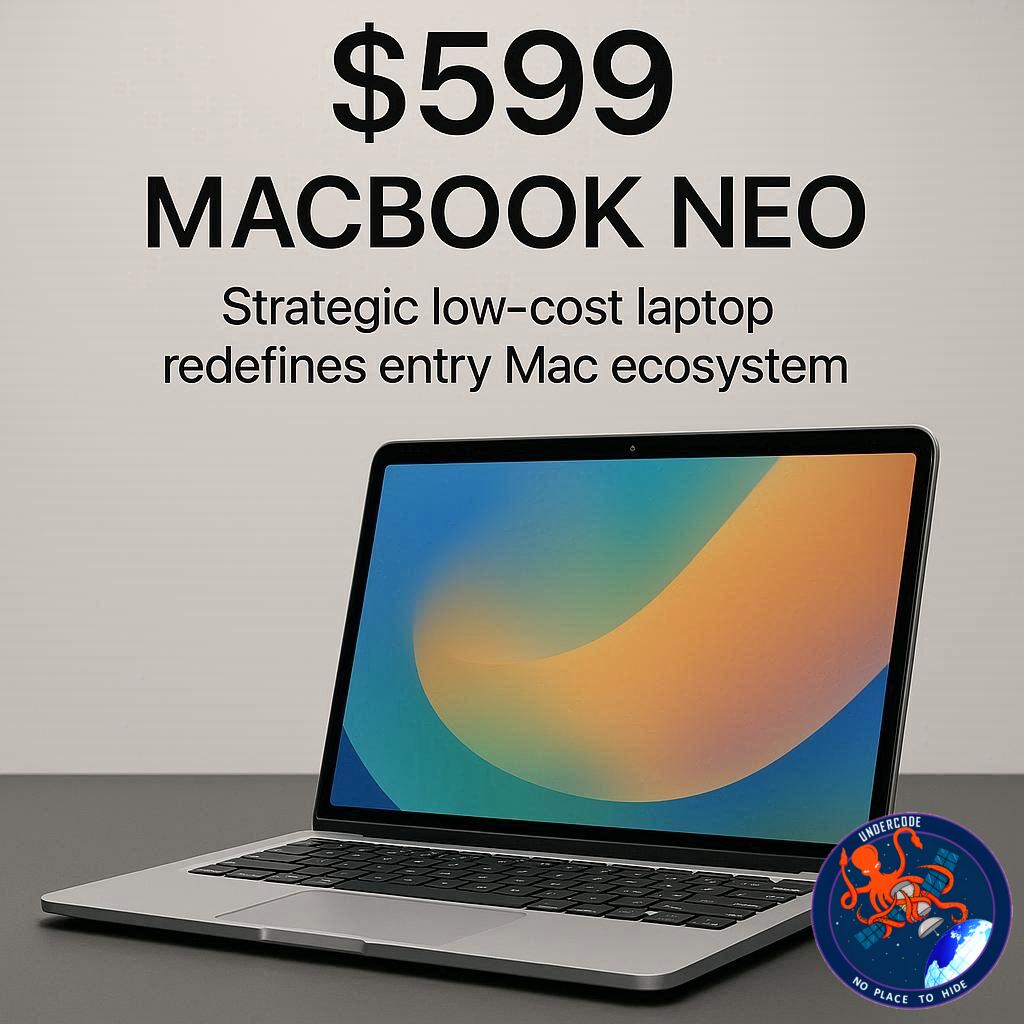
A New Chapter in Apple’s Affordable Computing Strategy
Apple has long positioned the Mac as a premium experience, polished hardware, refined software, and a seamless ecosystem that rarely competed on price. That narrative has now shifted. With the release of the MacBook Neo at $599, or $499 with education pricing, Apple is stepping into territory it historically avoided. This is not just another Mac launch. It is a calculated move into the low cost computing market, a space dominated for years by budget Windows laptops and Chromebooks. The message is clear: premium design and accessible pricing no longer have to be mutually exclusive.
The Long Awaited Affordable Mac Finally Arrives
For years, the gateway into macOS started at $999 with the MacBook Air. Even when Apple transitioned to its powerful in house silicon, the price ceiling remained firm. The Neo changes that equation dramatically. At $599, it is now the lowest priced new Mac Apple has introduced in years, undercutting previous entry points by hundreds of dollars while retaining much of the company’s design DNA.
Apple previously experimented with lower pricing through older models sold via third party retailers. For instance, the M1 MacBook Air lingered at retailers like Walmart for around $649.99. But that approach felt transitional, almost reluctant. The MacBook Neo, in contrast, is intentional. It is positioned from day one as a budget friendly Mac built for today’s users.
Familiar Design Without the Cheap Compromise
There is no plastic shell or stripped down chassis here. The Neo features a full aluminum build, mirroring the industrial design language of the MacBook Air and MacBook Pro. At just 2.7 pounds, it maintains the portability Apple users expect. Two USB C ports and a headphone jack round out the connectivity options, ensuring it does not feel restricted despite its lower cost.
Importantly, this is not an iPhone 5c style compromise where affordability meant visible trade offs. Instead, the Neo feels cohesive. It looks and feels like a Mac, not a budget imitation.
Powered by the A18 Pro, A Bold Silicon Decision
Under the hood, the Neo runs on the A18 Pro chip, the same processor that debuted in the iPhone 16 Pro. At first glance, that may raise eyebrows. Traditionally, Macs rely on M series chips like the M1 or M5. But Apple’s silicon architecture has matured to the point where even its mobile chips deliver impressive computing power.
In practical demonstrations, the Neo handled more than 15 Safari tabs alongside Mail, Messages, Pixelmator Pro, Microsoft Office, and Canva without visible strain. The chip even supports hardware accelerated ray tracing, opening the door for light gaming on a $599 Apple laptop. That alone reframes expectations for what entry level machines can achieve.
Positioned for Everyday Productivity
With 8GB of RAM, the MacBook Neo clearly targets everyday users. Students, remote workers, and casual creators represent the core audience. While professional video editors or developers might still gravitate toward higher tier MacBook Air or MacBook Pro models, the Neo appears more than capable for common workflows.
Apple understands that most consumers do not render 8K video daily. They browse, stream, write, attend meetings, and occasionally design or edit photos. For that demographic, the Neo’s configuration feels calibrated rather than compromised.
A Splash of Personality With Vibrant Colors
Beyond performance and pricing, Apple injected personality into the Neo lineup. Available in Citrus, Blush, Indigo, and Silver, the device breaks away from years of muted professional tones. Blush evokes memories of the rose gold era, while Indigo carries a subtle denim inspired confidence. Citrus is bold and playful, signaling that this Mac is not exclusively for boardrooms.
The colorful approach signals a cultural pivot. Apple appears ready to attract younger buyers and first time Mac users who value individuality alongside performance.
Competing Directly With Windows and Chromebooks
At $599, the MacBook Neo enters direct competition with mid range Windows laptops and even higher end Chromebooks. This is perhaps the most strategic aspect of its release. For the first time in years, consumers shopping strictly by budget can realistically consider a new Mac without stretching their finances.
This shift could significantly expand Apple’s installed base. A lower barrier to entry often leads to ecosystem lock in, from iCloud subscriptions to accessory purchases and future device upgrades.
Expanding the Apple Ecosystem From the Bottom Up
Apple Silicon revitalized the Mac lineup, giving it performance and battery efficiency advantages that even premium Windows laptops struggled to match. The Neo extends that advantage downward. It acts as the iPhone SE of the Mac world, accessible but not stripped of identity.
By doing so, Apple strengthens its ecosystem strategy. A $599 Mac is not just a laptop sale. It is potentially a gateway to AirPods, Apple Music, iCloud storage, and future hardware upgrades.
What Undercode Say:
Apple’s release of the MacBook Neo is less about hardware and more about timing. The global laptop market has slowed, consumers are price sensitive, and inflation has reshaped buying decisions. Entering the $599 bracket now is not accidental. It is strategic alignment with economic reality.
Using the A18 Pro chip is a bold but logical step. Apple’s silicon vertical integration gives it flexibility competitors lack. While Intel and AMD dependent manufacturers must balance component costs, Apple can repurpose and scale its own chips across product categories. This reduces manufacturing complexity and increases margin control.
The Neo also represents Apple’s quiet confidence. Instead of defending premium pricing exclusively, the company now leverages its brand strength to penetrate the budget segment without diluting identity. The aluminum build, color variety, and performance benchmarks protect the brand’s premium aura even at a lower price.
There is also a long term ecosystem calculation. Students who purchase a Neo today may later upgrade to a MacBook Pro, subscribe to Apple services, or invest in other Apple hardware. Lifetime customer value matters more than immediate profit per unit.
From a competitive standpoint, this move pressures mid tier Windows OEMs. Many $600 laptops rely on plastic builds, average displays, and mid range processors. If Apple can offer similar pricing with superior build quality and optimized macOS performance, brand perception alone may shift purchasing decisions.
Yet risks remain. The 8GB RAM limit could age quickly as software demands increase. Apple must ensure macOS remains optimized for lower memory configurations. Otherwise, consumer satisfaction could decline over time.
Still, the Neo’s introduction signals a philosophical change. Apple is no longer content being perceived as aspirational but inaccessible. It wants ubiquity. And ubiquity often starts with affordability.
The MacBook Neo is not merely a cheaper Mac. It is Apple recalibrating its market reach, betting that broad accessibility will strengthen its long term dominance in personal computing.
Fact Checker Results
The MacBook Neo is priced at $599 with a $499 education option. ✅
It uses the A18 Pro chip originally introduced in the iPhone 16 Pro. ✅
It features an aluminum build and weighs approximately 2.7 pounds. ✅
Prediction
If adoption trends mirror previous Apple Silicon transitions, the MacBook Neo could significantly increase macOS market share among students and first time buyers. 📈
Competitors in the $500 to $700 laptop range may respond with improved build quality and aggressive pricing. 💻
Apple’s ecosystem revenue is likely to grow as more entry level users integrate into its services network. 🔮
▶️ Related Video (74% Match):
🕵️📝✔️Let’s dive deep and fact‑check.
References:
Reported By: www.techradar.com
Extra Source Hub (Possible Sources for article):
https://www.discord.com
Wikipedia
OpenAi & Undercode AI
Image Source:
Unsplash
Undercode AI DI v2
Bing
🔐JOIN OUR CYBER WORLD [ CVE News • HackMonitor • UndercodeNews ]
📢 Follow UndercodeNews & Stay Tuned:
𝕏 formerly Twitter 🐦 | @ Threads | 🔗 Linkedin | 🦋BlueSky | 🐘Mastodon


