
Listen to this Post
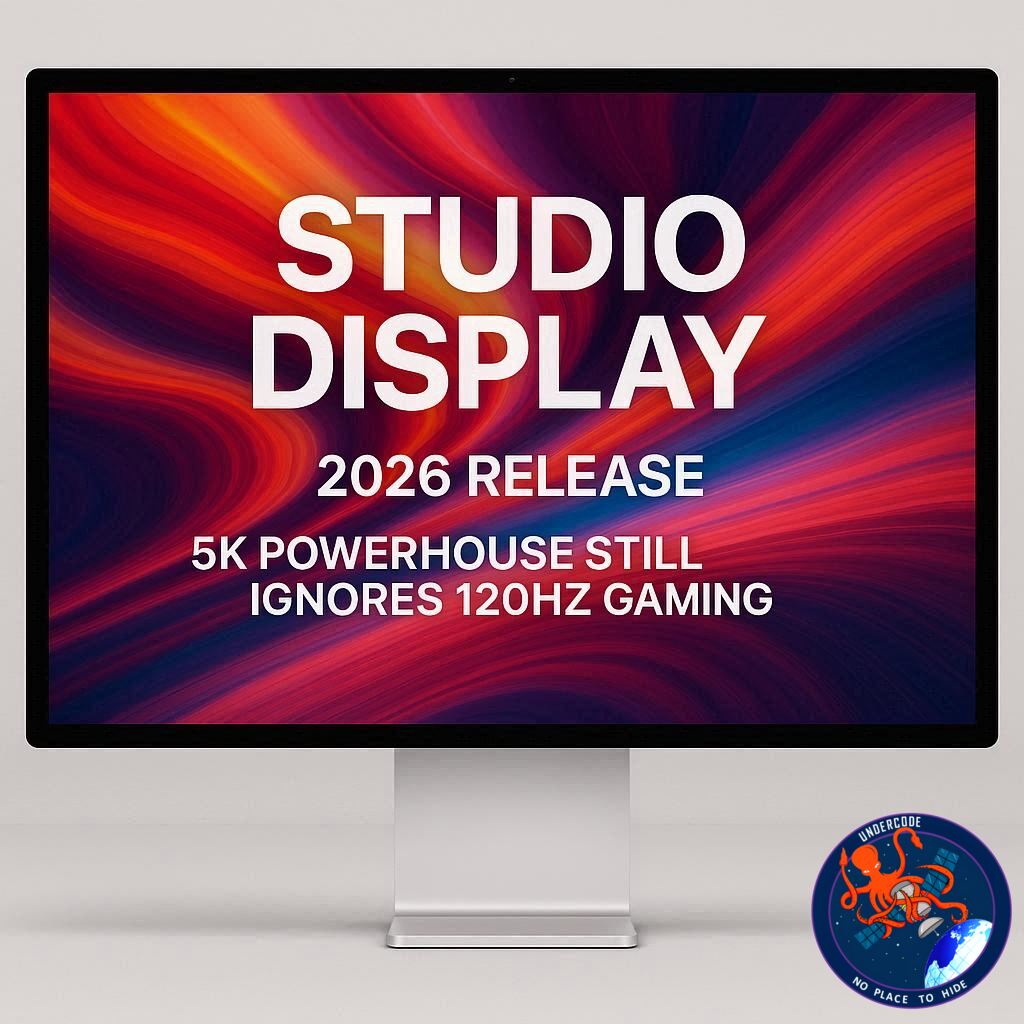 Introduction: A Premium Display That Stops Just Short of Greatness
Apple has refreshed its Studio Display, polishing the camera, enhancing audio, and adding Thunderbolt 5 connectivity. On paper, it sounds like a confident evolution of a premium 27-inch 5K monitor built for creative professionals. But beneath the glossy aluminum and pixel-perfect panel lies a stubborn omission that Mac gamers cannot ignore. The absence of a 120Hz refresh rate once again leaves Apple’s standalone display trailing behind a gaming market that has already moved far beyond 60Hz.
For years, gaming was a weak spot in Apple’s ecosystem. Then Apple silicon arrived and shifted expectations. Performance improved dramatically, major developers began paying attention, and even demanding titles started appearing on macOS. Optimism grew. Many believed Apple would eventually deliver a display that matched this new ambition. Instead, the updated Studio Display feels like a reminder that gaming is still not Apple’s priority.
A Long History of Apple and Gaming Tension
Apple’s relationship with gaming has always been complicated. Before the transition to Apple silicon, Macs were rarely considered serious gaming machines. Performance limitations and limited software support kept them far from mainstream gaming relevance.
The arrival of Apple silicon marked a turning point. Efficiency improved, GPU capabilities strengthened, and developers started experimenting with optimized releases. The conversation shifted from “Can a Mac game?” to “How well can it game?” That distinction matters. It suggested Apple might finally embrace gaming not as an afterthought, but as a legitimate pillar of its ecosystem.
The Studio Display Refresh That Missed the Moment
The updated Studio Display retains its stunning 27-inch 5K resolution panel. It still offers excellent color accuracy, strong brightness, and Apple’s trademark industrial design. The improvements include a 12MP Center Stage camera with Desk View, upgraded microphones, improved Spatial Audio speakers, and Thunderbolt 5 support for faster connectivity.
All of those enhancements are welcome. They improve video conferencing, creative workflows, and device integration. Yet none of them address the core issue for gamers. The display remains locked at 60Hz.
That single limitation overshadows every other improvement.
Why 120Hz Matters More Than Ever
A 120Hz refresh rate is not just a gaming luxury. It fundamentally changes how a screen feels. Scrolling becomes smoother. Animations appear more natural. Motion clarity improves across the entire operating system. In gaming, the difference becomes transformative. Fast-paced action gains responsiveness and fluidity that 60Hz simply cannot replicate.
Apple already understands this. The MacBook Pro lineup supports ProMotion with refresh rates up to 120Hz. The technology exists within Apple’s ecosystem. Yet users who want a larger 27-inch external display must sacrifice that smoothness.
The result is a strange compromise. Smaller built-in displays get advanced refresh rates, while premium standalone monitors remain capped at 60Hz.
A Fork in the Road for Mac Gamers
Mac gamers now face an awkward decision. They can choose a MacBook Pro with a 120Hz display but remain confined to a 16-inch screen. Or they can connect to the 27-inch Studio Display and lose high refresh rate performance entirely.
For players investing in immersive experiences, screen size and refresh rate both matter. Being forced to choose between them feels unnecessary in 2026. The technology is widely available, and competitors have been offering high-refresh 4K monitors for years.
The Studio Display XDR: Powerful but Overpriced
Apple does offer a solution of sorts in the Studio Display XDR, which replaces the Pro Display XDR. This high-end model includes a mini-LED panel with 2,304 local dimming zones, peak HDR brightness of 2,000 nits, and Adaptive Sync support between 47Hz and 120Hz. On a technical level, it is impressive.
For gamers, the presence of 120Hz and adaptive refresh is exactly what the base Studio Display lacks. But there is a catch. The Studio Display XDR starts at $3,299.
At that price point, it moves far beyond mainstream gamers and into professional studio territory. Even if Apple’s gaming ecosystem continues to grow, most players will hesitate before spending that much on a display alone.
The Competitive Landscape Apple Cannot Ignore
The broader monitor market tells a different story. Displays like the Alienware 27 AW2725Q offer 240Hz refresh rates at 4K resolution for $899. The Asus ROG Swift OLED PG27UCDM delivers 240Hz with an OLED panel for $1,199. These monitors prioritize gaming features, including ultra-high refresh rates and fast response times.
They may not match Apple’s 5K resolution or extreme HDR brightness, but they excel where gamers care most: smooth motion and responsiveness. They also cost a fraction of the Studio Display XDR.
This comparison highlights the gap. Apple’s monitors emphasize resolution, brightness, and design. Gaming monitors emphasize speed and immersion.
OLED vs Mini-LED: A Philosophical Divide
Another dimension of the debate is panel technology. Apple continues to rely on mini-LED for its flagship displays. Mini-LED provides excellent brightness and strong contrast through local dimming zones. It is particularly effective for HDR content.
However, many gamers favor OLED panels for their perfect blacks, pixel-level lighting control, and instant response times. OLED displays deepen immersion, especially in darker environments and fast-moving scenes.
Apple has adopted OLED in devices like the iPhone and iPad Pro, yet it has not brought OLED to the Studio Display line. For gaming enthusiasts who prioritize contrast and motion clarity, this omission reinforces the perception that Apple’s displays are not built with them in mind.
A Product Designed for Creators, Not Players
It is important to recognize that the Studio Display was never marketed primarily as a gaming monitor. Its strengths lie in color accuracy, design cohesion with Macs, and productivity features. For photographers, designers, and video editors, a 5K panel offers substantial benefits.
Still, Apple’s recent push into gaming created expectations. When the company partners with major developers and highlights improved GPU performance, consumers assume the hardware ecosystem will evolve accordingly. A 120Hz 5K Studio Display would have symbolized that evolution.
Instead, Apple appears to be drawing a line. Gaming improvements exist within Macs themselves, but standalone displays remain focused on creative professionals.
What Undercode Say:
Strategic Positioning Over Feature Parity
Apple’s decision to omit 120Hz from the base Studio Display is not technical incapacity. It is strategic positioning. Apple differentiates products carefully to protect pricing tiers. If the $1,599 Studio Display included 120Hz, it would reduce the perceived value gap between it and the $3,299 Studio Display XDR.
This segmentation preserves margins. Apple has historically prioritized product ladder clarity over feature maximalism.
Gaming Growth Without Hardware Commitment
Apple silicon has undeniably improved gaming performance. Metal optimization, developer partnerships, and porting toolkits indicate growing interest. Yet the hardware ecosystem tells a cautious story. By limiting high-refresh displays to premium tiers, Apple signals that gaming remains secondary to professional workflows.
The company is nurturing gaming, but not centering its identity around it.
The Missed Branding Opportunity
A 27-inch 5K 120Hz Studio Display would have made headlines. It would have positioned Apple as serious about modern display standards. Instead, the refresh cycle feels incremental rather than transformative.
Apple often shapes industry expectations. In this case, it is following them, and even lagging behind, in one key metric.
Market Reality and Consumer Trade-Offs
From a practical perspective, gamers using Macs can easily connect third-party high-refresh monitors. macOS supports many of them without issue. The limitation is not compatibility but branding. Apple loyalists who value ecosystem consistency must choose between aesthetic alignment and gaming performance.
That tension could slowly push performance-focused users toward alternative hardware ecosystems.
Long-Term Implications
If Apple continues strengthening macOS gaming libraries while maintaining conservative display specifications, the contradiction will grow more visible. Eventually, the company must decide whether gaming is a marketing experiment or a structural pillar.
The Studio Display refresh suggests Apple is still undecided.
Fact Checker Results
✅ The updated Studio Display retains a 60Hz refresh rate despite other hardware improvements.
✅ The Studio Display XDR supports up to 120Hz with Adaptive Sync and starts at $3,299.
❌ The base Studio Display includes OLED technology, it continues to use a traditional LED-based panel rather than OLED.
Prediction
📊 Apple will eventually introduce a 120Hz 5K Studio Display once macOS gaming demand reaches measurable scale.
📊 Competitive pressure from 240Hz OLED monitors will accelerate that shift within the next product cycle.
📊 Until then, Mac gamers seeking high refresh rates will continue turning to third-party displays rather than Apple-branded solutions.
▶️ Related Video (82% Match):
🕵️📝✔️Let’s dive deep and fact‑check.
References:
Reported By: www.techradar.com
Extra Source Hub (Possible Sources for article):
https://www.linkedin.com
Wikipedia
OpenAi & Undercode AI
Image Source:
Unsplash
Undercode AI DI v2
Bing
🔐JOIN OUR CYBER WORLD [ CVE News • HackMonitor • UndercodeNews ]
📢 Follow UndercodeNews & Stay Tuned:
𝕏 formerly Twitter 🐦 | @ Threads | 🔗 Linkedin | 🦋BlueSky | 🐘Mastodon


