
Listen to this Post
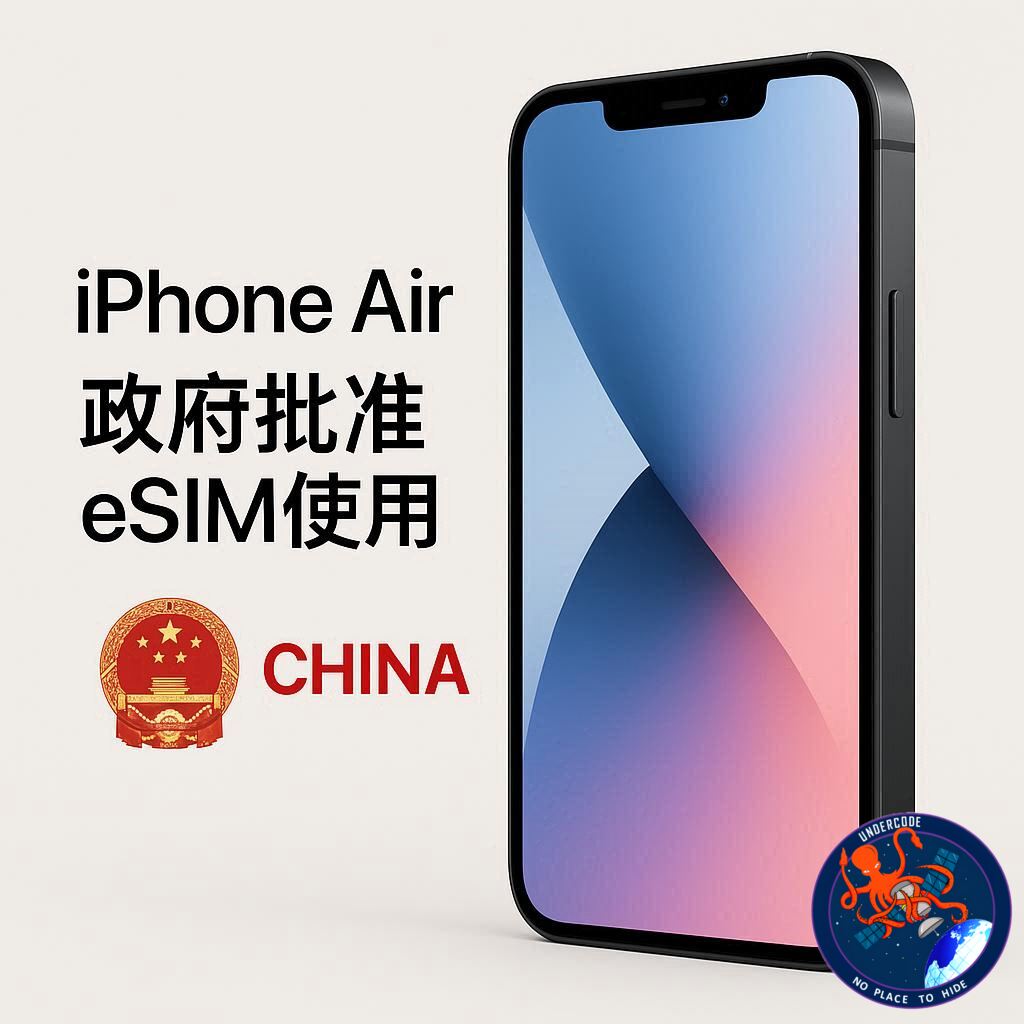
A New Era for Apple in China
Apple has officially announced the long-awaited release of its new smartphone, the iPhone Air, in China. The device, which had been delayed for regulatory reasons, will finally hit the Chinese market on October 22. What makes this release significant is not just the product itself but the breakthrough behind it: the Chinese government has approved the use of eSIM technology, marking a pivotal shift in the nation’s strict telecom policy.
A the Original
After months of delay, Apple confirmed that the iPhone Air will launch in China following government approval of its eSIM-only model. The phone, which eliminates the traditional SIM card slot, relies solely on eSIM (embedded SIM) technology—allowing users to activate or switch carriers digitally without inserting a physical SIM.
Until recently, China’s telecom authorities had restricted eSIM use, citing national security and data control concerns. Apple’s new approval indicates that Beijing is gradually easing these restrictions, possibly as part of broader efforts to modernize its telecom infrastructure and encourage foreign tech innovation.
Pre-orders for the iPhone Air begin on October 17, with prices starting from 7,999 usd (around ¥170,000 or $1,100). The model is expected to feature Apple’s latest A-series chip, enhanced battery life, and a lighter, thinner chassis, positioning it as a premium but futuristic upgrade in Apple’s ecosystem.
This launch marks more than just a product release. It symbolizes Apple’s renewed strategic negotiation with Chinese authorities—a relationship often described as a dance between innovation and regulation. China remains Apple’s most crucial manufacturing hub and one of its biggest consumer markets. Yet, geopolitical tensions, supply chain shifts, and domestic competition from Huawei and Xiaomi have made the tech giant’s journey increasingly complex.
The Chinese government’s greenlight for eSIM suggests an incremental policy relaxation, likely motivated by the nation’s pursuit of advanced digital infrastructure. eSIMs can streamline logistics, improve security through encrypted carrier provisioning, and pave the way for IoT expansion. For Apple, this could mean smoother integration across devices like the Apple Watch and iPad, both of which already support eSIM technology in other regions.
The approval might also reflect China’s pragmatic approach toward balancing control and innovation. While it seeks to protect its domestic tech interests, it cannot ignore the global standards set by companies like Apple. Allowing eSIMs may indicate that Beijing is ready to align with international telecom standards—at least in a controlled, monitored manner.
From a market perspective, the iPhone Air could reshape consumer behavior in China. The appeal of a slimmer, modern design coupled with digital flexibility might attract early adopters, professionals, and younger tech users who value seamless digital experiences. Still, challenges remain. Some consumers remain skeptical about eSIM security, carrier support, and the inability to swap SIMs easily when traveling abroad.
Nonetheless, Apple’s success with this rollout could set a precedent for other global smartphone brands, possibly leading to a wider adoption of eSIM devices across China’s massive market.
What Undercode Say:
Apple’s strategic timing for the iPhone Air launch is both technologically and politically calculated. The company has been navigating one of its toughest markets, where government policy can make or break innovation. This eSIM approval shows that Apple’s diplomacy, built over years of compromise and adaptation, is paying off.
From a technical standpoint, eSIM represents the next frontier of digital identity management. By removing physical SIM cards, Apple is not only simplifying device design but also reinforcing its ecosystem control. Every iPhone Air user will depend more deeply on Apple’s infrastructure—Apple ID, iCloud, and digital provisioning. This integration aligns with Apple’s long-term ambition: to build a fully digital ecosystem that functions independently of carriers and physical constraints.
Yet, the move also exposes Apple to heightened data scrutiny. China’s cybersecurity laws are among the world’s strictest, and eSIM data flows through digital channels that the state may seek to monitor. Balancing user privacy with compliance will be Apple’s biggest challenge in the Chinese market.
Economically, the iPhone Air’s 7,999-usd price tag positions it in a high-end segment dominated by Huawei’s Mate 70 series and Xiaomi’s 14 Ultra. To compete, Apple is relying not just on brand loyalty but on emotional value—offering consumers a device that symbolizes global sophistication. The “Air” branding evokes lightness, innovation, and prestige—values that resonate deeply with China’s rising middle class.
This launch could also act as a litmus test for Apple’s resilience in China after facing growing pressure from both Western and domestic fronts. With American lawmakers urging supply chain diversification and China favoring homegrown tech, Apple must constantly recalibrate its positioning.
If the iPhone Air succeeds, it will prove that policy alignment and brand prestige can still override political friction. But failure could indicate that even Apple’s influence is waning under China’s assertive tech sovereignty.
In a broader sense, this move signifies a global trend: the digital dematerialization of hardware. The eSIM is more than a convenience; it’s a philosophy—a shift toward invisible technology where software defines capability, not physical components. This is Apple’s domain, where design meets philosophy, and user experience becomes a lifestyle.
The iPhone Air’s success in China will depend not only on specs or price but on whether Apple can convince consumers to trust the invisible. That’s the essence of this battle: a cultural and psychological shift toward full digital identity.
🔍 Fact Checker Results
✅ Apple has officially confirmed the iPhone Air’s China release date as October 22.
✅ eSIM technology approval in China marks a verified policy shift by the Chinese government.
❌ Full technical specifications and carrier partnerships remain undisclosed as of now.
📊 Prediction
Apple’s iPhone Air could ignite a new wave of digital transformation in China’s smartphone sector. 🚀
If consumers embrace eSIM, expect other brands like Huawei and Xiaomi to follow quickly with similar offerings. 📱
Within two years, China may transition to being one of the largest eSIM-supported markets in the world. 🌐
🕵️📝✔️Let’s dive deep and fact‑check.
References:
Reported By: xtechnikkeicom_bd3b690142aedf026ecf58ae
Extra Source Hub (Possible Sources for article):
https://www.discord.com
Wikipedia
OpenAi & Undercode AI
Image Source:
Unsplash
Undercode AI DI v2
Bing
🔐JOIN OUR CYBER WORLD [ CVE News • HackMonitor • UndercodeNews ]
📢 Follow UndercodeNews & Stay Tuned:
𝕏 formerly Twitter 🐦 | @ Threads | 🔗 Linkedin | 🦋BlueSky | 🐘Mastodon


