
Listen to this Post
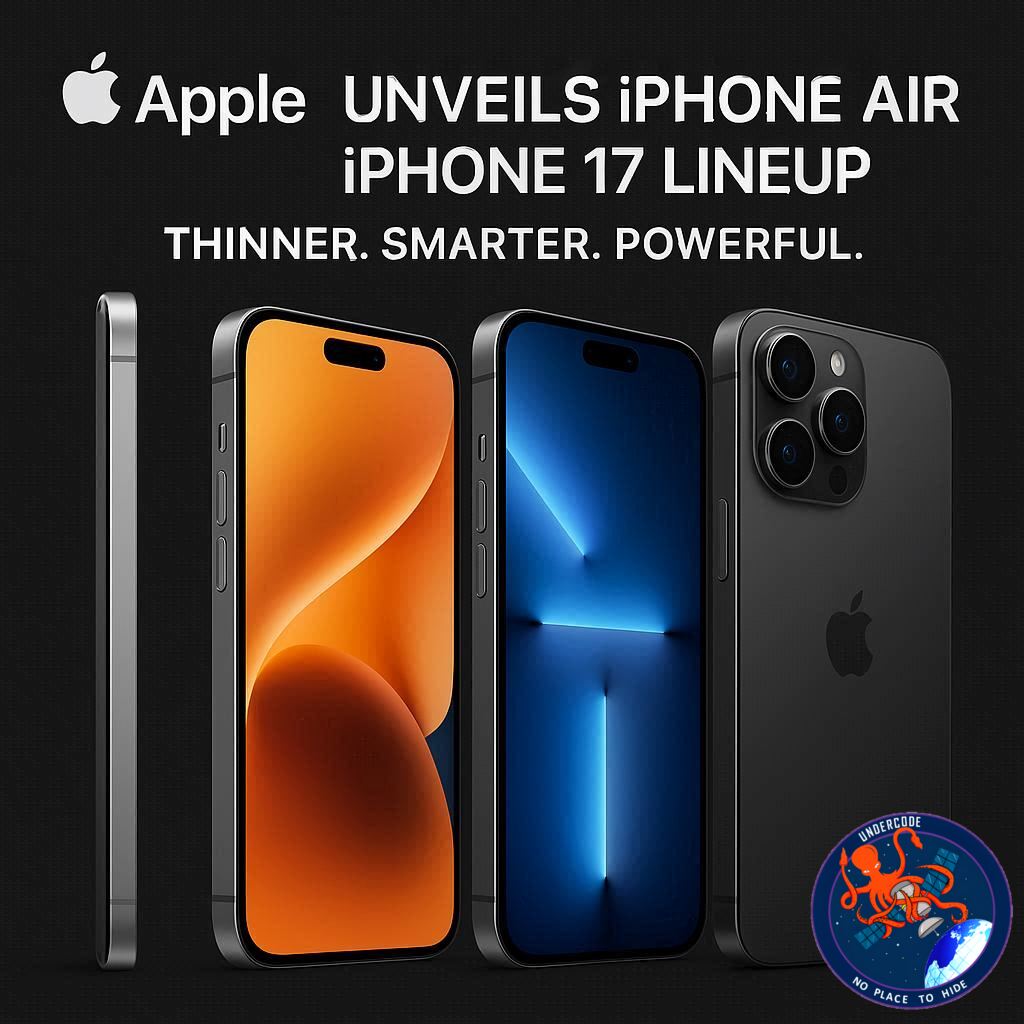
Apple has officially unveiled its 2025 iPhone lineup, featuring the all-new iPhone Air alongside the iPhone 17, iPhone 17 Pro, and iPhone 17 Pro Max. This year’s release marks a significant shift in Apple’s design and performance philosophy, blending thinner builds with cutting-edge durability and AI-powered innovation. For the first time, all iPhone models now feature 120Hz refresh rate displays, a standard that users have long been waiting for.
Pre-orders for all models open on September 9, with sales kicking off on September 19. The lineup not only introduces a dramatically slim iPhone Air but also packs in enhanced camera systems, upgraded connectivity, and larger default storage options, starting from 256GB. Below is a closer look at the pricing, features, and specs of each new model in the US market.
iPhone Air: Apple’s Thinnest iPhone Ever
US Pricing
256GB: $999
512GB: $1,199
1TB: $1,399
At just 5.6mm thick, the iPhone Air takes the crown as Apple’s slimmest device yet. Despite its ultra-thin profile, Apple emphasizes durability with a titanium frame and Ceramic Shield protection. The phone sports a 6.5-inch Super Retina XDR display with ProMotion technology and peak brightness of 3000 nits.
It runs on the A19 Pro chip paired with the C1x modem for lightning-fast performance and improved connectivity. The camera system includes a 48MP Fusion main lens, a 12MP telephoto, and an 18MP Center Stage selfie camera. Apple has also introduced simultaneous recording using both front and rear cameras.
Other highlights: Wi-Fi 7, Bluetooth 6, Thread support, eSIM-only design, 40 hours of video playback, and new usability features like the Action button and Camera Control.
Colour Options: Black, White, Beige, Light Blue
iPhone 17: The New Mainstream Flagship
US Pricing
256GB: $799
512GB: $999
The iPhone 17 gets a 6.3-inch Super Retina XDR display with slimmer bezels, 120Hz refresh rate, and Ceramic Shield 2 for reduced glare. Peak brightness reaches 3000 nits, and the display supports Always-On mode.
Powered by the A19 chip, the device excels at AI-driven tasks and mobile gaming. The dual Fusion camera system features a 48MP main sensor, 2x telephoto zoom, and 48MP ultra-wide camera. Its new square 18MP selfie camera supports landscape selfies without rotating the phone.
Colour Options: Lavender, Mist Blue, Black, White, Sage
iPhone 17 Pro: Professional Power in a Compact Build
US Pricing
256GB: $1,099
512GB: $1,299
1TB: $1,499
The iPhone 17 Pro sticks to the 6.3-inch Super Retina XDR display but boosts durability with Ceramic Shield 2 on both sides. Its aluminium unibody houses a vapor chamber cooling system for better heat management and a larger battery.
It’s powered by the A19 Pro chip, featuring a 6-core CPU, 6-core GPU, and 16-core Neural Engine for console-level gaming and advanced AI tasks. The triple camera system includes a 48MP setup with a new telephoto lens offering up to 8x optical zoom.
For professionals, the iPhone 17 Pro supports Dolby Vision HDR, ProRes RAW, Apple Log 2, and genlock for multi-camera filming.
Colour Options: Silver, Cosmic Orange, Deep Blue
iPhone 17 Pro Max: The Ultimate Flagship
US Pricing
256GB: $1,199
512GB: $1,399
1TB: $1,599
2TB: $1,999
The largest model in the lineup, the iPhone 17 Pro Max, boasts a 6.9-inch Super Retina XDR display with 120Hz refresh rate and Always-On functionality. With its 40W fast-charging support, it reaches 50% charge in just 20 minutes.
Like its Pro sibling, it uses the A19 Pro chip but delivers 40% better sustained performance thanks to an improved vapor chamber cooling system. The triple 48MP Fusion camera delivers 8x optical zoom and up to 40x digital zoom, making it the most advanced iPhone camera yet.
Running iOS 26, the device integrates Apple Intelligence features such as live translation, offline AI tools, enhanced call screening, and advanced visual search.
Colour Options: Silver, Cosmic Orange, Deep Blue
What Undercode Say:
Apple’s 2025 iPhone lineup feels like a strategic mix of refinement and bold innovation. The iPhone Air serves as a statement piece—showcasing Apple’s engineering prowess in making the thinnest, yet durable smartphone to date. It’s clearly designed to attract users who value portability and design without sacrificing performance. The use of titanium and Ceramic Shield in such a slim frame is a direct answer to critics who once claimed thinner phones meant fragility.
Meanwhile, the iPhone 17 positions itself as a versatile flagship, hitting the sweet spot of price and performance. With AI at its core, it’s evident Apple is moving toward making the iPhone less of a phone and more of an AI-powered personal assistant. The square selfie camera allowing landscape shots without rotation is a subtle, yet practical upgrade that shows Apple is listening to how people actually use their devices.
The Pro models are where Apple flexes its muscles. The iPhone 17 Pro brings professional-grade video tools into the pockets of filmmakers and creators, effectively blurring the line between smartphone and cinema equipment. And the Pro Max goes even further, introducing 40x digital zoom and pro-grade thermal management, cementing its role as Apple’s most complete powerhouse to date.
However, Apple’s pricing strategy will spark debate. With the iPhone Air starting at \$999 and the Pro Max stretching up to \$1,999, these devices cater to a premium audience. Apple is clearly betting that AI-driven features, camera technology, and performance longevity will justify the steep cost.
This year’s biggest shift may not be hardware alone, but the software synergy with iOS 26. Apple is embedding AI intelligence at the system level, ensuring features like offline translation, smart call screening, and visual search become daily utilities rather than gimmicks. This makes the iPhone not just a communication device, but a core productivity and lifestyle hub.
For consumers, the decision will boil down to trade-offs:
Choose the iPhone Air for sleek design and portability.
Go for the iPhone 17 if you want value with modern AI power.
Pick the Pro models if photography, videography, and raw power define your usage.
In short, Apple has successfully diversified its lineup to match different user profiles while keeping AI and durability as the central themes.
🔍 Fact Checker Results
✅ Apple confirmed all 2025 iPhones come with 120Hz refresh rate.
✅ The iPhone Air is officially the thinnest iPhone ever at 5.6mm.
❌ Rumors of a foldable iPhone in 2025 were not part of this launch.
📊 Prediction
The iPhone Air could become Apple’s design icon of the decade, influencing future ultra-thin devices and sparking a wave of slim premium smartphones. Meanwhile, the iPhone 17 Pro Max will likely dominate among professionals, especially in content creation and AI-powered productivity, setting Apple up for record-breaking adoption in high-end markets.
🕵️📝✔️Let’s dive deep and fact‑check.
References:
Reported By: timesofindia.indiatimes.com
Extra Source Hub:
https://www.quora.com
Wikipedia
OpenAi & Undercode AI
Image Source:
Unsplash
Undercode AI DI v2
🔐JOIN OUR CYBER WORLD [ CVE News • HackMonitor • UndercodeNews ]
📢 Follow UndercodeNews & Stay Tuned:
𝕏 formerly Twitter 🐦 | @ Threads | 🔗 Linkedin | 🦋BlueSky | 🐘Mastodon


