
Listen to this Post
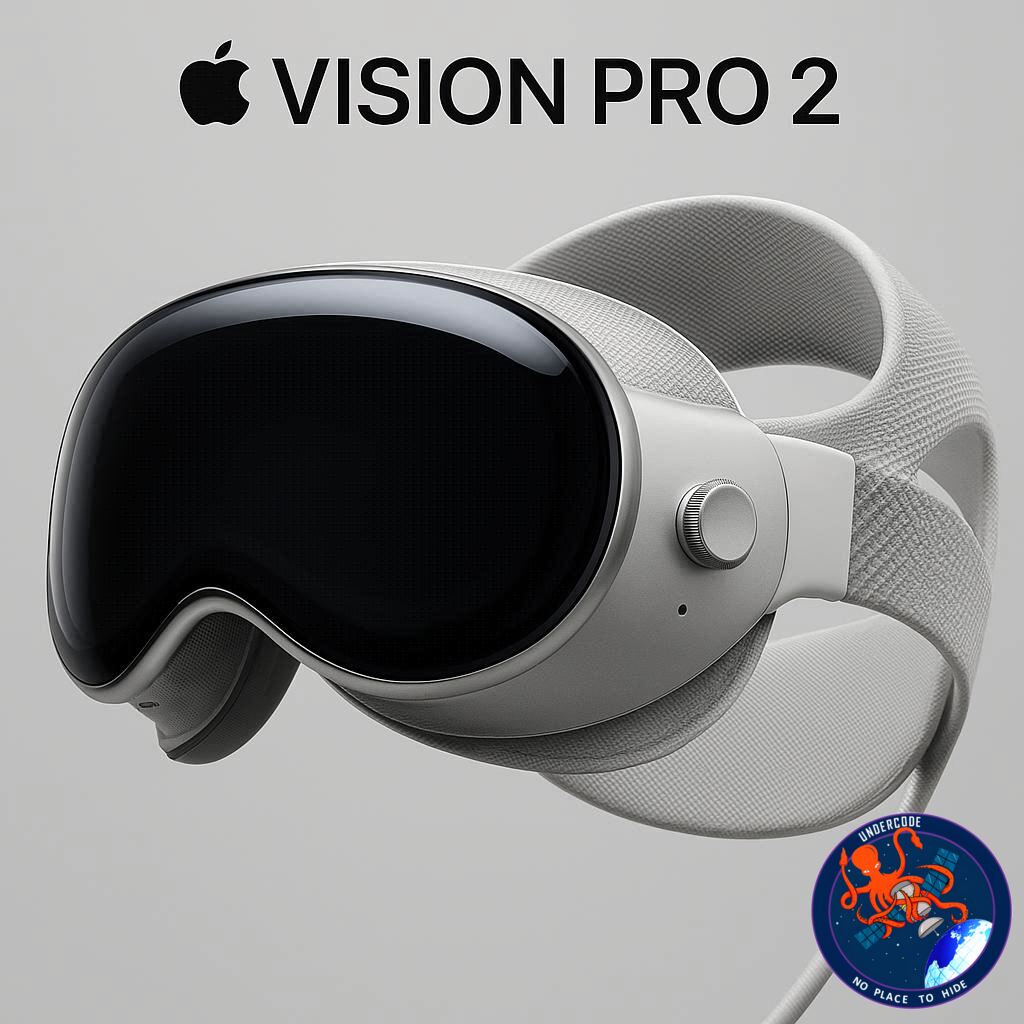
Apple’s second-generation Vision Pro isn’t just a refresh—it’s a response. The first model dazzled with its futuristic promise but stumbled on practicality. Now, Apple’s refining its vision for spatial computing with tangible upgrades that target comfort, power, and real-world usability. Here’s the story behind the evolution of the Vision Pro 2.
Reinventing Comfort: The Dual Knit Band
Apple listened. The biggest complaint about the first Vision Pro was discomfort during long sessions. The second generation addresses this directly with the all-new Dual Knit Band. Designed as a 3D-knitted single piece, it now splits into upper and lower straps for balanced pressure distribution.
The top and back adjustment mechanism has been rebuilt around a dual-function Fit Dial, offering precise tension control. Embedded tungsten weights act as a counterbalance—lifting the device’s front load and relieving facial pressure. Apple calls this “an evolution of equilibrium,” and for once, it’s not just marketing talk. The result is a headset that feels lighter, more breathable, and more secure.
The band is available in three sizes—small, medium, and large—and can even be purchased separately. In a thoughtful move, Apple made it backward compatible with the first-generation Vision Pro. That’s a rare sign of consumer respect in Apple’s playbook.
Power and Precision: The M5 Chip Arrives
The original Vision Pro was powered by the M2 chip, which—while solid—struggled with the sheer processing demands of spatial computing. The new model upgrades to the Apple M5 chip, marking a substantial leap forward.
The M5 introduces hardware-accelerated ray tracing and mesh shading, giving developers tools to create more realistic lighting and detailed 3D environments without sacrificing frame rates. The CPU now has two extra efficiency cores, ensuring smoother multitasking and responsiveness.
More importantly, the new 16-core Neural Engine supercharges AI-driven experiences. From real-time spatial scene creation to gesture recognition, everything runs faster—Apple claims up to 50% improvement in system-level AI tasks and 2x performance gains for third-party apps.
This means users can expect more fluid app launches, quicker browser responses, and smoother transitions across visionOS environments. In essence, Vision Pro finally feels as fast as it looks.
Sharper Views and Smarter Motion
Apple kept its micro-OLED displays, but under the hood, things have evolved. The M5’s efficiency enables visionOS to render 10% more pixels, slightly increasing clarity and depth perception.
The real upgrade, however, lies in refresh rate improvements. The new Vision Pro can now boost up to 120Hz in passthrough mode and during Mac Virtual Display use. The previous limit was 100Hz. That bump might sound small, but it dramatically reduces motion blur—crucial for people who felt mild nausea or disorientation with the first model.
Every movement, gesture, and transition now feels silkier. The device finally reaches the kind of seamless visual flow Apple promised back in its debut keynote.
More Life, Less Charge Anxiety
Battery life has been another pain point for Vision Pro owners. With the M5’s improved efficiency, Apple now claims:
2.5 hours of general use (up from 2)
3 hours of video playback (up from 2.5)
It’s still not an all-day headset unless plugged in, but every extra minute counts when dealing with a power-hungry spatial device. The new 40W–60W dynamic power adapter also ensures faster, safer charging—especially useful for creators using Vision Pro for design or development work.
What’s in the Box—and What’s Not
The second-gen Vision Pro ships with the new Dual Knit Band as standard, removing the old Solo Knit and Dual Loop Bands from the box. Those remain available for separate purchase.
Apple has discontinued the 30W charger, replacing it with the more capable dynamic adapter. Also included are the battery unit, front cover, polishing cloth, extra Light Seal Cushion, and a 1.5m USB-C cable.
For accessory lovers, Apple teased new ecosystem items:
Logitech Muse Pencil – available October 22
PlayStation VR2 Sense controllers – available November 11
The Bigger Picture: A Smarter Future for Vision Pro
Apple’s Vision Pro 2 feels less like a luxury demo and more like a tool that belongs on your desk. The company clearly absorbed feedback from early adopters, refining the design without compromising ambition. The combination of improved comfort, performance, and visual smoothness positions Vision Pro 2 as the first version truly ready for everyday creative or professional use.
And with AI integration expanding across Apple’s ecosystem, the M5 chip ensures Vision Pro won’t feel obsolete anytime soon.
What Undercode Say:
The Vision Pro 2 marks Apple’s pivot from spectacle to sustainability. The first Vision Pro was groundbreaking—but also isolating. Its brilliance came at the cost of usability. Apple seems to have learned that “innovation” must serve “endurance.”
The Dual Knit Band isn’t just a cosmetic fix; it’s a philosophical one. Comfort equals accessibility, and accessibility equals adoption. When a device designed for immersion becomes wearable for longer periods, it transforms from a novelty into a tool of habit.
The M5 chip’s AI and graphics improvements signify something deeper: Apple is not just refining hardware—it’s rewriting the emotional rhythm of spatial computing. Faster rendering, smarter light mapping, smoother motion—all combine to dissolve the line between digital and physical worlds.
Yet the Vision Pro 2’s real success will depend on ecosystem growth. Apps still define experience. If third-party developers truly harness the M5’s neural capabilities, we could witness the first genuine fusion of augmented and mixed reality in mainstream workflows.
The bump to 120Hz refresh rate might seem minor, but it’s a huge step toward visual comfort. It’s Apple acknowledging that human biology—not specs—determines the success of immersive tech. Reducing motion blur means reducing fatigue. That’s how you make people want to stay in your world longer.
Battery life remains the weak link. Even with efficiency gains, Vision Pro is still tethered by energy limitations. Until Apple integrates internal, high-density power cells or transitions to ultra-efficient microdisplays, this will stay a semi-mobile device—brilliant, but not yet boundless.
From a strategic view, Vision Pro 2 is Apple’s “second draft” of the future. It’s where the company polishes not just performance but perception. This isn’t about being first—it’s about being inevitable.
Fact Checker Results:
✅ Dual Knit Band confirmed compatible with first-generation Vision Pro.
✅ M5 chip includes 16-core Neural Engine with hardware-accelerated ray tracing.
❌ No all-day battery without external connection—still limited by physical pack.
Prediction:
By 2026, Apple will introduce a Vision Pro Lite—lighter, longer-lasting, and priced for broader adoption. 🎯
Developers will pivot toward AI-powered 3D spatial interfaces, transforming productivity apps into immersive environments. 💡
The Vision Pro 2 isn’t the end—it’s Apple’s rehearsal for the mainstream era of spatial computing. 🚀
🕵️📝✔️Let’s dive deep and fact‑check.
References:
Reported By: 9to5mac.com
Extra Source Hub (Possible Sources for article):
https://www.stackexchange.com
Wikipedia
OpenAi & Undercode AI
Image Source:
Unsplash
Undercode AI DI v2
Bing
🔐JOIN OUR CYBER WORLD [ CVE News • HackMonitor • UndercodeNews ]
📢 Follow UndercodeNews & Stay Tuned:
𝕏 formerly Twitter 🐦 | @ Threads | 🔗 Linkedin | 🦋BlueSky | 🐘Mastodon


