
Listen to this Post
Introduction
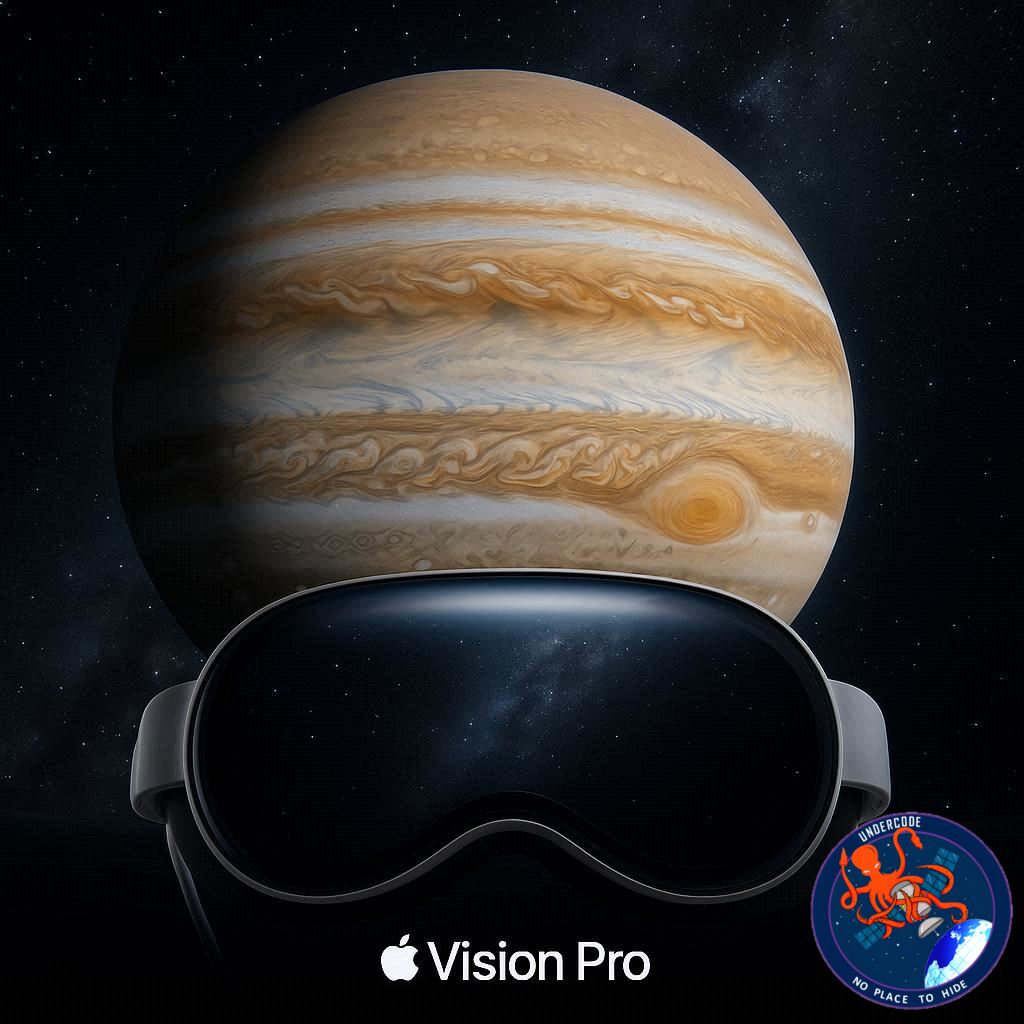
Apple continues to push the boundaries of immersive technology, and its latest reveal proves it once again. During WWDC25, Apple introduced a new Jupiter Environment for Apple Vision Pro users, expanding the possibilities of spatial computing. With the release of visionOS 26, Apple enthusiasts can now experience a stunningly realistic view from Amalthea, one of Jupiter’s moons. This isn’t just about virtual backgrounds—it’s about bringing the vastness of space right into your living room, with dynamic lighting, time shifts, and a sense of cosmic wonder.
Full Apple’s Jupiter Environment
The Vision Pro headset thrives on its Environments feature, which allows users to step into breathtaking 3D worlds. Previously, these environments showcased Earth-based sceneries or abstract visuals, but now Apple has ventured into deep space.
The Jupiter Environment presents a photorealistic view from Amalthea, an inner moon of Jupiter. Unlike other environments, which generally toggle between day and night, Jupiter introduces real-time progression of a 10-hour Jovian day. Users can choose from five time presets or freely slide a control to any moment in Jupiter’s rotation.
Apple explains how the gas giant’s rapid rotation compresses its day into just 10 hours. This feature allows Vision Pro wearers to see the planet’s atmosphere, storms, and celestial alignments change seamlessly. By default, the environment moves in real time, but users can accelerate or pause the cycle for a personalized pace.
At night, the experience transforms entirely. Instead of the sun’s glow, users witness a vast galactic panorama, with glowing stars and a dazzling Milky Way backdrop. Even in complete cosmic darkness, the view remains mesmerizing.
The environment also highlights subtle design choices: the way shadows fall across Jupiter, the shifting hues of its bands, and the interplay of moons orbiting in real time. To accommodate this addition, Apple removed the Morning Light Environment from the menu. Meanwhile, the Moon Environment received an update, though noticeable differences remain unclear.
The Jupiter release sets a precedent, showcasing the first-ever real-time environment in Vision Pro. Apple fans are now hoping this feature will extend to other environments to avoid stagnation. It gives users a stronger sense of passing time—a crucial detail when immersed in virtual spaces.
Overall, the new release stands out not just as an aesthetic feature but as a functional, dynamic environment that blends astronomy with technology.
What Undercode Say: 🔍
Apple’s choice of Jupiter for its first real-time cosmic environment is more than a visual treat—it’s a strategic move. Here’s why this release is bigger than it appears:
Space fascination as a driver of adoption
Space always sparks human curiosity. By giving Vision Pro owners a realistic seat near Jupiter, Apple leverages this fascination to deepen emotional connection with the product.
Positioning Vision Pro as educational and experiential
This isn’t just entertainment. Students, researchers, and astronomy enthusiasts now have a powerful visualization tool. Apple could market Vision Pro as a bridge between science and immersive technology, potentially collaborating with educational institutions.
The psychology of “passing time” in VR
One challenge with VR and AR environments is the sense of timelessness, which can disorient users. Jupiter’s 10-hour cycle restores a rhythm—helping people work, relax, or study without losing awareness of time. This is subtle, but vital for long-term headset adoption.
Thematic expansion for Apple’s ecosystem
By removing “Morning Light” and replacing it with Jupiter, Apple signals its intention to keep the environment library dynamic. This creates anticipation and regular engagement—similar to how iOS wallpapers and watch faces refresh consumer excitement.
Technical implications
Creating a real-time planetary simulation within a headset requires immense rendering power and optimization. The smoothness of lighting shifts and celestial dynamics suggests Apple is fine-tuning Vision Pro hardware for future scalability, potentially including AR-powered astronomy apps.
Commercial ecosystem growth
Alongside the announcement, Apple highlights accessories like AirPods Pro 2, MagSafe stands, and premium desk mats. These inclusions suggest Vision Pro’s immersive environments may extend into lifestyle branding, reinforcing Apple’s role not just as a tech provider, but a culture creator.
Future trajectory
Expect Apple to roll out more planetary environments: Mars, Saturn’s rings, or even exoplanets. If the Jupiter experiment succeeds, Vision Pro could become the go-to headset for space simulation experiences. This would appeal to NASA collaborations, gaming crossovers, and virtual tourism.
Fact Checker Results ✅❌
✅ Apple officially announced the Jupiter Environment during WWDC25.
✅ The visionOS 26 Release Candidate includes Jupiter as the first real-time environment.
❌ No confirmed major differences have been identified in the Moon Environment update despite its inclusion.
Prediction 🔮
The Jupiter Environment is only the beginning. Apple is likely to expand Vision Pro’s environment library with more real-time cosmic simulations, bringing Mars sunsets, Saturn’s rings, or even exoplanet views into users’ homes. Within the next two years, Apple could transform Vision Pro into a must-have tool for astronomy education, virtual tourism, and immersive storytelling, solidifying its dominance in spatial computing.
🕵️📝✔️Let’s dive deep and fact‑check.
References:
Reported By: 9to5mac.com
Extra Source Hub:
https://www.facebook.com
Wikipedia
OpenAi & Undercode AI
Image Source:
Unsplash
Undercode AI DI v2
🔐JOIN OUR CYBER WORLD [ CVE News • HackMonitor • UndercodeNews ]
📢 Follow UndercodeNews & Stay Tuned:
𝕏 formerly Twitter 🐦 | @ Threads | 🔗 Linkedin | 🦋BlueSky | 🐘Mastodon


