
Listen to this Post
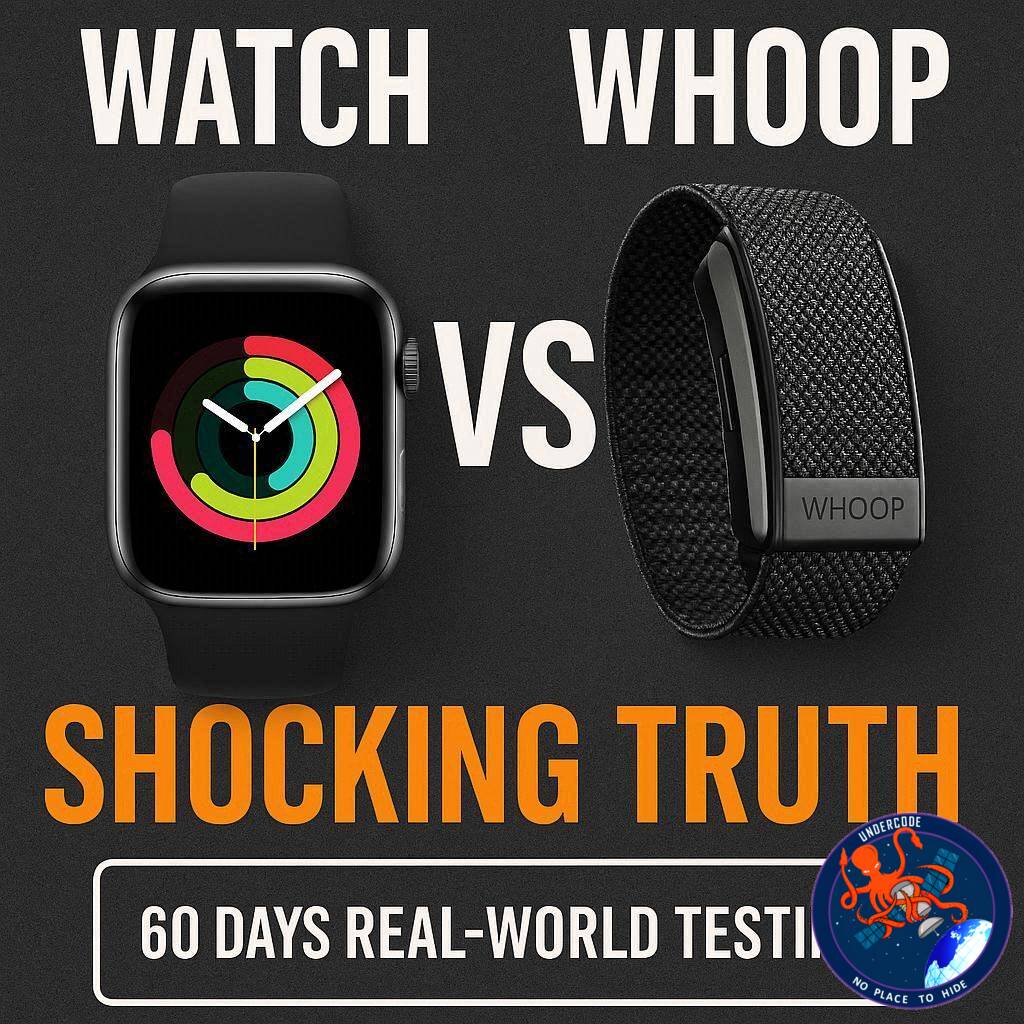
Why the WHOOP Craze Is Taking Over Fitness Culture
Over the last few years, the fitness world has become obsessed with recovery tracking, sleep optimization, strain scores, and biometric data. At the center of that movement sits the WHOOP band — a minimalist wearable promoted by elite athletes, CEOs, tech founders, and influencers who claim it completely changed how they train, sleep, and recover.
At first glance, WHOOP looks like the future of wellness technology. No screen. No distractions. Just pure health tracking designed to quietly monitor your body 24/7. Meanwhile, the Apple Watch has evolved into an all-in-one smartwatch packed with apps, notifications, GPS, communication tools, and advanced health sensors.
After wearing both the Apple Watch Ultra 2 and the latest WHOOP MG for 60 straight days, the comparison became far more interesting than expected. What initially looked like a battle between a “serious fitness tracker” and a consumer smartwatch quickly turned into something deeper: a clash between two completely different philosophies about technology, health, and everyday life.
The results were surprising.
Two Completely Different Visions of Wearable Technology
The biggest realization came immediately after putting on the WHOOP MG for the first time. This device is designed to disappear from your life. It has no display, no apps, no buttons to press repeatedly, and no constant buzzing notifications demanding attention. It exists quietly in the background collecting data every second of the day.
That simplicity is exactly what many people love about it.
The Apple Watch Ultra 2, on the other hand, feels like carrying a miniature iPhone on your wrist. It is interactive, bright, feature-rich, and constantly active. You can respond to messages, answer calls, use navigation, track workouts, stream music, and interact with countless applications throughout the day.
Even when focusing purely on fitness and health, the experience feels fundamentally different. The Apple Watch wants engagement. WHOOP wants invisibility.
That distinction becomes increasingly important depending on what type of user you are. Some people are exhausted by digital overload and want a wearable that simply tracks health quietly. Others want maximum functionality and versatility in a single device.
WHOOP’s Battery Life Feels Almost Unreal
Battery life is one area where WHOOP instantly dominates.
The WHOOP MG consistently lasted between 10 and 12 days on a single charge during testing. That changes the entire user experience because you stop thinking about charging entirely. The device even includes a sliding battery pack charger that lets users recharge while still wearing the band, allowing uninterrupted data collection.
That uninterrupted tracking is central to WHOOP’s identity. The company wants continuous monitoring without gaps.
The Apple Watch Ultra 2 simply cannot compete in this area. Even with Apple’s battery optimizations, most users will realistically charge it every single day or every other day at best. Heavy workouts, GPS tracking, music streaming, and notifications drain it even faster.
For users who care deeply about 24/7 sleep analysis, recovery data, and constant biometrics, WHOOP’s battery advantage is massive.
Apple Watch Quietly Crushes WHOOP in Hardware
One of the most unexpected discoveries was how much more advanced the Apple Watch hardware actually is.
Before testing, it seemed logical to assume WHOOP would include cutting-edge sensors unavailable elsewhere. Instead, the opposite turned out to be true.
The Apple Watch Ultra 2 includes:
ECG support
Blood oxygen monitoring
Skin temperature tracking
GPS
Compass
Altimeter
Depth sensor
Water temperature sensor
Advanced motion tracking
Dual-frequency GPS technology
WHOOP’s sensor package is comparatively minimal.
That creates an unusual situation where the supposedly “hardcore” fitness wearable actually offers fewer hardware capabilities than Apple’s mainstream smartwatch.
Despite that limitation, WHOOP still performs very well with the fundamentals. Heart-rate tracking, recovery scores, sleep analysis, and strain calculations were surprisingly close to Apple Watch readings during testing.
The real difference was never the hardware.
It was the software.
WHOOP’s App Is the Real Star of the Show
This is where WHOOP finally begins to justify its reputation.
The WHOOP app feels highly refined, focused, and intelligent. Instead of dumping raw data onto the user, it actively interprets information and provides actionable guidance.
The platform constantly analyzes:
Recovery levels
Sleep quality
Daily strain
Heart-rate variability
Resting heart rate
Stress levels
More importantly, WHOOP tells users what to do with that information.
The app may recommend lighter training after poor sleep, suggest recovery protocols after overtraining, or explain why energy levels dropped. Its AI-driven coaching experience feels proactive instead of passive.
Apple’s Health ecosystem approaches things very differently. Apple provides huge amounts of health data but leaves interpretation largely up to the user. For experienced fitness enthusiasts, that flexibility is useful. For average users, it can feel overwhelming or incomplete.
WHOOP succeeds because it transforms health data into understandable lifestyle recommendations.
That simplicity is extremely powerful.
The Discovery That Changed Everything
The biggest turning point came unexpectedly through a third-party app called Bevel.
Bevel essentially recreates the WHOOP experience using Apple Watch data. Recovery scores, strain analysis, sleep coaching, readiness metrics, and AI-powered recommendations suddenly became available directly through the Apple Watch ecosystem.
That discovery completely changed the comparison.
The realization hit hard: WHOOP’s biggest advantage was not the hardware at all. It was the interpretation layer built on top of the data.
Once Apple Watch users access similar software experiences through third-party apps, WHOOP’s value proposition becomes much harder to justify financially.
Especially considering Apple Watch hardware is significantly more capable overall.
The Subscription Model Is WHOOP’s Biggest Problem
This is where many potential buyers may begin questioning the hype.
The WHOOP MG costs approximately $359 USD per year. Not once. Per year.
That means users continuously pay subscription fees just to keep using the product and accessing their health data.
Meanwhile, a brand-new Apple Watch Series 11 can often be purchased for around $299 USD during discounts. In other words, some consumers could literally buy a new Apple Watch every year for less money than maintaining a WHOOP subscription.
That pricing becomes even harder to defend once users discover alternative apps like Bevel that replicate many WHOOP features at a fraction of the cost.
For existing Apple Watch owners, WHOOP suddenly starts looking less like revolutionary technology and more like a premium software subscription attached to a relatively simple wearable.
WHOOP Still Has One Powerful Advantage
Despite all the criticism, WHOOP still offers something genuinely unique.
Silence.
No notifications. No glowing screen. No social media distractions. No incoming calls interrupting workouts or sleep.
That minimalist philosophy creates an experience many people increasingly crave. In a world overloaded with digital stimulation, WHOOP feels calming and intentional.
There is also a strong emotional and cultural component behind the brand. WHOOP has successfully positioned itself as a wearable for elite performers. Athletes, founders, executives, and productivity-focused users gravitate toward it because it signals discipline, optimization, and high performance.
The branding is undeniably effective.
In many ways, WHOOP feels less like a gadget and more like a lifestyle identity.
Small Problems Become Big Problems Over Time
Living with the device daily also exposed several frustrating issues that become difficult to ignore considering the premium pricing.
The vibration alarm feels surprisingly cheap compared to Apple Watch’s refined haptic feedback. Turning alarms off through double-tapping often fails repeatedly, creating annoying experiences early in the morning.
The fabric band also absorbs sweat and moisture quickly, leading to unpleasant odors after extended wear. For a device marketed as premium and designed for 24/7 use, these details matter far more than they initially seem.
Over time, small annoyances compound into larger frustrations.
That becomes especially noticeable when users are paying hundreds of dollars annually.
What Undercode Says:
WHOOP Succeeded Because It Sold an Emotion, Not Just a Product
The biggest lesson from this comparison is that WHOOP’s success has very little to do with raw technology. Apple clearly wins the hardware battle. Sensor quality, smartwatch functionality, ecosystem integration, communication tools, GPS capabilities, and software maturity all favor Apple.
Yet WHOOP still became culturally powerful.
Why?
Because WHOOP understood modern consumer psychology better than most tech companies.
The brand sells the fantasy of becoming optimized. It sells the image of discipline, elite performance, recovery mastery, and scientific self-improvement. When people wear WHOOP, they are not simply buying a tracker — they are buying into an identity associated with athletes, entrepreneurs, and high achievers.
That emotional branding strategy is incredibly effective.
Minimalism Became WHOOP’s Secret Weapon
Ironically, WHOOP’s lack of features became its most attractive feature.
Consumers are increasingly overwhelmed by smartphones, notifications, social media addiction, and digital fatigue. WHOOP capitalized on this exhaustion by positioning itself as the anti-smartwatch.
No screen suddenly became luxurious.
No distractions suddenly felt premium.
That psychological shift says a lot about where wearable technology may be heading in the future. People increasingly want tech that works quietly instead of constantly demanding interaction.
Apple still struggles with this balance.
Apple’s Biggest Weakness Is Software Interpretation
Apple collects enormous amounts of health data, but most users never truly understand what to do with it.
WHOOP solved that problem elegantly through coaching, recovery recommendations, and AI-powered interpretation. That guidance transforms raw numbers into actionable decisions.
This exposes an important weakness inside Apple’s Health ecosystem: accessibility.
Most users are not data scientists or sports physiologists. They want clear answers:
Should I train today?
Did I recover properly?
Why am I exhausted?
Am I overtraining?
WHOOP answers those questions directly.
Apple often does not.
Third-Party Apps Could Destroy WHOOP’s Long-Term Advantage
The rise of apps like Bevel creates a potentially dangerous future for WHOOP.
If Apple Watch owners can access nearly identical recovery insights, strain scores, and AI coaching through inexpensive software subscriptions, WHOOP’s hardware becomes increasingly irrelevant.
That creates pressure on WHOOP to innovate far beyond branding and community identity.
Because once consumers realize the “magic” primarily exists in software, loyalty can disappear quickly.
The Subscription Economy Is Becoming Exhausting
Consumers are growing tired of endless subscriptions.
Streaming services, cloud storage, productivity tools, AI platforms, gaming memberships, and now fitness trackers all demand recurring monthly payments.
WHOOP enters dangerous territory by charging luxury-level subscription pricing while offering relatively limited hardware.
At some point, many users begin asking a simple question:
“Why am I renting my fitness tracker?”
That question could become WHOOP’s biggest long-term challenge.
Apple Quietly Remains the Better Overall Product
Even after acknowledging WHOOP’s strengths, the overall conclusion remains difficult to escape.
The Apple Watch is simply more versatile, more capable, and ultimately more valuable for most people.
It can function as:
A smartwatch
A fitness tracker
A communication device
A navigation tool
A payment device
A sleep tracker
A medical alert system
A workout companion
WHOOP only excels within a narrow specialization.
And once software alternatives replicate that specialization, Apple’s ecosystem advantage becomes overwhelming.
The Wearable Industry Is Entering a New Era
This comparison reveals a broader industry trend.
The future of wearables may no longer depend on adding more sensors or flashy hardware. Instead, the real competition may revolve around interpretation, coaching, AI guidance, and behavioral psychology.
Consumers do not just want information anymore.
They want understanding.
WHOOP recognized that earlier than many competitors.
Apple now faces pressure to evolve beyond simply collecting health metrics and start becoming a true health intelligence platform.
🔍 Fact Checker Results
✅ Apple Watch Truly Has More Sensors
The Apple Watch Ultra 2 objectively includes significantly more hardware sensors and functionality compared to the WHOOP MG, including ECG, GPS, blood oxygen monitoring, and depth tracking.
✅ WHOOP’s Core Strength Really Is Software
The comparison accurately highlights that WHOOP’s strongest advantage comes from recovery insights, coaching, and data interpretation rather than hardware innovation.
✅ Subscription Pricing Is a Major Consumer Debate
WHOOP’s recurring subscription model has become one of the most criticized aspects of the platform, especially when compared to one-time smartwatch purchases.
📊 Prediction
AI Health Coaching Will Soon Replace Traditional Fitness Tracking
The next generation of wearables will likely focus less on collecting data and more on interpreting behavior using artificial intelligence. Companies that provide actionable wellness coaching will dominate over brands that simply display charts and numbers.
Apple Could Eventually Absorb WHOOP’s Entire Market
If Apple expands AI-driven recovery coaching and improves health recommendations inside the Health app, it could eliminate most reasons consumers choose WHOOP in the first place.
Screen-Free Wearables Will Become More Popular
Despite its flaws, WHOOP exposed a growing demand for minimalist wearables that reduce digital distractions while still tracking health continuously. More companies are likely to enter this category over the next few years.
🕵️📝Let’s dive deep and fact‑check.
References:
Reported By: 9to5mac.com
Extra Source Hub (Possible Sources for article):
https://www.reddit.com
Wikipedia
OpenAi & Undercode AI
Image Source:
Unsplash
Undercode AI DI v2
Bing
🔐JOIN OUR CYBER WORLD [ CVE News • HackMonitor • UndercodeNews ]
📢 Follow UndercodeNews & Stay Tuned:
𝕏 formerly Twitter 🐦 | @ Threads | 🔗 Linkedin | 🦋BlueSky | 🐘Mastodon


