
Listen to this Post
🎯 Introduction:
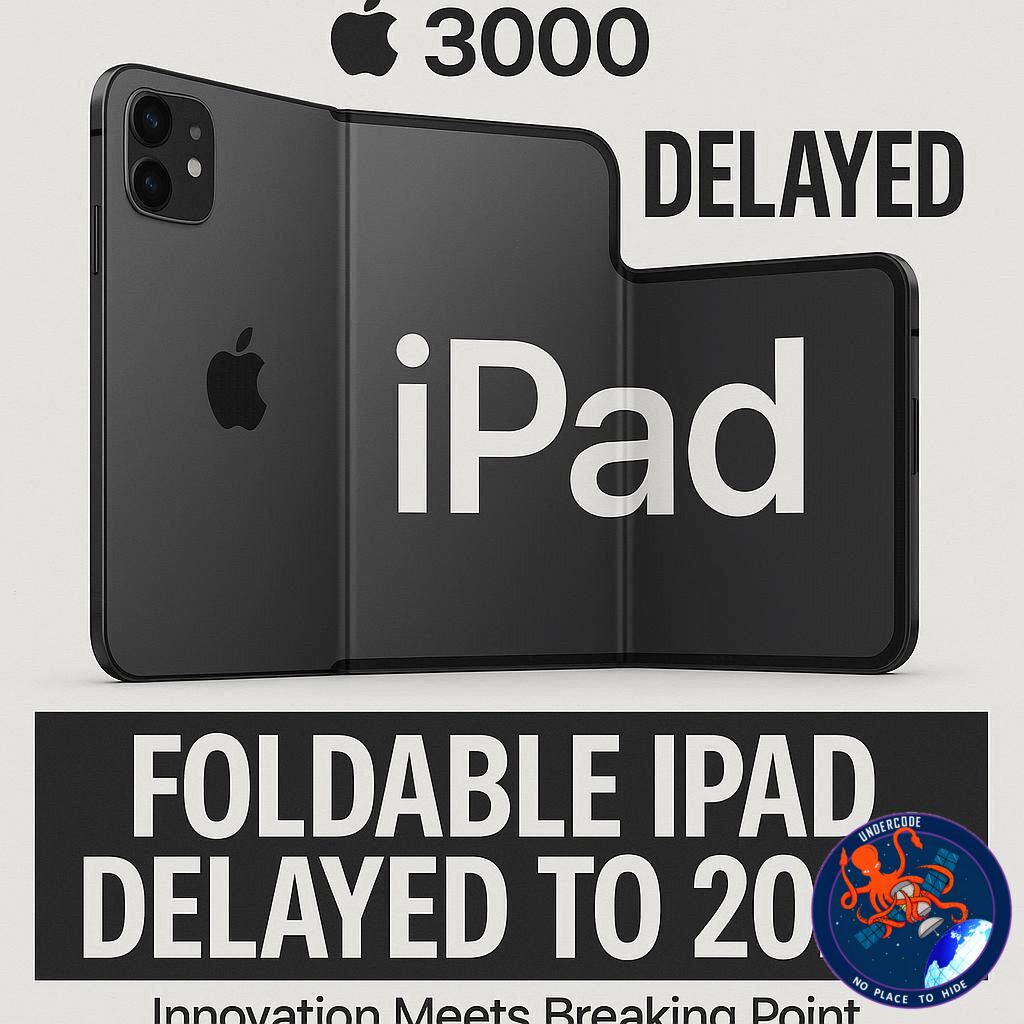
Apple’s dream of reinventing the tablet may be folding under its own weight—literally. The tech world has been buzzing about the company’s upcoming 18-inch foldable iPad, a device meant to merge portability with power. But Bloomberg’s latest revelations suggest that this futuristic gadget is now on life support. With engineering headaches, staggering costs, and a release date pushed to 2029, Apple’s most ambitious iPad yet may already be running out of steam before it even hits the market.
The Foldable iPad That’s Bending Apple’s Limits
Apple’s 18-inch foldable iPad, once expected to debut by 2028, has been pushed back at least another year, according to Bloomberg’s Mark Gurman. The reason? A mix of technical hurdles, heavy hardware, and manufacturing complexity that even Apple’s legendary engineering team is struggling to tame.
At 3.5 pounds, current prototypes weigh nearly as much as a MacBook Pro and about three times more than the feather-light iPad Pro. That’s not a minor design flaw—it’s a major problem for a product built around portability and elegance. Early models may look stunning, but their bulk turns Apple’s sleek design philosophy on its head.
The screen, an 18-inch OLED foldable panel, is the star and the culprit of the project. Co-developed with Samsung Display, this massive screen is meant to eliminate the visible crease that plagues most foldable devices. However, creating such a flawless display at that size comes with immense cost and complexity. Apple’s obsession with perfection may be driving the price up faster than its engineers can bring the weight down.
Sky-High Price, Sky-High Expectations
Analysts estimate the foldable iPad could cost between $3,000 and $3,900—roughly three times the price of a top-tier iPad Pro. For context, that’s laptop-level money for a device that doesn’t even include a physical keyboard. When closed, it resembles a metal-clad laptop with no external display, and when unfolded, it stretches out to a 13-inch MacBook Air size.
The question, then, is simple: who is this device for? Apple’s target seems to be professionals and tech enthusiasts willing to pay a premium for futuristic design. But with that kind of price tag, the foldable iPad risks becoming another niche luxury rather than a mainstream revolution.
Internal Doubts and a Cloud of Uncertainty
Inside Apple, confidence in the foldable iPad’s future is reportedly wavering. Engineers are split on whether the product can meet the company’s strict design and quality standards without becoming impractical. Some have even questioned if the device will ever ship.
This wouldn’t be the first time Apple pulled the plug on a high-profile project. The tech giant has a history of quietly abandoning ambitious but troubled ventures. The autonomous Apple Car, once hyped as a Tesla killer, was scrapped last year after more than a decade of development. Similarly, a lower-cost Vision Pro headset was shelved after internal testing failed to meet expectations.
The foldable iPad could very well be next on that list—an innovation too early, too expensive, and too impractical for its time.
What Undercode Say:
Apple’s foldable iPad story reflects a familiar pattern in tech innovation: the collision between vision and physics. On paper, a foldable 18-inch iPad sounds like a milestone in portable computing—a hybrid of laptop and tablet that could redefine creative workflows. But in reality, Apple’s obsession with perfection may be its greatest obstacle.
Weight is more than a number; it defines the experience. A 3.5-pound tablet blurs the line between a mobile device and a laptop in the worst possible way. It becomes too heavy to hold and too awkward to type on without accessories. If Apple can’t reduce that weight substantially, the foldable iPad may fail to justify its existence.
Then comes the price. At $3,000 or more, the device competes not with tablets but with professional laptops and even entry-level desktops. For that amount, users expect uncompromising performance, not just novelty. Foldable technology might excite early adopters, but the mass market still values practicality over spectacle.
The real challenge lies in Apple’s brand promise. Apple sells elegance, not experiments. Its products are symbols of refinement and reliability. Releasing a bulky, overpriced prototype would clash with that identity. This is why insiders’ doubts matter—because Apple rarely launches products that feel unfinished.
Strategically, Apple might be testing the waters rather than racing to market. By delaying to 2029, the company buys time to refine the tech, reduce production costs, and study competitors like Samsung and Huawei, who already have foldable devices on the market. Huawei’s MateBook Fold, for instance, is lighter and cheaper—proof that Apple isn’t the only player in the game.
From a broader perspective, the foldable iPad could serve as a bridge between tablets and laptops, eventually leading to a unified computing device—a dream many tech companies share. But for that to happen, foldable screen technology must evolve beyond today’s compromises.
If Apple succeeds, it could redefine the meaning of “mobile workstation.” If it fails, the foldable iPad may become another entry in Apple’s vault of forgotten experiments—a cautionary tale about pushing too far, too fast.
Ultimately, Apple’s biggest battle isn’t with Samsung or Huawei. It’s with the laws of physics and the limits of consumer patience. Perfection takes time, but innovation waits for no one.
🔍 Fact Checker Results:
✅ Bloomberg confirmed the delay to 2029 and cited engineering challenges.
✅ Weight and display cost issues were verified through insider reports.
❌ No official confirmation yet from Apple regarding project cancellation.
📊 Prediction:
By 2029, foldable technology will be cheaper, lighter, and far more refined. 🌐 If Apple manages to solve its weight and cost problems, the foldable iPad could become the blueprint for the next decade of portable computing. 💡 But if delays continue, competitors like Samsung and Huawei might claim the foldable crown long before Cupertino is ready to unfold its masterpiece. 🚀
🕵️📝✔️Let’s dive deep and fact‑check.
References:
Reported By: timesofindia.indiatimes.com
Extra Source Hub (Possible Sources for article):
https://www.linkedin.com
Wikipedia
OpenAi & Undercode AI
Image Source:
Unsplash
Undercode AI DI v2
Bing
🔐JOIN OUR CYBER WORLD [ CVE News • HackMonitor • UndercodeNews ]
📢 Follow UndercodeNews & Stay Tuned:
𝕏 formerly Twitter 🐦 | @ Threads | 🔗 Linkedin | 🦋BlueSky | 🐘Mastodon


