
Listen to this Post
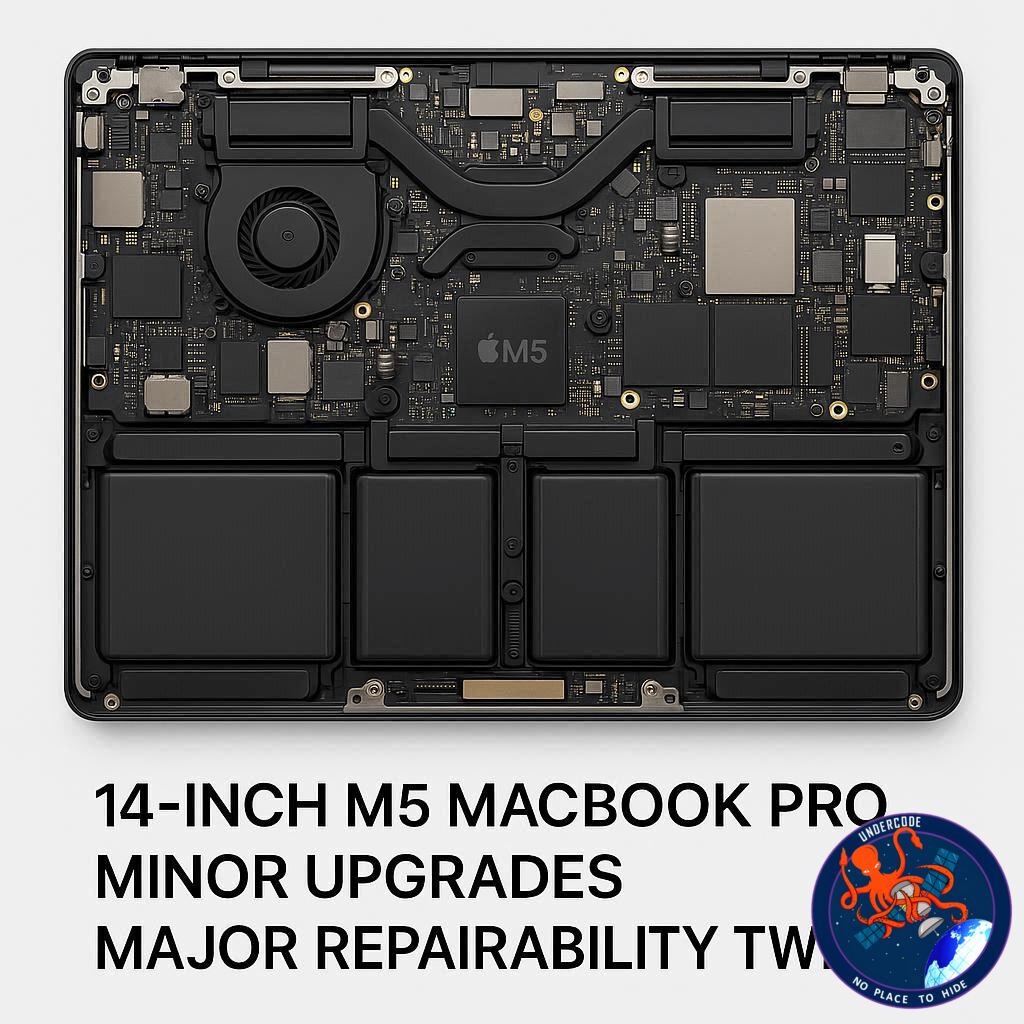
Apple’s latest 14-inch M5 MacBook Pro might not dazzle with massive performance leaps, but it reveals a subtler evolution—this time in repairability. While many users focus on speed, graphics, and battery life, a crucial aspect often overlooked is how easily a device can be repaired or upgraded. Apple’s careful hardware redesign, combined with accessible repair guides, suggests that the company is slowly addressing long-standing criticisms about MacBook Pro maintenance and sustainability.
iFixit Teardown Reveals Repairability Changes
The 14-inch M5 MacBook Pro offers modest hardware improvements over its M4 predecessor. Performance gains are noticeable but not dramatic, reflecting Apple’s incremental progress since its Intel-free era. However, when it comes to repairability, iFixit’s teardown highlights several meaningful tweaks that could influence both longevity and environmental impact.
One key finding is that Apple’s official repair guides have become more practical. For instance, iFixit notes that removing the Battery Management System cable first effectively cuts power, reducing the risk of accidental shorts while servicing internal components. This indicates Apple is making safety a priority for DIY repairs and authorized technicians alike.
Battery replacement, however, remains cumbersome. Swapping the six-cell 72.6 Wh battery—slightly upgraded from the M4’s 72.4 Wh unit—still requires removing multiple internal components, which iFixit criticizes as tedious and environmentally unfriendly. A preinstalled battery in a fixed chassis means that any repair involves nearly complete disassembly, discouraging casual fixes and raising the cost of maintenance.
Another sticking point is the logic board. Almost all major repairs, including component replacements, require removing this central piece. Screen replacement also involves first detaching the antenna bracket, giving access to tiny P2 screws—a tedious process that may frustrate even seasoned repair technicians.
On the brighter side, some improvements simplify minor fixes. Battery pull tabs are now more accessible without dismantling the trackpad, hinting at potential future standalone battery replacements. Furthermore, Apple’s proactive release of repair guides on day one signals increased transparency, helping users anticipate which parts will be available and how repair-friendly the device may be.
Despite these improvements, iFixit awarded the 14-inch M5 MacBook Pro a reparability score of just 4 out of 10. While still far from ideal, the progress shows Apple is inching closer to producing a truly repairable MacBook—something many tech enthusiasts have long hoped for.
What Undercode Say:
Apple’s approach to the M5 MacBook Pro demonstrates a subtle shift in corporate philosophy toward repairability and sustainability. Although the hardware upgrades are minor, the incremental design changes could have larger implications for user experience, repair culture, and environmental responsibility.
For years, MacBooks have been criticized for their closed, soldered designs that make battery or component replacement difficult. By making battery disconnects safer and pull tabs more accessible, Apple is showing early signs of embracing repair-friendly practices without compromising their sleek, integrated aesthetic. This is a delicate balancing act: maintaining the premium unibody design while allowing feasible repair access.
The 4 out of 10 reparability score may seem disappointing, but it represents an upward trajectory. For context, earlier MacBook models often scored below 3, highlighting that Apple is gradually incorporating lessons learned from the repair community and environmental concerns. Even small design tweaks—like improving battery pull tab access—can reduce e-waste significantly over time, especially in corporate or education environments where MacBooks are deployed in large numbers.
From a user perspective, Apple’s provision of official repair guides is a game-changer. Previously, many users relied on third-party guides that risked damage or voiding warranties. Early access to documentation enables both DIY enthusiasts and independent repair shops to plan ahead, increasing the lifespan of devices. It also suggests Apple may expand its support for modular replacement parts in the future.
However, the road to truly sustainable MacBooks remains long. Logic board removal for most repairs, preinstalled batteries, and tiny inaccessible screws still present barriers. Apple’s challenge is to evolve its design philosophy further without compromising the structural integrity, thermal efficiency, or slimness of the device. The M5 MacBook Pro shows promise, but it’s a step in a gradual process rather than a revolution.
In terms of market impact, these subtle design improvements may appeal to tech-savvy professionals and repair-conscious consumers. Companies invested in reducing operational e-waste might prefer this generation over previous models due to marginally easier maintenance, despite the minor performance boosts. The trend may also signal Apple’s acknowledgment of rising global scrutiny over device sustainability and electronic waste regulations.
Ultimately, Apple’s incremental progress reflects a nuanced understanding of modern consumer priorities: performance remains key, but repairability and sustainability are emerging as critical differentiators in high-end laptops. If Apple continues on this trajectory, future MacBooks could combine cutting-edge performance with a genuinely repairable and environmentally conscious design—a win-win scenario for users and the planet.
Fact Checker Results:
✅ Battery capacity slightly increased from 72.4 Wh to 72.6 Wh.
✅ Repair guides were released on day one of the M5 MacBook Pro launch.
❌ Major component replacements still require logic board removal, limiting repairability.
Prediction:
As Apple continues refining the MacBook design, we can expect future models to become more repair-friendly. 🛠️ Standalone battery replacements may become standard, and incremental design changes could pave the way for higher reparability scores. Sustainability could become a key selling point for professional and corporate buyers.
🕵️📝✔️Let’s dive deep and fact‑check.
References:
Reported By: 9to5mac.com
Extra Source Hub (Possible Sources for article):
https://www.twitter.com
Wikipedia
OpenAi & Undercode AI
Image Source:
Unsplash
Undercode AI DI v2
Bing
🔐JOIN OUR CYBER WORLD [ CVE News • HackMonitor • UndercodeNews ]
📢 Follow UndercodeNews & Stay Tuned:
𝕏 formerly Twitter 🐦 | @ Threads | 🔗 Linkedin | 🦋BlueSky | 🐘Mastodon


