
Listen to this Post
Introduction
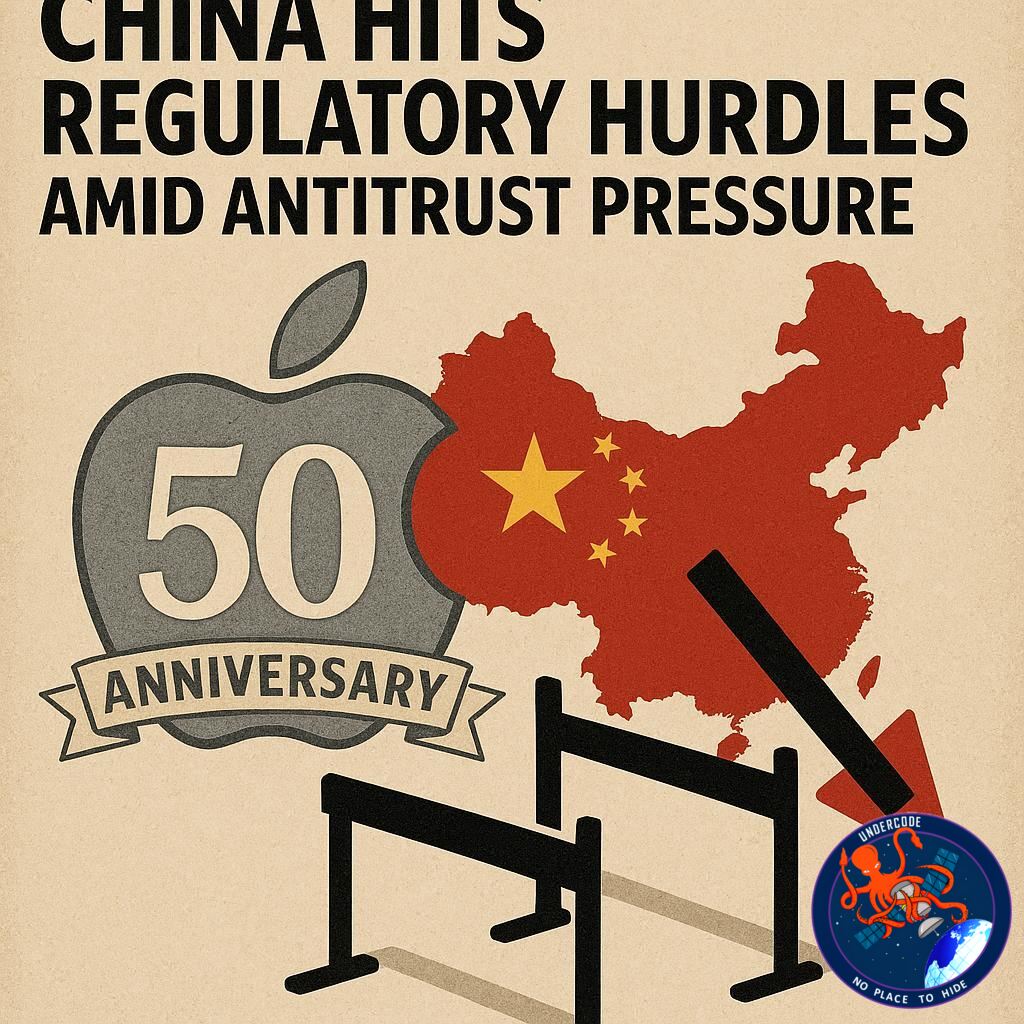
Apple’s milestone 50th anniversary celebrations, which began with fanfare in New York, have now reached China—but the excitement has been tempered by mounting scrutiny from Beijing. CEO Tim Cook attended a celebratory event in Chengdu, yet the atmosphere has been overshadowed by regulatory disputes and ongoing tension with Chinese authorities over the company’s App Store practices. What should have been a global celebration of Apple’s innovation is instead highlighting the tech giant’s delicate balancing act in the world’s largest smartphone market.
Apple Faces Heightened Pressure in China
Apple recently announced a reduction in its standard App Store commission in mainland China from 30% to 25%, a move it said followed discussions with Chinese regulators. While the company likely expected this concession to smooth relations, it appears to have been only the beginning. Bloomberg reports that the ruling Communist Party’s flagship newspaper has called for Apple to further ease App Store restrictions and address “monopolistic” practices, reflecting deepening scrutiny from Beijing.
Regulatory Concerns and Antitrust Issues
China’s concerns mirror challenges Apple has faced in other regions. In Europe, regulators have required Apple to allow third-party app stores and open its iPhone NFC chip to competitors’ payment systems. Chinese authorities may be pushing for similar concessions, particularly regarding third-party payments and external links for digital purchases. The antitrust watchdog is examining Apple’s policies on in-app spending commissions and restrictions on external payment services, signaling potential legal and operational pressures.
Tensions with Local Tech Giants
Apple’s disputes with Tencent Holdings Ltd. and ByteDance Ltd. over iOS App Store policies further complicate the company’s position. These clashes highlight the broader issue of foreign tech companies operating in China, where local competitors and state authorities closely monitor market practices. Apple’s moves to reduce manufacturing dependence on China may also be fueling Beijing’s desire to assert influence during a high-profile anniversary event.
9to5Mac’s Observations
According to 9to5Mac, what was meant to be a celebratory tour has instead emphasized Apple’s uneasy relationship with Chinese regulators. The timing of the criticism could reflect strategic pressure from Beijing, coinciding with Apple’s global milestone to signal that regulatory compliance and cooperation remain non-negotiable for foreign companies operating in China.
What Undercode Says:
Market Implications of Regulatory Pressure
Apple’s encounter with Chinese regulators may signal a longer-term shift in how foreign tech companies must navigate the Chinese market. While a 5% commission reduction seems minor, the broader demands for openness to third-party payment systems and App Store flexibility could significantly impact Apple’s revenue model in China, where digital services represent a growing portion of total earnings.
Comparative Global Trends
The situation in China parallels Apple’s challenges in Europe, suggesting that regulators worldwide are increasingly scrutinizing platform control and app monetization strategies. This trend underscores a fundamental tension between platform owners’ desire to monetize services and governments’ push for competitive fairness.
Strategic Shifts and Risk Management
Apple’s strategic moves to diversify its supply chain away from China, including manufacturing expansion in India and Vietnam, could be partly aimed at mitigating regulatory and geopolitical risk. However, these shifts may provoke short-term friction with Chinese authorities, particularly during high-profile events like anniversary celebrations.
Impact on Competitors and Market Dynamics
Local rivals such as Tencent and ByteDance may gain indirect advantages if Apple is compelled to open its platform further. Increased third-party payment access could erode Apple’s revenue margins while boosting the ecosystem for local competitors. The competitive landscape in China is thus likely to intensify, forcing Apple to balance compliance, profitability, and brand prestige.
Long-Term Revenue Considerations
Apple derives a substantial portion of its App Store revenue from China. Any regulatory concessions that enable alternative payment systems or reduce in-app commission fees could impact the company’s service revenue by hundreds of millions of USD. Careful monitoring and adaptation will be essential to sustain growth while maintaining operational freedom in a highly regulated environment.
Brand Perception and Public Sentiment
Apple’s brand remains strong globally, but tensions in China may subtly affect public perception among consumers sensitive to national and regulatory narratives. The company’s ability to maintain positive relationships with both consumers and regulators will influence long-term market penetration and loyalty in China.
Innovation vs. Compliance
Apple must balance innovation and user experience with compliance requirements. Opening up its App Store ecosystem may bring short-term operational complexity but could enhance user choice and reinforce its commitment to transparency, aligning with global regulatory expectations.
Strategic Partnerships and Negotiation
Ongoing dialogue with regulators, local tech partners, and policymakers will be critical. Apple’s ability to negotiate concessions without compromising core business principles will define the company’s trajectory in China’s highly competitive tech landscape.
Conclusion of Analysis
Apple’s 50th anniversary celebration in China has inadvertently highlighted the delicate balance between corporate growth, regulatory compliance, and global market strategy. How the company navigates these challenges will not only shape its fortunes in China but may also set a precedent for its operations in other markets facing regulatory scrutiny.
🔍 Fact Checker Results
Apple indeed reduced its App Store commission in China from 30% to 25% ✅
Bloomberg reported pressure from Chinese authorities on Apple’s App Store practices ✅
Apple has previously faced European antitrust actions requiring NFC access and third-party app store allowances ✅
📊 Prediction
Apple is likely to gradually comply with Chinese demands for third-party payments and external links to avoid more severe regulatory consequences. However, revenue adjustments from App Store changes could be offset by continued expansion in other markets. The next 12–18 months may see Apple negotiating further concessions while strategically accelerating its supply chain diversification outside China to minimize geopolitical and regulatory risks.
If you want, I can also create a visually appealing infographic summarizing Apple’s China regulatory challenges and potential market impact.
🕵️📝✔️Let’s dive deep and fact‑check.
References:
Reported By: 9to5mac.com
Extra Source Hub (Possible Sources for article):
https://www.reddit.com/r/AskReddit
Wikipedia
OpenAi & Undercode AI
Image Source:
Unsplash
Undercode AI DI v2
Bing
🔐JOIN OUR CYBER WORLD [ CVE News • HackMonitor • UndercodeNews ]
📢 Follow UndercodeNews & Stay Tuned:
𝕏 formerly Twitter 🐦 | @ Threads | 🔗 Linkedin | 🦋BlueSky | 🐘Mastodon


