
Listen to this Post
🎯 Introduction
The global technology sector is entering a tense new chapter. What was once unchallenged optimism around artificial intelligence has begun to fracture, as investors grow uneasy about the sheer scale of spending required to stay competitive. While most Big Tech giants are pouring unprecedented sums into AI infrastructure, one company is quietly standing apart. Apple, long criticized for lagging behind in artificial intelligence, is now emerging as a surprising winner in a market increasingly allergic to excess. This shift reveals a deeper story about capital discipline, investor psychology, and the evolving definition of leadership in the AI era.
📌 Market Turmoil Driven by AI Spending Anxiety
Over the past week, technology stocks endured heavy selling pressure as investor fears around runaway AI investments intensified. Microsoft, Nvidia, Oracle, Meta, Amazon, and Google-parent Alphabet all saw their share prices slide sharply. The common trigger was not weak earnings or slowing demand, but alarm over ballooning capital expenditures tied to artificial intelligence. In just the fourth quarter, Amazon, Alphabet, Microsoft, and Meta collectively reported nearly $120 billion in capital spending. According to the Financial Times, total AI-related Capex from major tech firms could surpass $660 billion in 2026, a figure exceeding the annual GDP of countries such as Singapore and Israel.
The scale of this spending sent shockwaves through the market. More than $1 trillion in market value was wiped out across Big Tech stocks, with Amazon suffering the steepest losses. Investors began questioning whether the AI arms race is becoming financially unsustainable, particularly as monetization remains uncertain and timelines for returns remain vague.
📌 Apple’s Unusual Position Amid AI Skepticism
Amid this widespread sell-off, Apple stood out as a clear anomaly. Until recently, the company had been heavily criticized for its perceived failure to articulate a compelling AI strategy. Some commentators even went so far as to question CEO Tim Cook’s leadership. Apple’s stock reflected this skepticism, underperforming peers throughout much of 2025. While the broader S&P 500 gained roughly 16%, Apple shares rose only about 8%, reinforcing its reputation as an artificial intelligence laggard.
Criticism intensified when Apple announced delays to major Siri upgrades until 2026 and unveiled Apple Intelligence features that received mixed reviews. Further concerns emerged after Apple confirmed it would rely on external partners, particularly Google, rather than building its own end-to-end AI infrastructure. Analysts warned that outsourcing AI capabilities could weaken Apple’s long-term strategic control.
📌 A Sudden Shift in Investor Sentiment
Despite months of doubt, early 2026 has delivered a dramatic reversal. Apple was the only member of the so-called “Magnificent Seven” to close last week in positive territory, with shares rising more than 5%. The rally allowed Apple to reclaim its position as the world’s second-largest company by market capitalization, a title it had briefly lost to Alphabet.
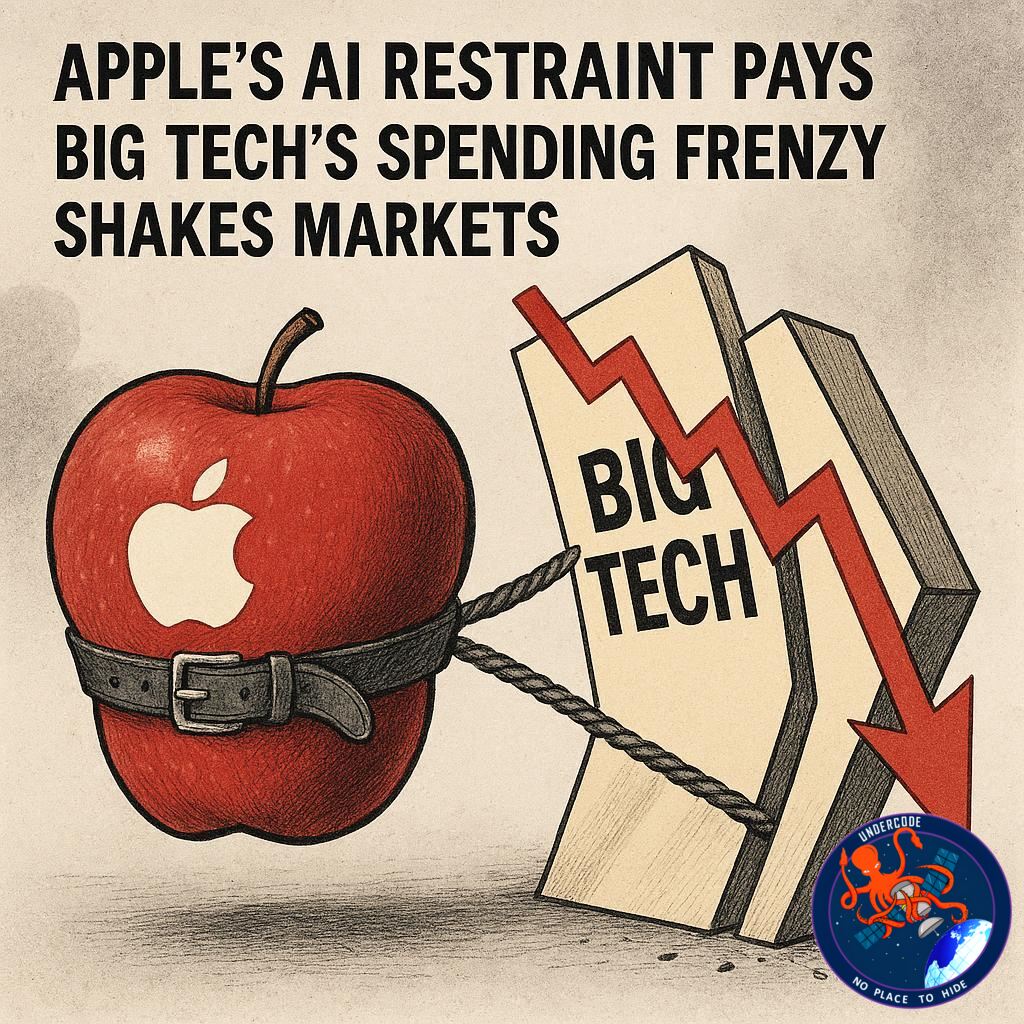
The catalyst behind this shift is Apple’s restrained approach to AI investment. At a moment when investors are scrutinizing every dollar of Big Tech spending, Apple’s comparatively modest capital expenditure plans are being reinterpreted as strategic discipline rather than weakness. The company is expected to spend approximately $13 billion on Capex in 2026, a fraction of what peers are committing.
📌 Apple as a Safe Haven Within Tech
Market participants are increasingly viewing Apple as a defensive play within the technology sector. As capital rotates out of heavily leveraged software and cloud names, Apple’s hybrid model of hardware, software, and services is regaining appeal. According to Andrew Graham of Jackson Square Capital, Apple represents a rare case where the combined ecosystem may be worth more than the sum of its individual parts. This perception is helping stabilize Apple’s stock while others struggle under the weight of investor doubt.
📌 The Strategic Logic Behind the Google Partnership
Apple’s AI partnership with Google marks a decisive shift toward collaboration rather than competition. Under the agreement, Apple will use Google’s Gemini AI technology as the backbone for its Apple Foundation Models. Gemini and Google Cloud infrastructure are expected to power future Apple Intelligence features, including a more personalized Siri scheduled for release later this year.
From a financial perspective, the strategy minimizes risk. Rather than investing tens of billions of dollars into building proprietary data centers and large language models, Apple is leveraging Google’s already-mature AI ecosystem. Industry observers note that Gemini is widely regarded as one of the most advanced AI platforms available today, giving Apple access to cutting-edge capabilities without the burden of massive upfront costs.
🧠 What Undercode Say:
Apple’s current momentum is less about sudden innovation and more about timing, psychology, and capital efficiency. For years, the market rewarded aggressive spending, believing scale alone would guarantee AI dominance. That assumption is now cracking. Investors are beginning to realize that AI leadership without financial discipline can erode shareholder value faster than it creates it.
Apple’s restraint is not accidental. The company has always favored vertical integration, user privacy, and ecosystem control over raw technological spectacle. By delaying full-scale AI deployment and relying on partnerships, Apple avoided locking itself into an expensive infrastructure cycle at the peak of hype. Now, as peers struggle to justify trillion-dollar valuations alongside runaway Capex, Apple’s balance sheet looks unusually clean.
The Google partnership also reflects pragmatic realism. Building competitive AI models requires not only capital, but time, energy, and tolerance for failure. Apple chose to skip the most expensive learning curve and instead focus on product integration, user experience, and monetization. This allows the company to deploy AI features where they matter most, inside devices and services used daily by hundreds of millions of customers.
Critically, Apple’s strategy shifts AI from a standalone profit center into an ecosystem enhancer. AI becomes a feature that strengthens hardware sales, increases services engagement, and locks users deeper into the Apple environment. This is fundamentally different from cloud-first AI models that rely on enterprise adoption and unpredictable usage patterns.
Investor sentiment is responding accordingly. In an environment where fear has replaced optimism, Apple’s predictability, cash flow stability, and spending discipline feel reassuring. The company is no longer being punished for moving slowly. Instead, it is being rewarded for not moving recklessly.
This does not mean Apple will dominate AI innovation in a traditional sense. Rather, it suggests Apple may dominate AI monetization, which ultimately matters more to markets. The current rally reflects confidence that Apple can absorb AI benefits without absorbing AI excess.
🔍 Fact Checker Results
✅ Big Tech collectively reported AI-related Capex exceeding $120 billion in Q4, with projections above $660 billion for 2026.
✅ Apple’s expected Capex of around $13 billion in 2026 is significantly lower than peers, supporting claims of spending discipline.
❌ Assertions that Apple has fully solved its AI lag remain premature, as key Siri upgrades are still delayed until 2026.
📊 Prediction
📈 Apple is likely to continue benefiting from capital rotation within the tech sector as investors favor disciplined balance sheets.
🤝 The Google Gemini partnership will accelerate Apple Intelligence adoption without destabilizing margins.
⚠️ If AI monetization improves faster than expected across Big Tech, Apple may face renewed pressure to increase spending.
▶️ Related Video (84% Match):
🕵️📝✔️Let’s dive deep and fact‑check.
References:
Reported By: timesofindia.indiatimes.com
Extra Source Hub (Possible Sources for article):
https://stackoverflow.com
Wikipedia
OpenAi & Undercode AI
Image Source:
Unsplash
Undercode AI DI v2
Bing
🔐JOIN OUR CYBER WORLD [ CVE News • HackMonitor • UndercodeNews ]
📢 Follow UndercodeNews & Stay Tuned:
𝕏 formerly Twitter 🐦 | @ Threads | 🔗 Linkedin | 🦋BlueSky | 🐘Mastodon


