
Listen to this Post
Introduction
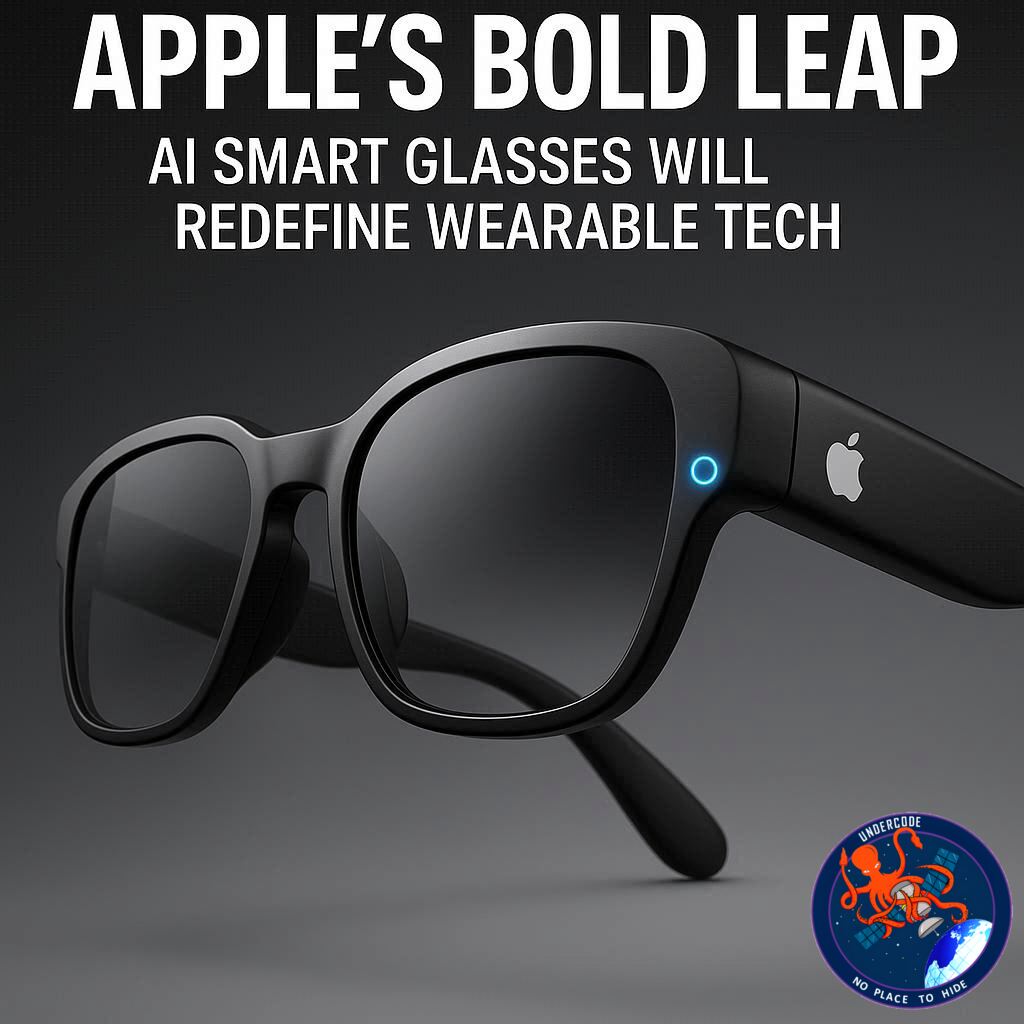
The world of wearable technology is heating up again, and Apple is ready to make its mark. According to Bloomberg, Apple is preparing to launch its own AI-powered smart glasses next year, aiming to challenge early movers like Meta’s Ray-Ban collaboration. While Apple arrives late to the category, history shows the company often thrives as a “fast follower,” refining existing ideas into market-shifting innovations. From the iPod to the iPhone and the Apple Watch, Apple has repeatedly redefined industries by prioritizing seamless integration, premium design, and user-focused experiences. Could these AI smart glasses be Apple’s next big revolution? Let’s break down the story.
the Report
Apple’s upcoming AI smart glasses will include cameras, microphones, and speakers, much like Meta’s Ray-Ban glasses. The device is expected to support Siri, handle phone calls, play music, translate conversations in real time, and provide navigation. Apple is also reportedly developing custom silicon to power these wearables, ensuring smoother performance and more efficient AI processing.
Meta’s Ray-Ban smart glasses, already available for around \$299, impressed early adopters by enabling quick photos, hands-free videos, and discreet headphone use. For cyclists and multitaskers, the open-ear audio experience is a huge plus. Still, the product is not without flaws: camera quality is average, AI personalization is limited, and iOS users can’t fully access notification features.
Apple, on the other hand, has the potential to close these gaps with three major value-adds:
Deep Siri integration with personal context, offering a truly smart assistant.
Higher-quality cameras to capture more natural and detailed photos/videos.
Seamless notification management, syncing with Focus mode to filter relevant alerts.
These features could make Apple’s version far more compelling than Meta’s, especially for iPhone users. Pricing is still unknown, but expectations are high that Apple will deliver a premium yet functional device.
What Undercode Say:
Apple’s timing may look late, but strategically, it might be perfect. The market for AR and AI wearables is still in its infancy, meaning no single brand has fully captured mainstream adoption. By entering now, Apple can study the weaknesses of competitors and push forward with a polished product that feels less like a gimmick and more like a necessity.
From a technological perspective, Apple’s custom silicon is the secret weapon. Unlike Meta, which relies on off-the-shelf components and external partnerships, Apple can fine-tune hardware and software integration. This advantage could make tasks like real-time translation and turn-by-turn navigation far more fluid than on existing devices.
From a consumer behavior angle, Apple users are already deeply locked into the ecosystem. The seamless handoff between iPhone, AirPods, Apple Watch, and Mac has conditioned users to value integration. If the glasses naturally extend this ecosystem—say, by reading urgent notifications while biking, or recording moments without pulling out a phone—they could quickly gain traction.
Design and trust will also be Apple’s strengths. Smart glasses face stigma because of privacy concerns (cameras on your face make others uneasy). Apple’s reputation for balancing privacy and security may help calm these fears, especially if it builds in clear indicators when cameras are active.
The market battle ahead will be fascinating. Meta is already planning more advanced AR glasses at around \$800, aiming to climb the tech ladder. But Apple has the branding, customer loyalty, and design expertise to overshadow even earlier players. For consumers, this competition could drive rapid improvements in wearable AI.
If history repeats itself, Apple won’t just release “another gadget”—it will redefine expectations. Much like AirPods normalized wireless earbuds, Apple Glasses might normalize AI-assisted daily life, where your assistant is always just a glance or a whisper away.
Fact Checker Results ✅❌
✅ Apple is indeed developing AI-powered smart glasses, confirmed by Bloomberg reports.
❌ No official pricing or release date has been confirmed yet—speculation suggests 2025.
✅ Meta’s Ray-Ban glasses exist and are priced around \$299, offering camera, audio, and notification features.
Prediction 🔮
Apple’s AI smart glasses will likely become the gateway product for mass-market AR adoption. If they launch with strong Siri integration, premium design, and privacy safeguards, they could surpass Meta’s offerings quickly. Expect Apple to market them not just as a tech toy, but as an everyday lifestyle tool—transforming navigation, communication, and media capture. By 2027, Apple’s glasses could easily rival the Apple Watch in popularity, creating a new billion-dollar category in wearables.
🕵️📝✔️Let’s dive deep and fact‑check.
References:
Reported By: 9to5mac.com
Extra Source Hub:
https://www.medium.com
Wikipedia
OpenAi & Undercode AI
Image Source:
Unsplash
Undercode AI DI v2
🔐JOIN OUR CYBER WORLD [ CVE News • HackMonitor • UndercodeNews ]
📢 Follow UndercodeNews & Stay Tuned:
𝕏 formerly Twitter 🐦 | @ Threads | 🔗 Linkedin | 🦋BlueSky | 🐘Mastodon


