
Listen to this Post
Introduction
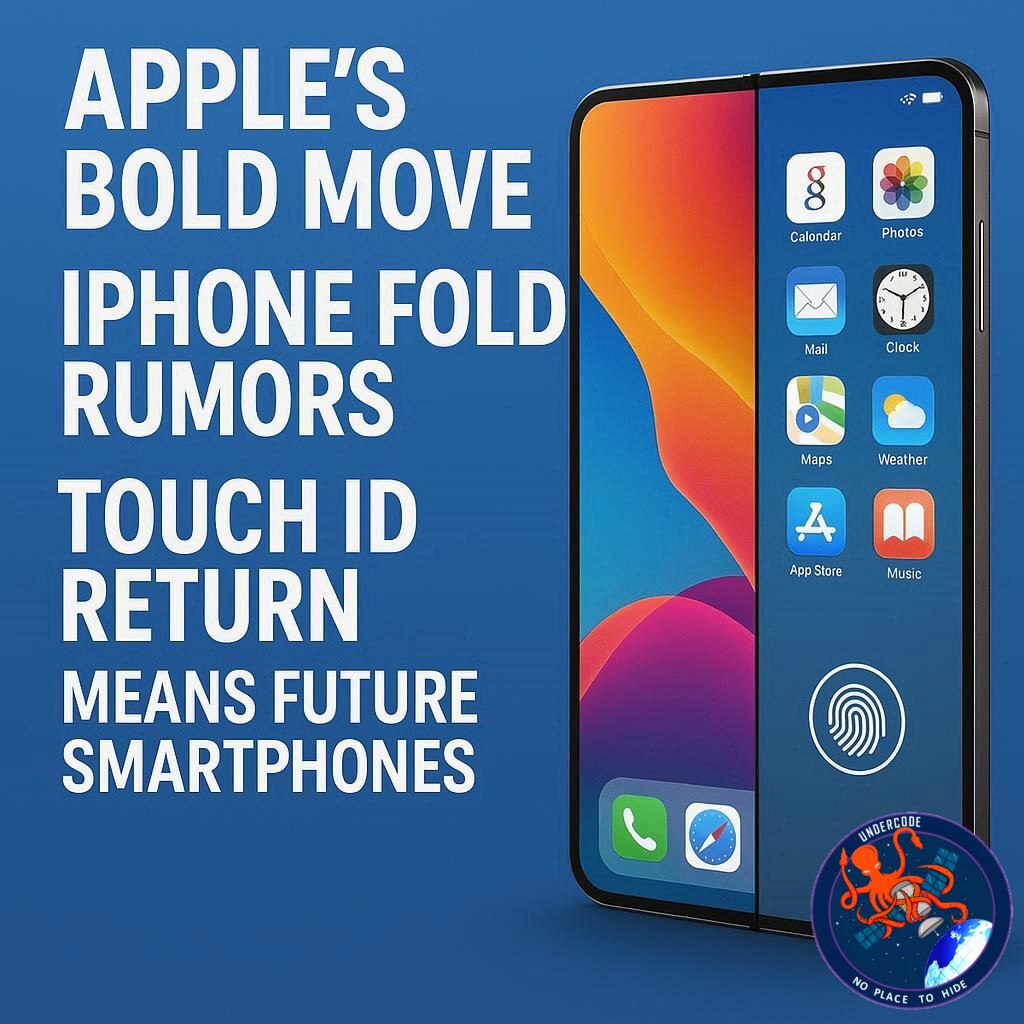
Apple’s long-awaited entry into the foldable smartphone market has sparked massive speculation among fans and tech experts alike. With Samsung dominating the foldable arena for years, Apple has been quietly refining its own vision of what a foldable iPhone should be. Analyst Ming-Chi Kuo has once again shed light on the company’s possible strategy—hinting at a surprising return of Touch ID on the side button, instead of relying on Face ID. Could this be a game-changing decision or a step backward? Let’s break down what’s been reported so far, the reasons behind Apple’s choices, and what the future might hold for the iPhone Fold.
The Story So Far
Renowned Apple analyst Ming-Chi Kuo first suggested in March that the iPhone Fold would feature Touch ID integrated into the side button rather than Face ID. Recently, he has doubled down on this prediction, dismissing rumors of an in-display ultrasonic fingerprint scanner.
The iPhone Fold, expected to launch next year, is rumored to cost around \$2,000, making it Apple’s premium flagship. The device is said to feature a 5.5-inch external display and a 7.8-inch internal screen when unfolded—effectively merging the functions of an iPhone and an iPad mini into a single, foldable device.
Apple’s delay in releasing a foldable smartphone reflects its “best-not-first” philosophy. Unlike Samsung, which launched its first foldable device seven years ago, Apple waited until the crease in folding displays could be virtually eliminated. Samsung reportedly perfected this for Apple earlier this year, clearing the way for development.
The wisdom behind Apple’s caution is clear: Samsung’s first Galaxy Fold was plagued by durability issues, forcing recalls and redesigns. Even in later versions, foldables remained vulnerable to dust and screen fragility. Apple seems determined to avoid such embarrassing setbacks by ensuring near-perfect durability before launch.
Why Touch ID Instead of Face ID?
While Face ID has become a hallmark of modern iPhones, it may not suit the iPhone Fold’s design. The TrueDepth camera system required for Face ID is too thick compared to the rumored 4.5mm thin profile of the unfolded iPhone Fold.
Moreover, implementing Face ID would mean installing duplicate sensors on both the internal and external screens—an expensive solution. By contrast, a single side-button Touch ID sensor is cost-effective, elegant, and compatible with both folded and unfolded modes.
Patent Possibilities
Apple does hold patents for under-display biometric authentication, combining Touch ID and Face ID. However, Kuo believes this technology is unlikely to be ready for the first-generation iPhone Fold. Instead, Luxshare ICT is expected to supply the Touch ID modules.
Camera Setup
Reports suggest that the iPhone Fold will include dual selfie cameras—one for the outer screen and one for the inner screen—along with two rear cameras usable in both folded and unfolded modes.
Highlighted Accessories
Samsung Galaxy Fold 7
Official Apple Store on Amazon
Anker 511 Nano Pro ultra-compact iPhone charger
Spigen MagFit case for iPhone 16e (adds MagSafe support)
Apple MagSafe Charger (25w power for iPhone 16 models)
Apple 30W charger
What Undercode Say:
Apple’s rumored design decisions for the iPhone Fold reveal more than just hardware strategy—they show Apple’s mindset about entering new markets.
First, the Touch ID revival signals a pragmatic approach. Apple isn’t abandoning Face ID but recognizes the unique challenges of a foldable design. Rather than forcing Face ID into an impractical setup, Apple opts for a proven, slimmer, and cost-efficient alternative.
Second, the delayed entry into foldables underscores Apple’s philosophy: let competitors test the waters, stumble, and expose flaws. Only then does Apple step in with a refined product that avoids those pitfalls. This method worked with MP3 players, smartphones, tablets, and even wearables.
Third, the price point near \$2,000 suggests Apple is targeting early adopters and high-end users who demand premium innovation. It’s a luxury positioning move, placing the iPhone Fold as a hybrid between a phone and a mini-tablet.
From an industry perspective, the iPhone Fold could reshape how people use mobile devices. Instead of carrying both an iPhone and an iPad, users could have one device that transforms seamlessly between roles. This aligns with Apple’s ecosystem strategy, encouraging deeper integration with iCloud, Apple Pencil (if supported), and future software optimizations.
The return of Touch ID also reflects broader market demands. In some regions, fingerprint authentication is still preferred over facial recognition due to convenience, privacy, and mask-related challenges. Apple adopting it in the Fold reinforces its versatility.
The move also raises competitive pressure. Samsung may face renewed challenges if Apple delivers a foldable with superior durability, smoother software, and a crease-free display. Unlike Samsung’s experimentation, Apple’s approach is to refine and dominate once it enters.
If successful, the iPhone Fold could start a new era of hybrid devices—possibly leading to foldable MacBooks or even dual-screen iPads in the future. Apple’s patience, once again, might turn into its strongest weapon.
✅ Fact Checker Results
Kuo’s track record for Apple predictions is strong, with many of his reports proving accurate. His claims about Touch ID on the side button are consistent with technical and cost considerations. ❌ Rumors of under-display Face ID remain unlikely for the first generation.
🔮 Prediction
If Apple launches the iPhone Fold in 2026, it will not only dominate the premium foldable segment but also push competitors to rethink durability and usability. Expect Apple to refine this design in future models, possibly introducing under-display biometrics once the technology matures. The Fold could become the foundation for Apple’s next wave of revolutionary devices.
🕵️📝✔️Let’s dive deep and fact‑check.
References:
Reported By: 9to5mac.com
Extra Source Hub:
https://www.github.com
Wikipedia
OpenAi & Undercode AI
Image Source:
Unsplash
Undercode AI DI v2
🔐JOIN OUR CYBER WORLD [ CVE News • HackMonitor • UndercodeNews ]
📢 Follow UndercodeNews & Stay Tuned:
𝕏 formerly Twitter 🐦 | @ Threads | 🔗 Linkedin | 🦋BlueSky | 🐘Mastodon


