
Listen to this Post
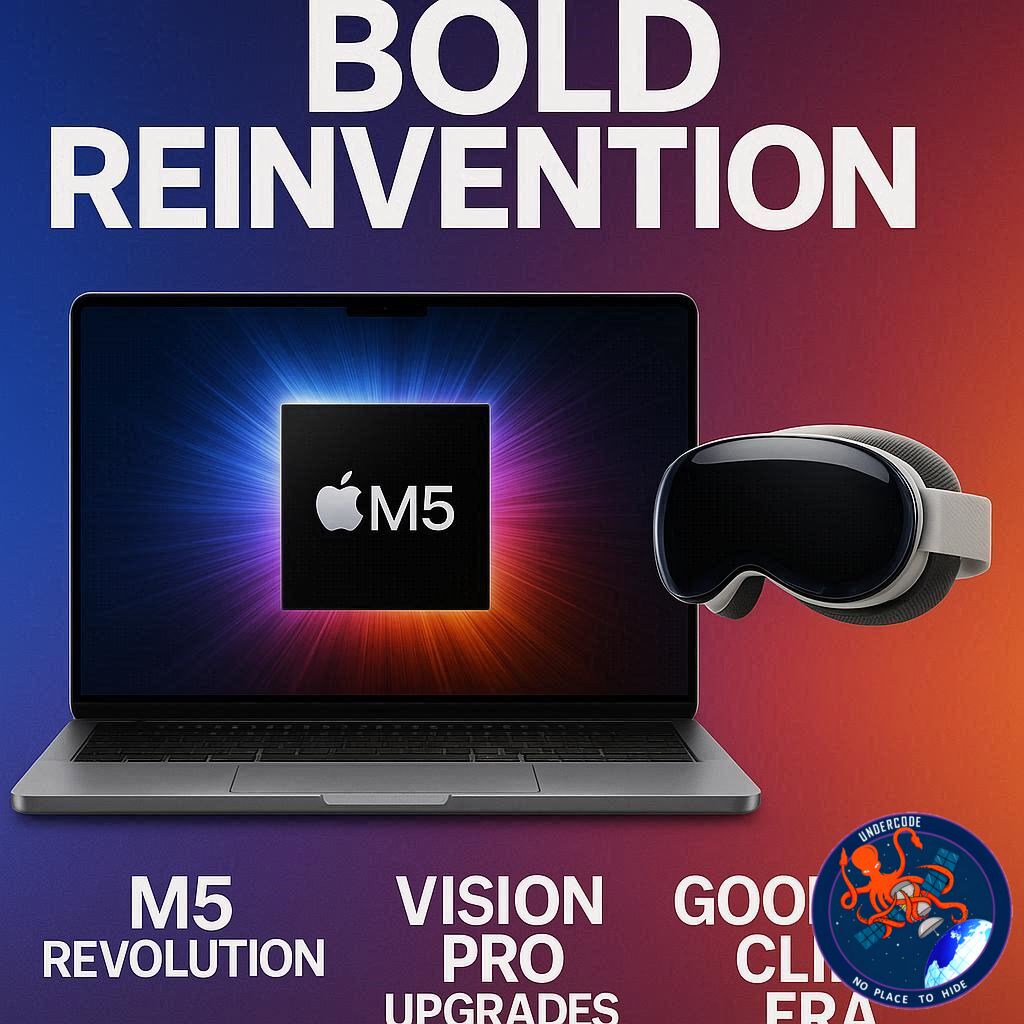
Apple’s latest lineup has landed — and it’s sparking both excitement and controversy. The company officially introduced the new M5-powered iPad Pro, MacBook Pro, and Vision Pro, marking another leap forward in its hardware evolution. But amid the buzz of innovation, Apple also dropped a few surprises: the quiet discontinuation of its quirky Clips app, a major rebranding of Apple TV+, and an intriguing tease of live immersive NBA content for Vision Pro.
For longtime Apple followers, this was more than a product drop — it was a statement of direction. The tech giant is pushing hard into the next phase of spatial computing, blending entertainment, productivity, and immersive media into one ecosystem. And while some fans cheered the performance upgrades of the M5 chip, others couldn’t help but wonder: is Apple’s focus shifting away from fun, lightweight creativity toward heavier, AI-driven and immersive experiences?
The New Era of M5 Devices
The new M5 chip, the star of the show, represents Apple’s most advanced silicon yet — offering blistering performance, energy efficiency, and enhanced AI processing capabilities. The M5 iPad Pro introduces a sleek redesign, powered by the C1X modem for faster connectivity, and positions itself as the ultimate professional tablet. The MacBook Pro gets its own M5 version, focusing on creative professionals and developers who demand speed without compromise.
But perhaps the most ambitious move comes with the Vision Pro’s M5 upgrade. Apple’s spatial computer — often seen as the future of personal computing — now comes equipped with new hardware features including a Dual Knit Band for improved comfort and expanded app compatibility, alongside partnerships that tease a future where live sports and immersive entertainment merge. The mention of live Lakers games in immersive mode signals Apple’s intent to own the next generation of sports viewing.
Saying Goodbye to Clips and Hello to “Apple TV”
In a quieter but telling shift, Apple confirmed it’s killing off the Clips app — its experimental short-form video platform that never quite caught on. While Clips had a small but loyal fanbase, its removal reflects Apple’s pivot toward long-term, cross-device services rather than standalone creative tools.
Meanwhile, the company has renamed Apple TV+ to simply “Apple TV”, a move that has stirred debate. Some see it as a simplification for brand cohesion, while others argue it muddies the distinction between Apple’s streaming service and the physical Apple TV hardware. This kind of rebranding could hint at a future where Apple consolidates entertainment and hardware under one unified identity — something competitors like Amazon have been attempting with Prime and Fire TV.
Teasing the Future: Apple’s Smart Display and AI-Driven Homes
During Happy Hour Plus, host Benjamin Mayo expressed growing excitement over Apple’s rumored smart display, reportedly in development according to insider Mark Gurman. This new device — positioned as a hybrid between a HomePod and an iPad — could reshape Apple’s smart home strategy. Instead of siloed products, Apple appears to be merging intelligence, design, and connectivity into a cohesive ecosystem where every device works as an extension of the user’s digital environment.
Such a display could serve as the command center for Apple’s HomeKit ecosystem, powered by AI-driven context awareness. Think of it as Siri with a face, capable of managing lights, media, and even personal health data through seamless integration. It’s Apple’s play to bring a human touch to smart technology — a contrast to the purely data-driven interfaces seen elsewhere.
What Undercode Say:
Apple’s October announcements reflect a strategic tightening of its ecosystem. Instead of introducing radically new products, Apple is refining, merging, and consolidating — a sign of maturity in its product philosophy. The discontinuation of Clips isn’t just about dropping a failing app; it’s about clearing the stage for Apple’s next creative playground: immersive and AI-assisted content creation.
The M5 chip represents Apple’s long game. Each silicon generation strengthens its independence from external suppliers like Intel or Qualcomm, reinforcing Apple’s identity as a vertically integrated powerhouse. This control allows it to pivot faster, unify performance across devices, and deepen the user experience without external constraints.
The Vision Pro upgrades and the teased immersive Lakers experience highlight how Apple is betting big on spatial media — not just as a tech novelty, but as a new storytelling platform. The company is crafting an ecosystem where the line between content consumption and participation blurs. Watching a basketball game in a 360-degree environment isn’t just entertainment; it’s Apple redefining “presence.”
The Apple TV rebrand, while controversial, may be Apple’s attempt to streamline its media identity. The future likely involves tighter integration of all media content — from streaming shows to sports and gaming — under the Apple TV umbrella, accessible across devices with one universal design language.
And the rumored smart display could complete the circle. Imagine a world where your smart display knows your schedule, adjusts your lighting for video calls, plays your favorite playlist when you walk in, and displays live sports stats when the Lakers are playing — all powered by Apple’s machine learning backbone.
Yet, there’s also a cautionary undertone here. As Apple leans into more immersive and AI-driven experiences, it risks alienating the casual users who once loved its simplicity. The brand that championed “it just works” is now entering a realm where the learning curve might steepen. But that’s also what makes this phase exciting: Apple isn’t playing it safe anymore. It’s reinventing itself again, this time for the spatial age.
Fact Checker Results
✅ Apple officially discontinued the Clips app as confirmed by 9to5Mac.
✅ The M5 chip was unveiled for iPad Pro, MacBook Pro, and Vision Pro.
❌ Apple has not officially confirmed the release date or specs for the rumored smart display.
Prediction
🔮 Expect Apple to unveil its AI-powered smart display in early 2026, positioning it as the central hub of the home. The Vision Pro will expand its role in sports and entertainment, potentially featuring partnerships beyond the NBA. Meanwhile, Apple’s media branding will continue to consolidate, likely merging music, TV, and sports streaming into one immersive experience — an “Apple Universe” that lives across every screen you own.
🕵️📝✔️Let’s dive deep and fact‑check.
References:
Reported By: 9to5mac.com
Extra Source Hub (Possible Sources for article):
https://www.twitter.com
Wikipedia
OpenAi & Undercode AI
Image Source:
Unsplash
Undercode AI DI v2
Bing
🔐JOIN OUR CYBER WORLD [ CVE News • HackMonitor • UndercodeNews ]
📢 Follow UndercodeNews & Stay Tuned:
𝕏 formerly Twitter 🐦 | @ Threads | 🔗 Linkedin | 🦋BlueSky | 🐘Mastodon


