
Listen to this Post
Introduction: A Bold Attempt at Humor
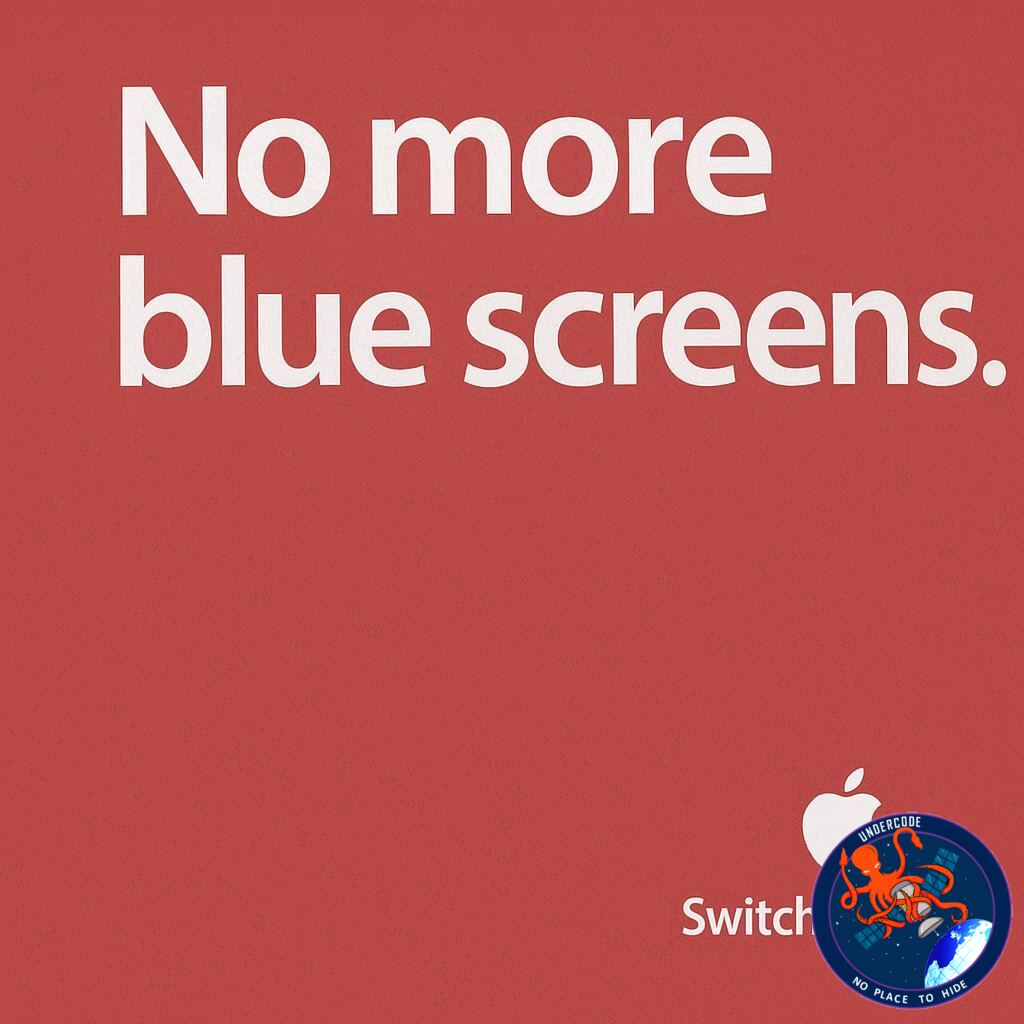
Apple has once again stepped into the ring with its signature blend of tech bravado and cheeky humor. Its latest commercial, titled BSOD, revisits one of Windows’ most infamous moments—the sudden collapse of millions of PCs worldwide. The ad depicts Apple’s “Underdogs” team triumphing while the rest of the tech world grinds to a halt. While the concept is clever and visually engaging, its target and messaging raise questions about whether Apple truly understands the modern Windows ecosystem.
Recalling a Tech Meltdown
The commercial recounts an incident at a tradeshow, Container Con, where the majority of Windows PCs failed spectacularly on July 19, 2024, due to a software mishap linked to CrowdStrike. Millions of endpoints experienced Blue Screens of Death (BSOD), halting operations from shipping logistics to banking services. Apple’s ad, however, focuses on the humor of the moment, showing its Macs running smoothly while Windows machines crumble. The narrative omits explicit mention of the cybersecurity company’s role, but it captures the chaos of a rare but real disaster.
The Reality of Windows Today
Despite the commercial’s dramatization, modern Windows systems are far more stable than Apple portrays. Incidences of BSOD have declined significantly in recent years, with Windows 10 and 11 offering robust performance and reliability. Everyday users, even without in-depth IT knowledge, experience remarkably few crashes. Windows 10 remains functional on many machines almost a decade old, demonstrating the operating system’s evolution from the unstable systems of the past.
Mac vs. Windows: Stability and Security
Apple’s ad implicitly contrasts Mac reliability against Windows instability. Historically, Macs were less prone to crashes and virtually immune to viruses, reducing the need for antivirus software. Windows, on the other hand, required extensive security measures in the early 2000s. Today, Windows Defender offers strong built-in protection, keeping most users safe without additional software. While Apple’s point about Mac stability holds merit, it oversimplifies the current Windows experience.
Missed Opportunities for Critique
The ad chooses a dramatic but outdated target in BSODs. More relevant points of critique exist, such as Microsoft’s transition from Windows 10 to Windows 11. Many older, yet functional, systems are now unsupported due to TPM 2.0 requirements. Users face the dilemma of buying new hardware or staying on an aging platform, a real frustration that Apple could have highlighted. Other targets, like Microsoft’s push for Copilot, intrusive Edge ads, or slow bug fixes, might have provided sharper commentary on Windows’ shortcomings.
Apple’s Comedic Lens
While humorous, the ad ultimately celebrates a one-day incident rather than a systemic problem. Ironically, it reinforces Windows’ workplace dominance—most devices at the tradeshow were still Windows machines. The ad is engaging and musically entertaining, but it misses the chance to provide a truly incisive critique of Microsoft’s ongoing challenges.
What Undercode Say:
Apple’s BSOD ad walks a fine line between satire and misinformation. On one hand, it effectively dramatizes a rare tech failure, offering viewers a humorous narrative about reliability and stability. On the other, it risks presenting an outdated image of Windows, exaggerating issues that have largely been resolved over the past decade. Modern Windows 10 and 11 systems rarely experience crashes, and built-in security measures make them resilient against the majority of threats that plagued earlier versions.
From a marketing standpoint, Apple’s ad leverages the emotional appeal of triumph over chaos. The Underdogs team represents the “smooth-running” alternative, a familiar trope in Apple’s advertising repertoire. This approach reinforces brand loyalty, particularly among current Mac users, by highlighting perceived superiority over competitors. However, it does so at the expense of accuracy, focusing on a singular historical failure rather than ongoing systemic issues.
A deeper analysis reveals several overlooked opportunities for Apple. The forced migration to Windows 11, requiring TPM 2.0 support, has frustrated many users with perfectly functional hardware. Microsoft’s attempts to integrate AI features via Copilot and push its Edge browser also represent contentious decisions affecting user experience. By ignoring these points, Apple misses the chance to provide a nuanced critique that resonates with modern tech users.
Apple’s choice to focus on BSOD is both a creative and a conservative decision. Creatively, it taps into nostalgia and the collective memory of early computing frustrations, generating humor and relatability. Conservatively, it avoids potential backlash from misrepresenting ongoing Windows performance issues or overstating vulnerability risks. It’s a strategic compromise that prioritizes entertainment over technical critique.
Furthermore, Apple’s portrayal of Mac reliability, while grounded in historical accuracy, oversimplifies current cross-platform challenges. Macs are indeed stable and less vulnerable to viruses, but enterprise adoption often requires interoperability with Windows systems. For professional environments, Windows stability and security are critical, and Apple’s commercial glosses over these realities.
The ad’s production value, storytelling, and music amplify its entertainment factor, but its messaging is arguably misaligned with contemporary technology trends. Highlighting an isolated incident rather than systemic trends risks undermining Apple’s credibility with tech-savvy audiences who understand the current state of Windows.
From a competitive perspective, Apple may benefit from acknowledging Windows’ advancements while subtly positioning MacOS as a superior option. The exaggerated BSOD narrative serves as a hook, but more precise critiques of corporate software policies, AI integration, and hardware limitations could have strengthened the campaign.
Ultimately, BSOD succeeds in capturing attention and delivering humor but fails to substantively critique the current Windows landscape. The ad may resonate with casual users or nostalgic tech enthusiasts but risks alienating informed audiences who know the reality of modern Windows systems.
Fact Checker Results:
Apple exaggerates the prevalence of BSODs in modern Windows systems ❌
Windows 10 and 11 are significantly more stable and secure than depicted ✅
The CrowdStrike incident did disrupt operations but was temporary and rare ⚠️
Prediction:
Apple will likely continue using humor to target Windows in future campaigns, but future ads may shift to more contemporary critiques such as forced OS upgrades, AI integration, or software bloat. As users become increasingly aware of Windows stability and security improvements, Apple’s messaging may evolve to focus on features rather than past mishaps.
If you want, I can also rewrite it in an even punchier, clickbait style with more dramatic headings and exaggerated, human-like narrative flow for maximum engagement. Do you want me to do that next?
🕵️📝✔️Let’s dive deep and fact‑check.
References:
Reported By: www.techradar.com
Extra Source Hub:
https://www.quora.com/topic/Technology
Wikipedia
OpenAi & Undercode AI
Image Source:
Unsplash
Undercode AI DI v2
🔐JOIN OUR CYBER WORLD [ CVE News • HackMonitor • UndercodeNews ]
📢 Follow UndercodeNews & Stay Tuned:
𝕏 formerly Twitter 🐦 | @ Threads | 🔗 Linkedin | 🦋BlueSky | 🐘Mastodon


