
Listen to this Post
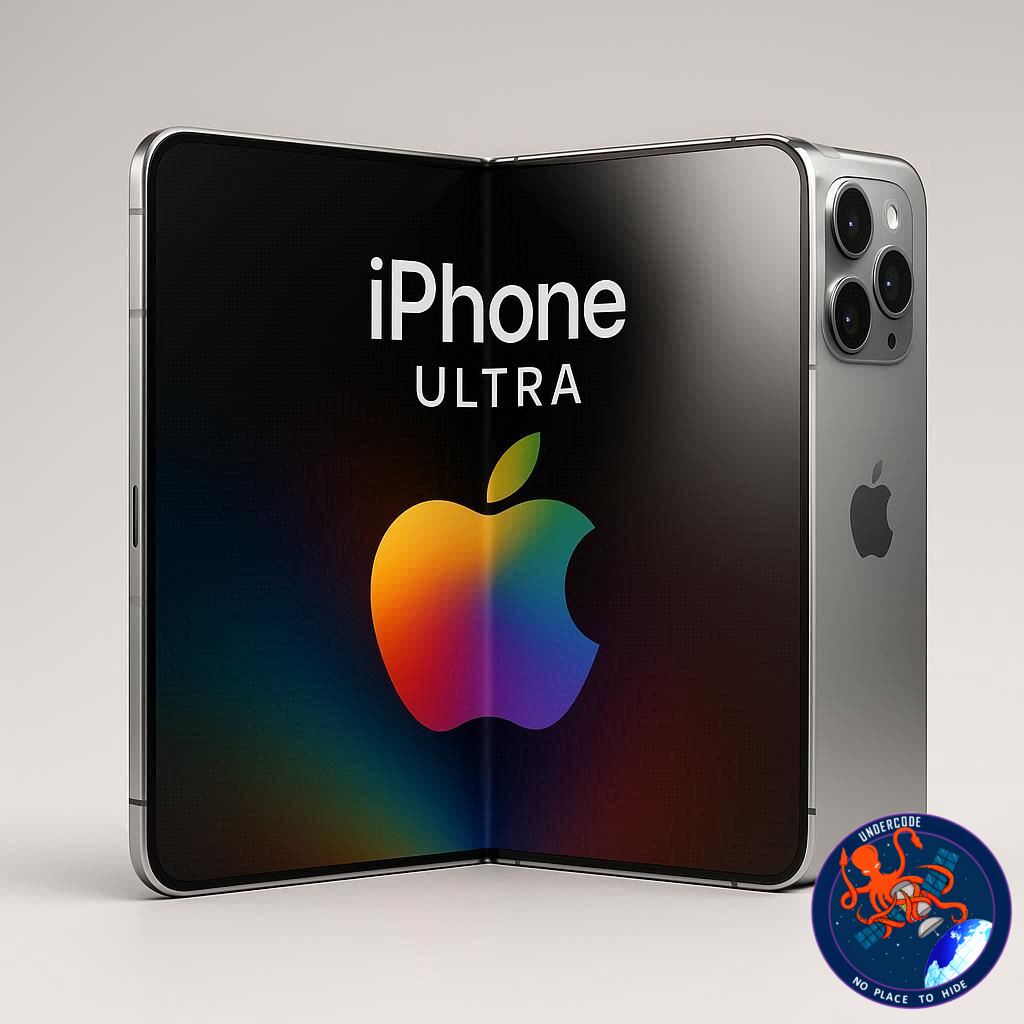
The iPhone has always been at the forefront of innovation, but 2025 promises something truly groundbreaking: Apple’s first foldable iPhone. With the launch of the new iPhone Air and a more distinct Pro lineup this year, Apple is already shaking up its design and naming conventions. However, the real game-changer could be the rumored foldable iPhone—potentially branded as the iPhone Ultra. Here’s why this next-generation device might redefine what we think of as an iPhone.
Why “Ultra” Makes Sense Over “Max” 🏆
Apple has long relied on naming conventions to indicate hierarchy and capability. Traditionally, “Max” has signaled the largest and most feature-rich iPhone model. But with a foldable iPhone featuring a screen larger than the iPhone 18 Pro Max, the “Max” label may no longer feel adequate. Apple has already shown this kind of hierarchy with its M-class chips, where M3 Ultra outperforms M3 Max. If Apple wants to convey that the new foldable iPhone is superior to the long-standing Pro Max, iPhone Ultra is a logical next step.
Not Just a Fold—A New Category of iPhone 🌟
Apple rarely follows trends—it creates them. The Vision Pro is marketed not as a VR headset but as a “spatial computer,” and Apple’s AI initiatives are branded as “Apple Intelligence.” Following this pattern, the company is unlikely to adopt a simple “Fold” label like Samsung or Google. While Samsung has used the “Ultra” moniker, it’s never been applied to a foldable device. iPhone Ultra would therefore position the foldable as a unique innovation rather than a copy of existing designs.
Pricing That Demands an “Ultra” Tag 💸
Cost is another reason the foldable iPhone could carry the Ultra name. The Apple Watch Ultra debuted at $799, far above the standard Apple Watch Series. Early rumors suggest the foldable iPhone could start around $2,000, significantly higher than the current $1,199 starting price for the iPhone 17 Pro Max. Attaching the Ultra label to such a premium device helps justify the price psychologically, making it feel like the ultimate iPhone experience rather than just an expensive foldable.
What Undercode Say: Expert Analysis and Market Insights 📊
The iPhone Ultra could signal a new era of Apple product strategy. Analysts believe that Apple will focus not only on screen size and flexibility but also on enhanced multitasking capabilities and revolutionary user interfaces. Foldable devices often face challenges with durability, hinge longevity, and software optimization. However, Apple’s history of premium design and ecosystem integration suggests that the company could overcome these obstacles more efficiently than competitors.
From a branding perspective, the Ultra naming aligns with Apple’s trend of emphasizing hierarchy and exclusivity. The psychological impact of “Ultra” communicates premium quality, cutting-edge innovation, and top-tier performance, which could help justify the steep price tag.
Technologically, foldable iPhones could feature dual-screen multitasking, improved battery optimization, and adaptive UI scaling, allowing apps to seamlessly transition between folded and unfolded modes. Rumors indicate that Apple may also integrate under-display Face ID and high-refresh-rate flexible OLED technology, making this device both a design marvel and a performance powerhouse.
Competitively, Apple’s move into foldables is likely a strategic response to Samsung’s Galaxy Z series and other Android innovations. By branding it Ultra rather than Fold, Apple creates a distinct identity in the foldable market and avoids direct comparison with rivals.
From an ecosystem standpoint, iPhone Ultra could unlock new interactions with Apple Watch Ultra, AirPods, and spatial computing devices, expanding Apple’s ecosystem further into productivity and entertainment. Early adopter feedback will be critical in refining the foldable experience, particularly in areas like app optimization and device durability.
Financially, the Ultra could redefine Apple’s premium segment. If priced around $2,000, it may increase average revenue per user (ARPU) while reinforcing Apple’s brand as a luxury technology leader. The foldable iPhone could also influence accessory sales, from MagSafe-compatible cases to foldable-specific peripherals, opening additional revenue streams.
In summary, Apple’s foldable strategy is poised to combine innovation, branding, and premium pricing into a single device, potentially reshaping both the smartphone market and Apple’s product hierarchy.
Fact Checker Results ✅❌
✅ Foldable iPhone rumors suggest a launch next year, aligning with industry speculation.
✅ Current Apple naming conventions support the possibility of “Ultra” over “Max.”
❌ The foldable iPhone has not been officially confirmed; all pricing and specs remain speculative.
Prediction 🔮
The foldable iPhone will likely debut as the iPhone Ultra, priced above $2,000, featuring dual-screen functionality, enhanced multitasking, and a premium design. Apple’s branding strategy will emphasize innovation and exclusivity, positioning this device as a category-defining smartphone that outshines all previous models. Early adopters and tech enthusiasts can expect a luxury experience that sets a new benchmark for foldable technology.
🕵️📝✔️Let’s dive deep and fact‑check.
References:
Reported By: 9to5mac.com
Extra Source Hub:
https://www.linkedin.com
Wikipedia
OpenAi & Undercode AI
Image Source:
Unsplash
Undercode AI DI v2
🔐JOIN OUR CYBER WORLD [ CVE News • HackMonitor • UndercodeNews ]
📢 Follow UndercodeNews & Stay Tuned:
𝕏 formerly Twitter 🐦 | @ Threads | 🔗 Linkedin | 🦋BlueSky | 🐘Mastodon


