
Listen to this Post
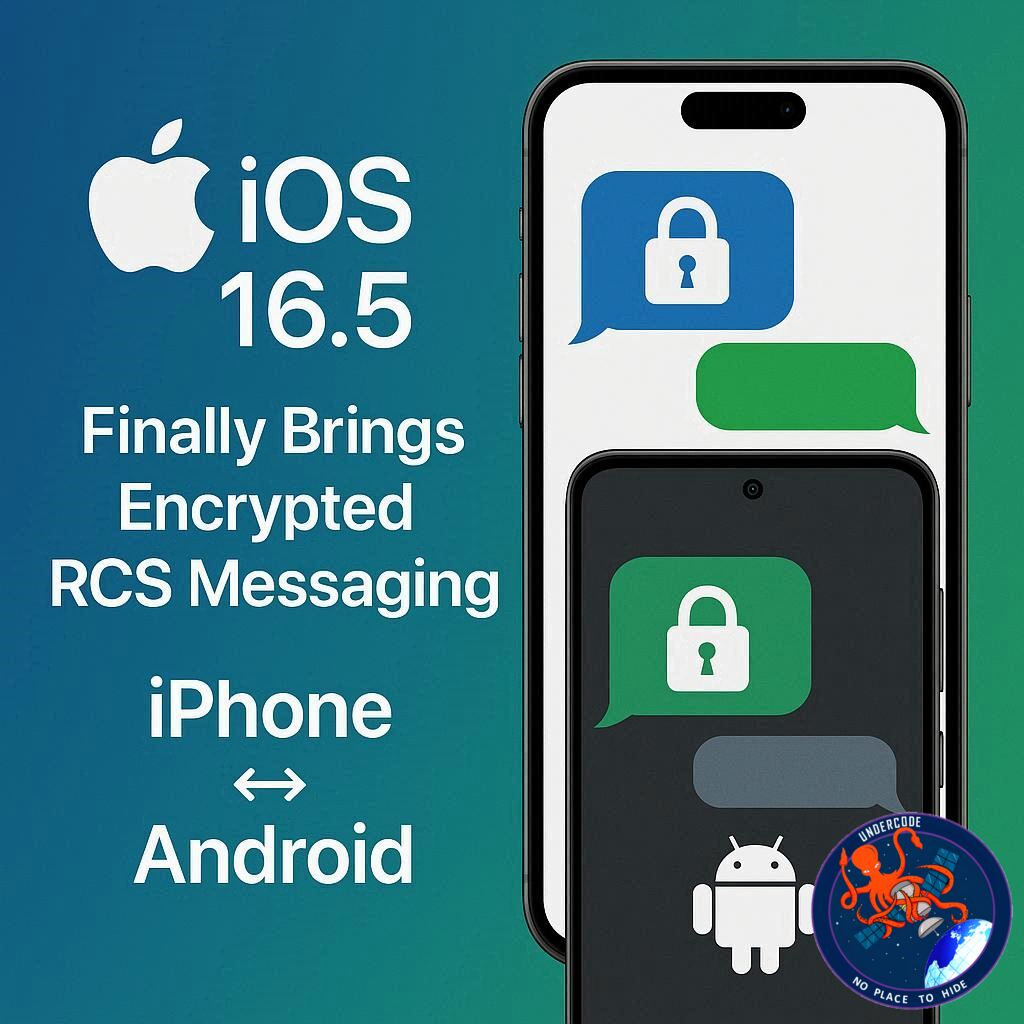
A Long-Awaited Privacy Upgrade Changes Cross-Platform Messaging
For years, texting between iPhone and Android users felt like a technological compromise. While Apple’s iMessage ecosystem already offered strong privacy protections, conversations with Android users remained exposed through older messaging standards that lacked modern encryption. That gap has finally started to close with the release of iOS 26.5.
Apple’s newest software update introduces end-to-end encrypted RCS messaging between iPhone and Android devices, a move that significantly improves privacy for millions of users exchanging texts across platforms. The feature not only modernizes communication between the two ecosystems but also signals a deeper shift in how Apple and Google are cooperating on industry-wide messaging standards.
The update extends beyond the iPhone itself. Encryption support is now available across Apple’s broader ecosystem, including the iPad, Apple Watch, Mac, and Apple Vision Pro. That means users can continue secure conversations across multiple devices without weakening protection.
At the core of the update is RCS, or Rich Communication Services, the modern replacement for outdated SMS technology. RCS enables higher-quality media sharing, typing indicators, read receipts, and now, encrypted communication between operating systems that historically struggled to work together securely.
Apple has enabled the feature by default, though users still need to meet certain conditions before encryption becomes active. The mobile carrier must support encrypted RCS functionality, and Android users need to run the latest version of Google Messages. Once everything is compatible, a lock icon appears in conversations to indicate that messages are fully encrypted.
Installing the update is relatively straightforward. Users can navigate to Settings, open General, tap Software Update, and install iOS 26.5. After restarting the device, they can verify encryption status inside the Messages settings under the RCS Messaging section. If “End-to-End Encryption (Beta)” is enabled, the secure connection is active.
This feature may sound technical, but its real-world impact is enormous. End-to-end encryption ensures that messages remain unreadable while traveling between devices and servers. Neither telecom providers nor outside attackers can easily intercept and read the content. In an era where digital surveillance, data leaks, and cyberattacks continue to escalate, encrypted messaging is no longer considered optional security. It has become a baseline expectation.
Security experts, however, are careful not to oversell the protection. Adam Boynton from Jamf highlighted an important limitation: encryption protects the communication channel itself, but it does not automatically protect users from deception or manipulation. Cybercriminals increasingly rely on impersonation attacks powered by AI-generated voices, fake identities, and convincing phishing attempts. Even a perfectly encrypted system cannot stop someone from voluntarily sending sensitive information to the wrong person.
That warning reflects a broader evolution in cybersecurity. Attackers are shifting away from brute-force technical hacks and focusing more on psychological manipulation. Modern scams often exploit trust instead of software vulnerabilities. Apple’s encryption upgrade strengthens transport security, but human awareness remains the weakest link.
Outside of messaging security, iOS 26.5 is a relatively small update. Apple added a new Pride Luminance wallpaper for supported devices, expanded Suggested Places recommendations inside Apple Maps, and introduced new subscription options for developers. However, one controversial addition is the increased use of localized advertising inside Apple Maps, which may raise fresh debates about privacy and targeted marketing.
Despite being considered a “minor” release, the update carries substantial security importance. Apple patched more than 60 vulnerabilities affecting different system components, including WebKit and kernel-level memory handling. These vulnerabilities represent the kinds of flaws often targeted in sophisticated mobile attacks.
Interestingly, some vulnerabilities were reportedly discovered by major security organizations and AI researchers, including Google’s Threat Analysis Group and researchers connected to Claude AI development. That detail highlights how cybersecurity is increasingly becoming a collaborative effort between competing technology companies and AI research teams.
The broader significance of iOS 26.5 lies in its symbolism. For years, messaging fragmentation between Apple and Android created technical and social barriers. Green bubbles versus blue bubbles became a cultural phenomenon, especially among younger users. By embracing encrypted RCS communication, Apple appears to be slowly acknowledging the need for a more universal messaging standard that prioritizes interoperability alongside privacy.
The update also reflects growing global pressure from regulators and consumers demanding stronger digital protections. Governments worldwide are pushing technology companies to provide safer communication environments without sacrificing usability. Encryption has become one of the defining battlegrounds in the modern tech industry, balancing user privacy, law enforcement concerns, and corporate competition.
As messaging apps continue evolving, the integration of encrypted RCS may eventually reduce dependence on third-party applications like WhatsApp or Signal for cross-platform secure texting. Apple and Google seem increasingly aware that users expect built-in communication tools to offer privacy by default rather than as a premium feature.
In practical terms, this update may quietly become one of Apple’s most meaningful quality-of-life improvements of the year. It doesn’t introduce flashy AI features or dramatic visual redesigns. Instead, it strengthens the invisible infrastructure behind everyday communication, something users may not notice immediately but will benefit from constantly.
What Undercode Say:
Apple’s decision to enable encrypted RCS messaging is not just another software feature rollout. It represents a strategic correction in the mobile industry’s long-running messaging divide. For years, Apple benefited from keeping iMessage isolated inside its ecosystem because exclusivity encouraged customer loyalty. Secure messaging became part of the premium identity of owning an iPhone.
What changed is the pressure surrounding interoperability. Regulators, especially in Europe, have increasingly challenged closed ecosystems. Consumers also became more privacy-conscious after repeated scandals involving data collection, spyware, and surveillance. Apple likely realized that refusing encrypted cross-platform communication was beginning to look outdated rather than premium.
The timing is equally important. AI-generated scams are exploding globally. Deepfake calls, cloned voices, fake video messages, and AI-assisted phishing attacks are growing faster than traditional cybersecurity systems can adapt. In this environment, encrypted infrastructure becomes essential because attackers constantly search for weak communication layers.
Still, encryption alone is not the final solution. The Jamf executive’s comments reveal the next battlefield in cybersecurity: identity trust. Future attacks will increasingly focus on convincing users emotionally instead of breaking software technically. A fake emergency voice note from a family member could bypass every encryption protocol because the victim willingly responds.
That creates a fascinating paradox in modern security. Technology is becoming harder to hack directly, yet humans remain easier to manipulate psychologically. Companies like Apple can secure networks, but they cannot fully secure human judgment.
Another overlooked aspect is Apple’s gradual cooperation with Google. Historically, both companies treated messaging ecosystems as competitive territory. RCS encryption support suggests that industry giants now understand fragmented communication systems damage user trust long term. Secure interoperability is becoming commercially necessary.
There is also a hidden competitive angle against third-party messaging platforms. Apps like WhatsApp, Telegram, and Signal gained popularity because built-in texting felt outdated and insecure. If Apple and Google successfully modernize native messaging, they could slowly reclaim user engagement from external platforms.
The update additionally demonstrates how “minor” software releases often contain the most important security improvements. Consumers usually pay attention to visual redesigns, AI tools, or new device launches. Meanwhile, invisible backend security patches quietly prevent real-world attacks affecting millions of devices.
Apple patching over 60 vulnerabilities in a single update is significant. It shows how complex modern operating systems have become. Smartphones are no longer simple communication tools; they are portable financial systems, biometric identity hubs, health trackers, and cloud-connected personal archives. Every vulnerability potentially exposes enormous amounts of sensitive data.
The references to WebKit vulnerabilities are especially notable because browsers remain one of the largest attack surfaces on mobile devices. A malicious webpage alone can sometimes trigger sophisticated exploits if vulnerabilities remain unpatched. Kernel memory flaws are even more dangerous because they can potentially provide attackers with deeper system-level access.
The involvement of AI researchers in identifying vulnerabilities also reveals another emerging trend: artificial intelligence is becoming both a cybersecurity threat and a cybersecurity defense tool simultaneously. AI systems can help discover software weaknesses faster, but malicious actors can also automate attacks using the same technologies.
Apple Maps introducing localized ads is another detail worth watching carefully. It creates a contradiction inside the same update. On one side, Apple strengthens messaging privacy. On the other, it expands advertising personalization. Modern tech companies constantly walk this line between privacy branding and monetization strategies.
The cultural impact of encrypted RCS should not be ignored either. Messaging bubbles became social symbols, especially in North America. Cross-platform communication quality affected friendships, dating culture, and even social inclusion among teenagers. Better interoperability may slowly reduce that divide.
From a market perspective, Apple is carefully adapting without completely surrendering ecosystem control. The company still maintains iMessage exclusivity features, but encrypted RCS allows Apple to appear cooperative while preserving its premium ecosystem advantages.
The update also signals how cybersecurity communication has evolved publicly. Companies increasingly market privacy and security features directly to consumers because users now understand digital threats better than they did a decade ago. Security is no longer invisible engineering. It has become a consumer-facing selling point.
Long term, encrypted RCS may push telecom carriers into a less central role in messaging infrastructure. Traditional SMS systems depended heavily on carrier technologies. Modern encrypted systems increasingly move control toward software platforms instead of network operators.
One subtle but important implication is user expectation. Once people experience encrypted messaging as the default standard, tolerance for insecure communication methods drops rapidly. That societal shift pressures all tech companies to improve baseline protections across services.
The real success of iOS 26.5 will not be measured by wallpapers or interface tweaks. It will be measured by whether users begin trusting cross-platform communication again without worrying about security compromises or degraded experiences.
📊 Prediction
Apple and Google will likely continue expanding encrypted interoperability over the next few years, gradually transforming RCS into the global default messaging standard. 📱
AI-driven impersonation attacks will rise dramatically, forcing tech companies to develop identity verification systems beyond traditional encryption. 🔐
Future iOS updates may integrate AI-powered scam detection directly inside messaging apps to combat deepfake conversations and fraudulent communication attempts. 🤖
🔍 Fact Checker Results
✅ iOS 26.5 introduces end-to-end encrypted RCS messaging between iPhone and Android users.
✅ Apple patched more than 60 security vulnerabilities in the update.
❌ Encryption does not fully protect users from impersonation scams, phishing, or AI-generated deception tactics.
🕵️📝Let’s dive deep and fact‑check.
References:
Reported By: www.zdnet.com
Extra Source Hub (Possible Sources for article):
https://www.stackexchange.com
Wikipedia
OpenAi & Undercode AI
Image Source:
Unsplash
Undercode AI DI v2
Bing
🔐JOIN OUR CYBER WORLD [ CVE News • HackMonitor • UndercodeNews ]
📢 Follow UndercodeNews & Stay Tuned:
𝕏 formerly Twitter 🐦 | @ Threads | 🔗 Linkedin | 🦋BlueSky | 🐘Mastodon


