
Listen to this Post
Introduction
Apple has officially taken a major step toward reshaping mobile communication by introducing end-to-end encrypted Rich Communication Services (RCS) messaging in iOS 26.5 beta. The update marks one of the most important collaborations between Apple, Google, and the wider telecom industry in years, aiming to replace outdated SMS technology with a modern, secure alternative.
For decades, SMS remained the global standard for texting despite its severe privacy limitations. Messages sent through SMS could often be intercepted, lacked multimedia quality, and offered none of the features users now expect from modern messaging apps. With RCS, the mobile industry is finally moving closer to a unified messaging experience that works securely across Android and iPhone devices.
Apple’s latest move is particularly significant because it narrows the long-standing gap between iMessage and Android messaging systems. The addition of cross-platform encryption could dramatically change how billions of people communicate daily.
Apple Introduces End-to-End Encryption for RCS Messaging
Apple confirmed that iOS 26.5 beta now supports end-to-end encryption for Rich Communication Services messaging. The feature arrives as part of a broader industry initiative designed to modernize text communication and improve security standards for mobile users worldwide.
The new encryption system ensures that messages cannot be read while traveling between devices. Only the sender and recipient can access the content of the conversation, significantly improving privacy protections for users communicating across platforms.
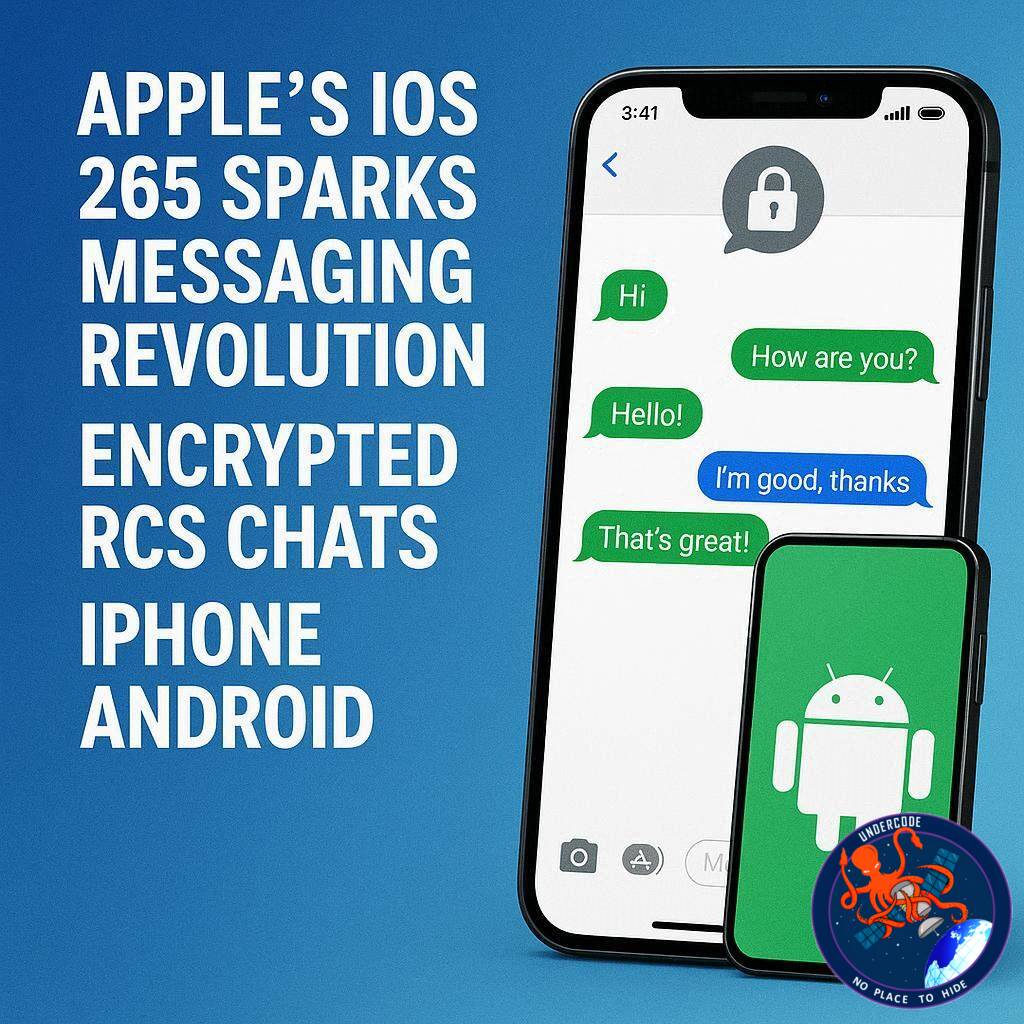
According to Apple, users will notice a new lock icon inside encrypted RCS conversations, signaling that their chats are fully protected.
RCS Finally Replaces the Aging SMS Standard
Traditional SMS messaging has remained surprisingly unchanged for decades. Despite smartphones evolving rapidly, SMS continued relying on outdated infrastructure with limited security and functionality.
RCS changes that by introducing internet-based communication features similar to modern messaging platforms like WhatsApp or Telegram. Users can now send higher-quality photos and videos, view typing indicators, receive read receipts, and experience smoother conversations without relying on third-party apps.
The protocol is built around the GSMA’s Universal Profile specification, which aims to create a unified messaging standard across carriers and device manufacturers.
Cross-Platform Encryption Arrives for iPhone and Android
One of the biggest announcements surrounding iOS 26.5 is that encryption is not limited to Apple devices anymore. Android users running the latest version of Google Messages can also participate in encrypted RCS conversations with iPhone users.
The feature is automatically enabled for both new and existing chats, removing the need for users to manually activate security settings.
Google also confirmed that Android users will see a padlock icon during encrypted cross-platform conversations, mirroring Apple’s implementation.
This development represents a rare moment of cooperation between two of the biggest rivals in the tech industry.
Apple’s Earlier Encryption Tests Paved the Way
Apple initially began experimenting with encrypted RCS messaging during testing phases in iOS and iPadOS 26.4 beta. At first, the feature was restricted to conversations between Apple devices only.
However, industry momentum quickly accelerated after the GSM Association announced official support for end-to-end encryption within the RCS protocol earlier in 2025.
That decision laid the foundation for broader compatibility between Apple and Android ecosystems.
The GSMA’s Role in Building Secure Messaging Standards
The GSM Association played a central role in bringing encrypted RCS messaging to reality. The organization worked alongside Apple, Google, carriers, and other members of the mobile ecosystem to standardize the security framework.
GSMA Chief Technology Officer Alex Sinclair described the update as a major milestone for global messaging infrastructure. He emphasized that the encryption rollout was only possible because of extensive collaboration between multiple companies and organizations.
The GSMA also stressed that the technology is being delivered on an open and globally recognized foundation, which could help encourage broader adoption worldwide.
Why This Update Matters for Everyday Users
For average smartphone users, this update delivers far more than just a technical improvement.
For years, conversations between Android and iPhone users often felt broken or incomplete compared to native messaging experiences inside individual ecosystems. Media quality suffered, reactions failed to work properly, and group chats frequently became frustrating.
Encrypted RCS messaging helps solve many of these problems while simultaneously improving privacy protections.
Users no longer need to rely entirely on third-party apps just to communicate securely with friends using different devices.
Privacy Becomes a Major Competitive Battlefield
The timing of Apple’s encrypted RCS rollout is also important because privacy has become one of the most powerful marketing tools in the tech industry.
Consumers are increasingly aware of digital surveillance, data collection, and cyber threats. Secure messaging is no longer considered a luxury feature — it is rapidly becoming an expectation.
Apple has consistently positioned itself as a privacy-focused company, and extending encryption support to RCS strengthens that image.
At the same time, Google benefits by making Android messaging feel more modern and competitive against Apple’s ecosystem.
What Undercode Says:
The Real Winner Is the Messaging Industry Itself
The introduction of encrypted RCS messaging is bigger than a simple software update. It represents the gradual death of SMS, a protocol that has survived largely because carriers refused to abandon it completely.
For years, messaging fragmentation created artificial barriers between Android and iPhone users. Apple benefited from keeping iMessage exclusive, while Android manufacturers struggled to establish a unified alternative.
This update changes the tone of that battle.
Instead of forcing users into separate ecosystems, both companies are slowly accepting interoperability as the future.
Apple’s Strategy Is More Calculated Than It Appears
Apple’s decision to embrace encrypted RCS does not mean the company is surrendering the exclusivity advantage of iMessage.
Instead, Apple appears to be strategically modernizing cross-platform communication while still preserving premium features for its own ecosystem.
The company understands that regulators across Europe and other regions are increasingly scrutinizing closed digital ecosystems. Supporting encrypted RCS allows Apple to appear cooperative while maintaining strong control over its broader messaging experience.
It is a defensive move disguised as consumer-friendly innovation.
Google Gains a Massive Public Relations Victory
Google has pushed RCS adoption aggressively for years, often criticizing Apple for refusing to support modern messaging standards.
Now that Apple has officially adopted encrypted RCS, Google gains credibility for its long-term strategy.
Android users also benefit because conversations with iPhone users will no longer feel technologically inferior.
This could gradually reduce the social pressure associated with “green bubble” messaging culture, especially among younger audiences.
Encryption Is Becoming the Default Standard
One of the most important aspects of this rollout is that encryption is enabled automatically.
Historically, many companies offered encryption only as an optional feature buried inside settings menus. That approach limited adoption because average users rarely adjusted security configurations.
By enabling encryption by default, Apple and Google are helping normalize secure communication for billions of users.
This reflects a larger industry trend where privacy protections are increasingly built directly into consumer technology.
Telecom Carriers Are Quietly Losing Control
RCS originally emerged as a carrier-driven attempt to modernize SMS, but the real power has shifted toward operating system developers and platform providers.
Apple and Google now effectively control the user experience surrounding messaging services, while telecom operators increasingly function as infrastructure providers in the background.
This shift mirrors what happened to voice calls, where internet-based services eventually became more important than traditional telecom systems.
Cybersecurity Threats Are Driving Demand
The timing also aligns with growing cybersecurity concerns worldwide.
Governments, corporations, and consumers are facing constant threats from phishing attacks, spyware campaigns, and mass surveillance efforts.
Encrypted messaging helps reduce the risk of intercepted communications, especially on insecure networks.
While encryption does not solve every security problem, it significantly raises the barrier for attackers attempting to monitor conversations.
The Future Could Bring Full Messaging Convergence
If encrypted RCS adoption succeeds globally, the mobile industry could move toward a far more unified communication system.
Eventually, users may stop caring whether someone owns an iPhone or Android device because the messaging experience becomes nearly identical.
That possibility threatens one of Apple’s strongest ecosystem lock-in advantages.
However, Apple likely believes the broader iPhone experience remains powerful enough to retain customers even if messaging differences shrink.
Regulators Will Watch Closely
Governments and regulators are increasingly targeting large tech companies over interoperability concerns.
Supporting encrypted RCS may help Apple avoid additional criticism regarding anti-competitive behavior in digital communication services.
At the same time, regulators will likely continue pushing for even deeper compatibility between competing ecosystems.
This update could therefore represent only the beginning of broader changes coming to mobile communication standards.
🔍 Fact Checker Results
✅ Apple Officially Added Encrypted RCS Support
Apple confirmed that iOS 26.5 beta includes support for end-to-end encrypted RCS messaging for compatible carriers and devices.
✅ Google Messages Supports Cross-Platform Encryption
Google verified that Android users using the latest Google Messages app can participate in encrypted chats with iPhone users.
✅ GSMA Backed the Industry-Wide Encryption Initiative
The GSMA publicly confirmed collaboration between Apple, Google, and mobile ecosystem partners to standardize encrypted RCS communication.
📊 Prediction
📈 Encrypted RCS Could Replace SMS Faster Than Expected
The introduction of default encryption across iPhone and Android devices may accelerate the decline of traditional SMS messaging worldwide. As carriers and manufacturers continue supporting RCS infrastructure, users will increasingly expect secure, feature-rich messaging without downloading third-party apps.
📈 Apple and Google May Expand Messaging Collaboration
The success of encrypted RCS could encourage additional cooperation between Apple and Google on messaging standards, media compatibility, and spam protection systems.
📈 Privacy Will Become a Core Selling Point for Smartphones
As cybersecurity threats continue rising globally, smartphone companies will likely compete more aggressively around encryption, secure communication, and data privacy features in future devices and software updates.
🕵️📝Let’s dive deep and fact‑check.
References:
Reported By: thehackernews.com
Extra Source Hub (Possible Sources for article):
https://www.quora.com/topic/Technology
Wikipedia
OpenAi & Undercode AI
Image Source:
Unsplash
Undercode AI DI v2
Bing
🔐JOIN OUR CYBER WORLD [ CVE News • HackMonitor • UndercodeNews ]
📢 Follow UndercodeNews & Stay Tuned:
𝕏 formerly Twitter 🐦 | @ Threads | 🔗 Linkedin | 🦋BlueSky | 🐘Mastodon


