
Listen to this Post
🎯 Introduction
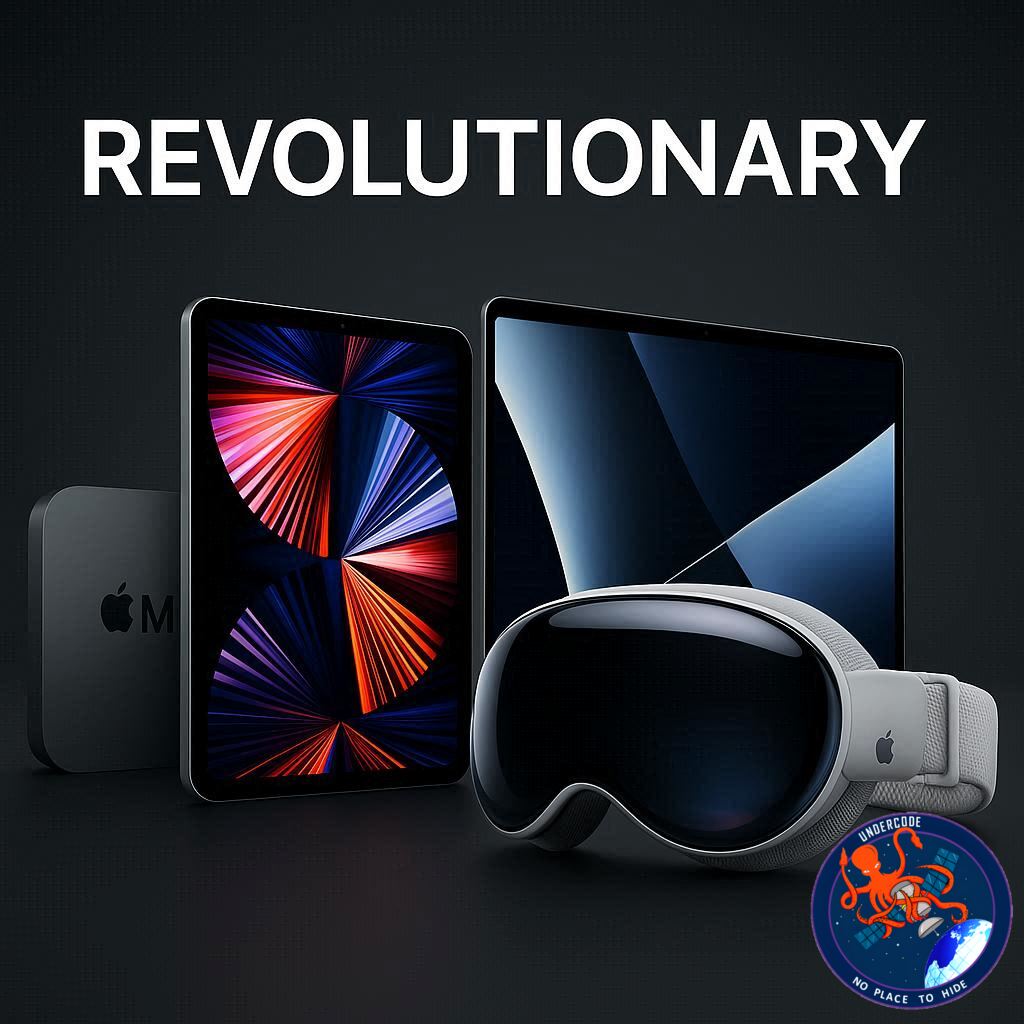
Apple is gearing up for a rare “quiet storm.” Instead of the grand stage lights and cinematic unveilings, the tech giant plans to drop its next generation of hardware updates through online press releases. But make no mistake—this isn’t a soft launch. With the arrival of the new M5 chip, Apple is preparing to shake its product ecosystem once again, from the ultra-powerful iPad Pro to the immersive Vision Pro headset and the sleek 14-inch MacBook Pro. The week ahead could redefine performance standards across Apple’s entire lineup, even without a keynote presentation.
The M5 Lineup: A Subtle Revolution in Plain Sight
Apple’s upcoming product refresh centers around its long-anticipated M5 chip—a silicon powerhouse designed to boost speed, efficiency, and graphic capabilities across the company’s premium devices. According to Bloomberg’s Mark Gurman in his Power On newsletter, Apple is ready to unveil updates for the iPad Pro, Vision Pro headset, and 14-inch MacBook Pro. Instead of a high-profile event, these announcements will quietly roll out online, signaling Apple’s growing confidence in its loyal user base and the maturity of its product line.
The M5 iPad Pro: Power in Silence
The new iPad Pro equipped with the M5 chip is already making waves online. Leaked Russian unboxing videos have given the world a sneak peek into its design and specifications. Early Geekbench 6 results show a notable leap—12% faster CPU and 36% faster GPU performance than the M4 predecessor. The tablet now starts with a minimum of 12GB RAM, shedding the “iPad Pro” branding on its back while keeping its familiar, elegant design intact. It’s subtle, almost too quiet, yet unmistakably powerful—a device built for those who demand desktop-class performance in a tablet frame.
The Vision Pro: Comfort Meets Computing
Next on Apple’s upgrade list is the Vision Pro, which will also run on the M5 chip. Performance gains aside, Apple seems focused on user comfort this time. The new model is expected to include a redesigned “Dual Knit Band” that improves weight distribution during extended use. A sleek Space Black color option may also debut, appealing to professionals and tech enthusiasts alike. Still, Gurman notes that these updates may not mark a “second-generation” device—more like a strategic refinement. Interestingly, Apple has paused development on both a cheaper “Vision Air” and a next-gen Vision Pro to pivot resources toward its smart glasses project, a move that could define the company’s future in wearable computing.
The 14-Inch MacBook Pro: The Quiet Performer
Apple’s entry-level 14-inch MacBook Pro is ready to receive the vanilla M5 chip, bringing next-gen processing power to more users without jumping into the high-end M5 Pro or M5 Max variants, which are slated for early 2026. Apple retail stores are already seeing reduced stock of current M4 base models, a classic sign of an incoming refresh. For creators, coders, and professionals seeking Apple’s seamless blend of performance and portability, this model might become the sweet spot of 2025.
Other Updates on the Horizon
While the M5-powered lineup takes the spotlight, Apple isn’t done. Products like a refreshed AirTag, HomePod mini, and Apple TV remain on the company’s roadmap, possibly appearing in later cycles. Gurman suggests that Apple could begin announcements midweek, with Columbus Day slowing internal scheduling in the U.S.
What Undercode Say:
Apple’s strategy here is fascinating—almost counterintuitive. For years, the company’s major product reveals were cultural events, drawing millions of live viewers. But now, Apple seems to believe its devices no longer need theatrical hype to dominate headlines. This shift from spectacle to substance tells us something deeper: Apple is entering its maturity era.
The M5 chip, though only a moderate step up on paper, represents a continuation of Apple’s long-term control over performance architecture. Each generation of Apple Silicon doesn’t just compete—it isolates Apple further from Intel, AMD, and even Qualcomm’s ecosystem. With the M5, Apple isn’t chasing power alone—it’s refining the thermal balance, AI processing, and energy efficiency that define its hardware philosophy.
The iPad Pro’s evolution mirrors Apple’s quiet dominance. The removal of the “iPad Pro” text might sound trivial, but it reflects Apple’s confidence that the product’s identity speaks for itself. This tablet isn’t just a portable display—it’s a workstation for digital artists, filmmakers, and developers. The addition of 12GB RAM as a baseline is a direct statement that Apple wants to dissolve the boundary between iPadOS and macOS computing.
As for the Vision Pro, its story is more symbolic. It entered the market with massive expectations, but adoption has been slower than Apple hoped. The M5 refresh and ergonomic tweaks suggest Apple is recalibrating—improving usability rather than chasing specs. The pause on the Vision Air hints that Apple learned from early user feedback: immersive computing isn’t just about clarity or performance—it’s about comfort and practicality. This restraint might save the Vision line in the long run.
Meanwhile, the MacBook Pro update completes Apple’s triangle of productivity. With the M5 chip at the core, Apple is ensuring its laptop lineup remains untouchable in power efficiency and sustained performance. The staggered release of M5 Pro and M5 Max models is also strategic—it keeps professionals interested in the roadmap while preventing internal cannibalization of higher-end models.
If anything, Apple’s understated release format is the boldest part of this story. By quietly publishing these updates online, the company challenges the traditional marketing script. It’s as if Apple is saying, “We don’t need to shout anymore.” Every leak, every benchmark, every rumor has already done the talking.
In essence, the M5 rollout is Apple’s quiet declaration of dominance—a whisper that still echoes louder than its competitors’ megaphones.
🔍 Fact Checker Results
✅ Bloomberg’s Mark Gurman confirmed the M5 product lineup in his Power On newsletter.
✅ Early Geekbench 6 benchmarks show verifiable M5 performance gains over M4 models.
❌ No official second-generation Vision Pro confirmed—Apple only refining the existing version.
📊 Prediction
🔮 In the next 12 months, Apple’s M5 ecosystem will redefine the performance baseline for all mobile devices. Expect the iPad Pro to become the go-to tool for professionals on the move, while the Vision Pro will quietly evolve into a more accessible mixed-reality experience. By early 2026, the M5 Pro and M5 Max chips will likely extend Apple’s dominance into workstation-class computing, completing a cycle of innovation powered not by hype—but by quiet confidence.
🕵️📝✔️Let’s dive deep and fact‑check.
References:
Reported By: timesofindia.indiatimes.com
Extra Source Hub (Possible Sources for article):
https://www.quora.com/topic/Technology
Wikipedia
OpenAi & Undercode AI
Image Source:
Unsplash
Undercode AI DI v2
Bing
🔐JOIN OUR CYBER WORLD [ CVE News • HackMonitor • UndercodeNews ]
📢 Follow UndercodeNews & Stay Tuned:
𝕏 formerly Twitter 🐦 | @ Threads | 🔗 Linkedin | 🦋BlueSky | 🐘Mastodon


