
Listen to this Post
Introduction
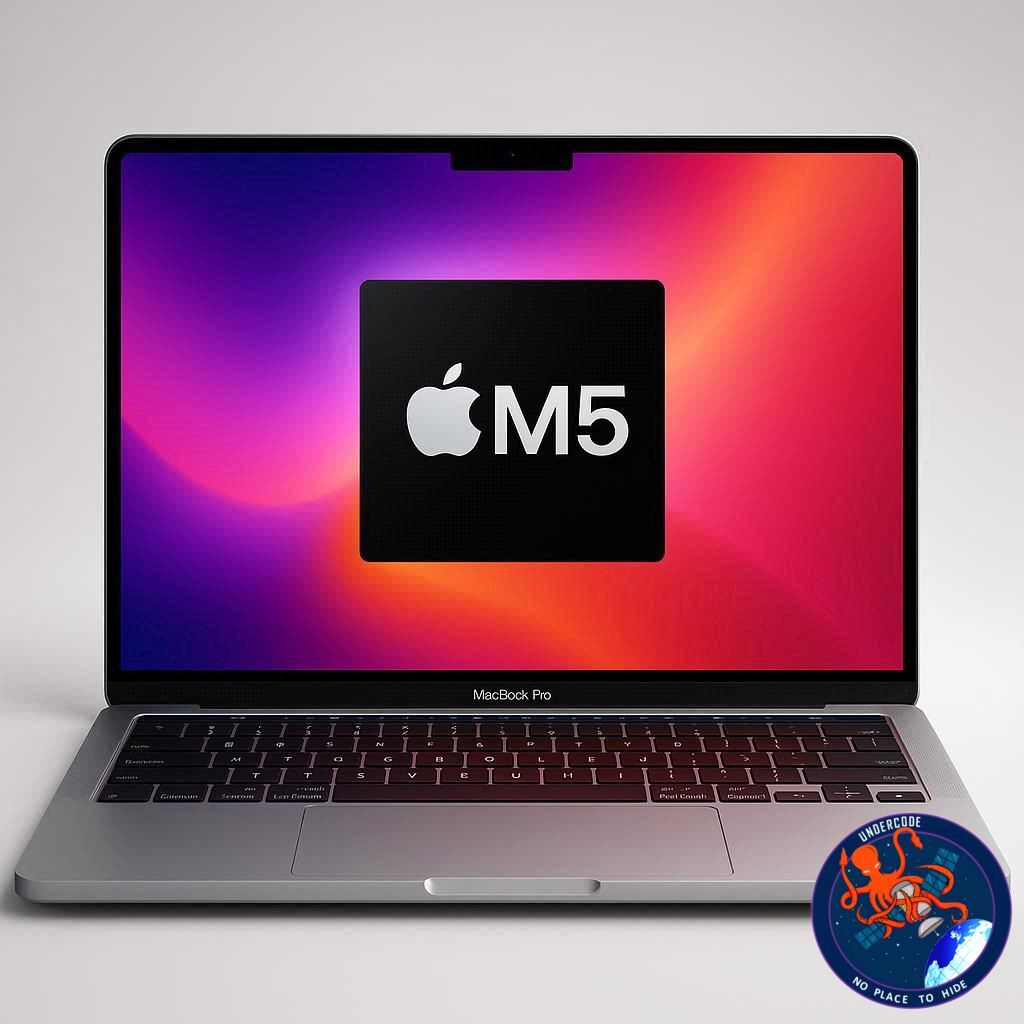
Apple is preparing another refresh of its MacBook Pro lineup, continuing its tradition of yearly updates. While this upcoming model may not bring groundbreaking changes, it represents another step forward in Apple’s pursuit of performance and efficiency. With new Apple Silicon at the core, subtle connectivity improvements, and a shifted release timeline, consumers are left wondering if now is the time to buy or if patience will pay off with the bigger upgrade expected in 2026. Let’s break down everything you need to know about the next MacBook Pro refresh.
The Upcoming MacBook Pro Refresh
Apple is reportedly working on a new MacBook Pro update, introducing the next generation of Apple Silicon: the M5, M5 Pro, and M5 Max chips. Built on TSMC’s advanced 3nm N3P process, these processors will deliver better efficiency and performance similar to what we’ve seen in the iPhone 17’s A19 and A19 Pro chips.
The update, however, is considered minor. Aside from the chip upgrade, there won’t be noticeable design or feature changes. Those expecting a sleeker look, OLED displays, or major design revisions will have to wait until late 2026 when Apple is rumored to launch a major MacBook Pro overhaul with thinner chassis and next-gen display technology.
One potential bonus feature is Wi-Fi 7 compatibility, aligning with the iPhone 16 and 17 lineup. This would be an upgrade from the M4 MacBook Pro, which missed the latest wireless standard.
Traditionally, Apple unveils MacBook Pro refreshes in October. But this time, reports suggest the launch will be pushed to early 2026, likely in January. While unusual, it wouldn’t be the first time — Apple released early-year MacBook Pros in 2023 as well.
Interestingly, the first product to debut the M5 chip may not be the MacBook Pro but rather the iPad Pro refresh, expected as early as next month. Apple followed a similar pattern with the M4 chip introduction.
Overall, the M5 MacBook Pro is shaping up to be a modest update, making it a less compelling upgrade compared to waiting for the larger redesign in 2026. For those eager to buy now, attractive discounts on current M4 MacBook Pro models make them a more appealing choice. The 14-inch M4 MacBook Pro starts at \$1299, while the M4 Pro 14-inch goes for \$1799, and the M4 Pro 16-inch begins at \$2249.
Even if you already own an Apple Silicon MacBook Pro, the M4 remains a solid upgrade option with its brighter displays, advanced webcams with Center Stage, and huge performance gains.
What Undercode Say:
The MacBook Pro update with M5 is a fascinating case study in Apple’s product strategy. Instead of overwhelming customers with drastic yearly redesigns, Apple focuses on incremental improvements, ensuring stability and maximizing long-term user value.
From an industry perspective, the M5 chip matters more than the laptop itself. Built on N3P, it reflects TSMC’s aggressive roadmap in the semiconductor space. For Apple, this means tighter power efficiency, enabling longer battery life and consistent performance — two factors that professionals value most in the MacBook Pro line.
The decision to delay the release until early 2026 is equally telling. Apple may be aligning the MacBook Pro with other product cycles, ensuring the spotlight isn’t split during its major fall launches (like iPhone or Apple Vision Pro upgrades). Launching in January also gives Apple an early-year sales boost.
While the absence of OLED displays and major redesigns is disappointing to some, it reinforces Apple’s strategy: push incremental chip upgrades now and save the “wow factor” for a full-scale redesign later. This approach avoids alienating recent buyers who invested in M4 models and ensures that the M5 refresh doesn’t cannibalize future sales.
Consumers today face three clear choices:
Buy discounted M4 MacBook Pros now for excellent value.
Wait for the M5 in 2026 if performance is a top priority.
Hold off until late 2026 for the redesigned OLED MacBook Pro.
From a financial perspective, the M4 offers the best deal in the short term, given the steep discounts and proven performance. But tech enthusiasts who demand cutting-edge silicon will inevitably lean toward the M5. Professionals working in video editing, 3D rendering, or machine learning will particularly benefit from the next-gen chip’s efficiency.
Ultimately, this “minor refresh” is less about design and more about future-proofing. Apple Silicon evolves rapidly, and even incremental jumps translate into real productivity gains for power users. Apple’s ecosystem strategy — with M5 chips across MacBooks and iPads — will also strengthen cross-device performance and app optimization.
The real game-changer remains the 2026 redesign. OLED displays, slimmer builds, and possibly new thermal solutions will redefine the MacBook Pro’s role as the industry benchmark for creative professionals. Until then, the M5 refresh is a solid, if unspectacular, stepping stone.
✅ Fact Checker Results
Apple is indeed planning M5 chips on a 3nm N3P process.
The redesign with OLED is expected in late 2026, not in this update.
Bloomberg confirms the release shift to early 2026.
🔮 Prediction
Apple’s incremental MacBook Pro update in early 2026 will attract professionals seeking raw performance but may underwhelm casual buyers waiting for flashy changes. The real sales explosion will likely occur in late 2026, when the OLED redesign drops — reshaping the premium laptop market and setting new industry standards.
🕵️📝✔️Let’s dive deep and fact‑check.
References:
Reported By: 9to5mac.com
Extra Source Hub:
https://www.facebook.com
Wikipedia
OpenAi & Undercode AI
Image Source:
Unsplash
Undercode AI DI v2
🔐JOIN OUR CYBER WORLD [ CVE News • HackMonitor • UndercodeNews ]
📢 Follow UndercodeNews & Stay Tuned:
𝕏 formerly Twitter 🐦 | @ Threads | 🔗 Linkedin | 🦋BlueSky | 🐘Mastodon


