
Listen to this Post
🎯 Introduction: A Color That Changed the Narrative
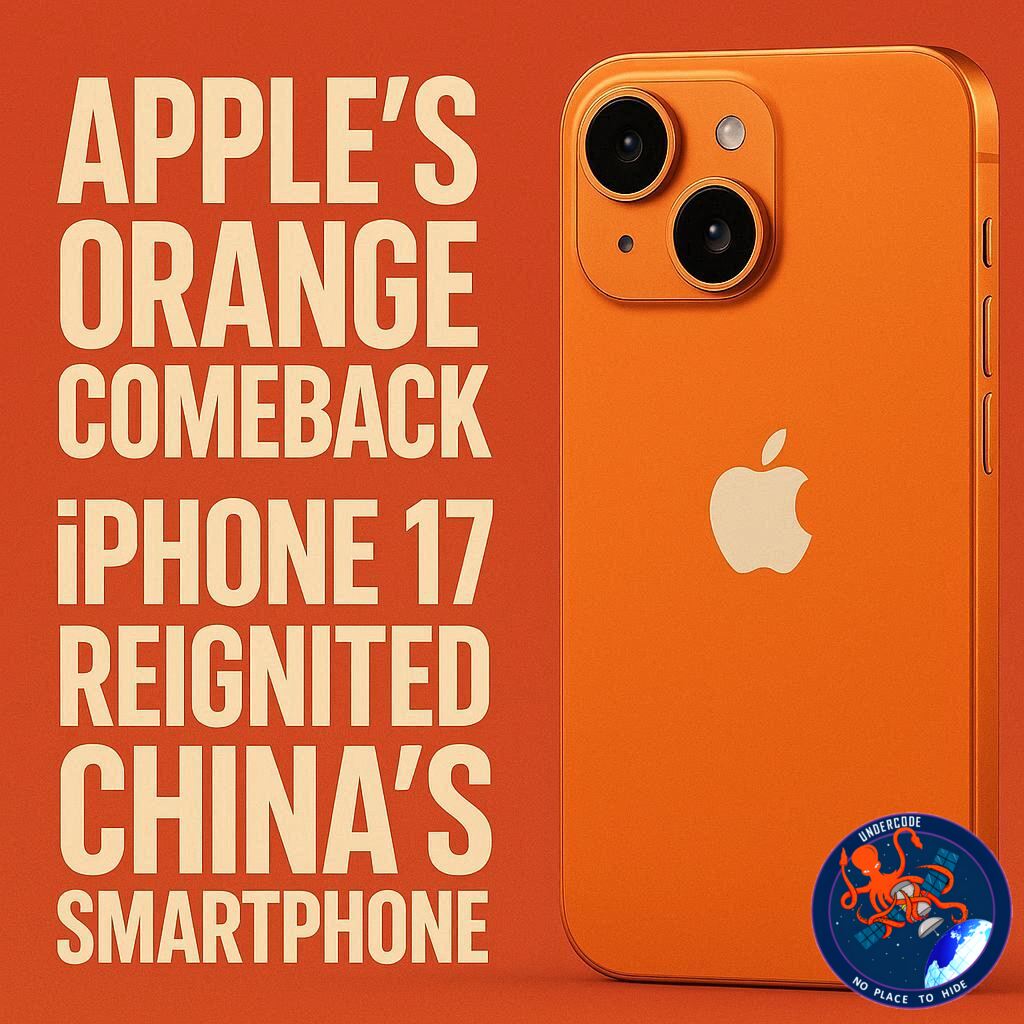
After three difficult years of shrinking sales and fading momentum, Apple has staged one of its most surprising comebacks in China, the most unforgiving smartphone market on the planet. The catalyst was not a radical new form factor or a bold AI breakthrough, but something far simpler and far more cultural: color. With the iPhone 17, Apple introduced a striking new finish officially named “Cosmic Orange”, a design move that unexpectedly aligned with Chinese consumer psychology, social symbolism, and economic timing. The result was a sharp reversal of fortunes, renewed brand heat, and a record-breaking quarter that repositioned Apple as relevant again in a market many believed it was slowly losing.
📌 Summary: How iPhone 17 Turned Decline Into Growth
Apple’s resurgence in China follows a prolonged three-year sales slump caused by intense local competition, slower upgrade cycles, and consumer fatigue with incremental design changes. That narrative shifted dramatically with the launch of the iPhone 17, particularly its bold new “Cosmic Orange” colorway. According to the Financial Times, demand surged so strongly that Apple recorded its best fourth quarter in China, with revenue climbing 38 percent year-on-year to 26 billion USD. On Chinese social platforms, users quickly rebranded the color as “Hermès Orange,” drawing parallels between the iPhone’s new look and luxury fashion cues. Analysts noted that the vivid color restored a sense of visibility and status that had been missing from recent iPhone models, making the device instantly recognizable as the newest release. The color also benefited from linguistic symbolism, as the Mandarin word for orange sounds similar to the word for success, triggering viral phrases and celebratory buying behavior online. Beyond aesthetics, the iPhone 17 delivered meaningful hardware upgrades in camera systems, chipset performance, and battery life. These improvements encouraged a physical upgrade cycle, often described as a “supercycle,” shifting consumer focus away from software-based AI features and toward tangible improvements. Apple also gained support from China’s economic stimulus measures, with the base iPhone 17 qualifying for government subsidies of up to 72 USD, lowering the barrier to entry for middle-class buyers and amplifying demand across broader demographics.
🧠 What Undercode Say: Why This Strategy Worked So Well
🎨 Design as Social Identity
Apple’s biggest win was recognizing that in China, smartphones are not just tools but social signals. The Cosmic Orange finish reintroduced visual differentiation at a time when most flagship phones had become indistinguishable slabs of glass. Visibility mattered more than subtlety, and Apple finally leaned into that reality.
👜 Luxury Association Without Luxury Pricing
The organic rebranding of Cosmic Orange into “Hermès Orange” was not accidental hype, but a reflection of Apple’s long-standing positioning between technology and fashion. Without raising prices, Apple tapped into luxury perception, something Chinese consumers are highly responsive to when status cues are embedded in everyday products.
🧠 Cultural Linguistics as a Growth Multiplier
The phonetic similarity between “orange” and “success” in Mandarin created a layer of emotional storytelling money cannot buy. Viral captions, memes, and celebratory posts turned the iPhone 17 into a symbolic good-luck charm, blurring the line between consumer electronics and cultural token.
🔁 Hardware Over AI Fatigue
While much of the tech industry has pushed AI as the next upgrade motivator, Chinese consumers showed a clear preference for tangible benefits. Better cameras, stronger batteries, and faster chips offered immediate value, reinforcing the idea that physical upgrades still matter more than abstract software promises.
📉 Timing the Market Correction
Apple’s rebound also coincided with a moment when local competitors faced margin pressure and consumer skepticism. This gave Apple a narrow but powerful window to reassert itself, especially among buyers who had delayed upgrades during uncertain economic conditions.
💰 Subsidies as Strategic Acceleration
Government subsidies did not create demand, but they accelerated it. By pricing the base iPhone 17 under subsidy thresholds, Apple effectively expanded its addressable market without discounting its premium image.
📊 Brand Elasticity Proved Resilient
The success of the iPhone 17 demonstrates that Apple’s brand in China was not broken, only dormant. Once given a compelling reason to re-engage, consumers responded at scale, suggesting long-term elasticity remains intact.
🔍 Fact Checker Results
✅ Apple’s China revenue increased by 38 percent year-on-year, reaching 26 billion USD
✅ The “Cosmic Orange” color played a central role in consumer re-engagement
❌ The resurgence was driven by AI features rather than hardware upgrades
📊 Prediction
📈 Apple is likely to introduce more region-specific colors and design cues in future iPhone cycles
📱 Hardware-driven upgrade cycles will continue to outperform AI-centric marketing in China
⚠️ Competitors may rapidly imitate bold design strategies, narrowing Apple’s advantage over time
▶️ Related Video (88% Match):
🕵️📝✔️Let’s dive deep and fact‑check.
References:
Reported By: timesofindia.indiatimes.com
Extra Source Hub (Possible Sources for article):
https://www.pinterest.com
Wikipedia
OpenAi & Undercode AI
Image Source:
Unsplash
Undercode AI DI v2
Bing
🔐JOIN OUR CYBER WORLD [ CVE News • HackMonitor • UndercodeNews ]
📢 Follow UndercodeNews & Stay Tuned:
𝕏 formerly Twitter 🐦 | @ Threads | 🔗 Linkedin | 🦋BlueSky | 🐘Mastodon


