
Listen to this Post
Introduction
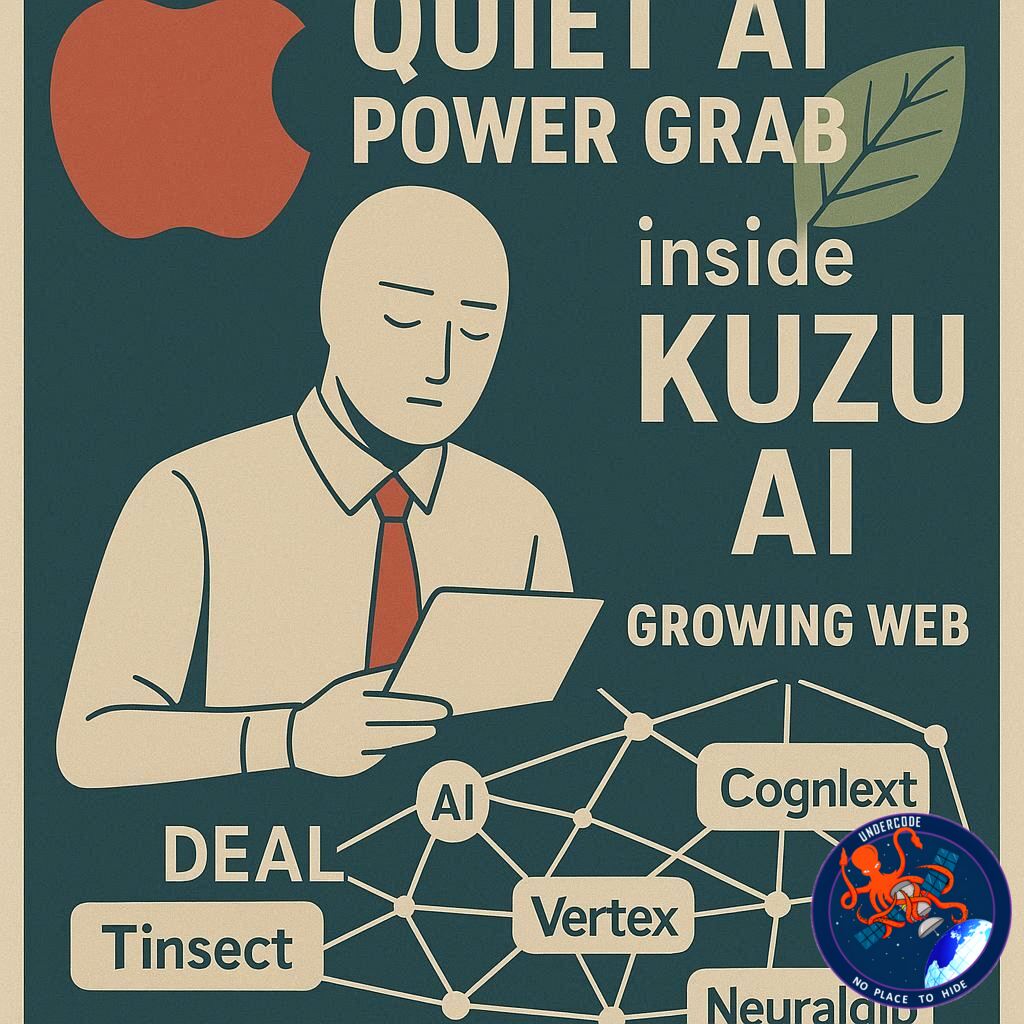
Apple’s recent acquisition streak reveals a company quietly reshaping its technological foundations rather than chasing flashy headlines. While the $2 billion purchase of the AI startup Q.ai grabbed attention, a smaller and far more discreet deal may be just as telling. In October, Apple acquired Kuzu, an embedded graph database company that has since erased much of its public footprint. On the surface, Kuzu looks like a minor addition, but placed in context with Apple’s other 2025 acquisitions, it paints a clear picture of a tech giant methodically reinforcing its AI, data, and platform infrastructure ahead of the next computing era.
the Original
Earlier this month, Apple confirmed its $2 billion acquisition of the AI startup Q.ai, reinforcing its long-term ambitions in artificial intelligence. Alongside this high-profile deal, Apple also completed a quieter acquisition of Kuzu, a company specializing in embedded graph database technology designed for speed, scalability, and ease of use. Kuzu’s acquisition was first noticed in October, after which the company removed most of its online presence, a familiar pattern following Apple takeovers.
Although the financial terms were not disclosed, the deal was significant enough to be reported to the European Union under the Digital Markets Act, which requires large “gatekeepers” like Apple to disclose certain acquisitions. The EU’s public database now provides a rare consolidated view of Apple’s recent purchases.
In 2025 alone, Apple reported several acquisitions, including Pixelmator for image editing, Styra for cloud-native authorization software, IC Mask Design for chip layout services, and multiple AI-focused firms such as WhyLabs, Pointable, and TrueMeeting. The list is updated on a delayed rolling basis, suggesting Apple may have made additional acquisitions not yet disclosed.
Together, these deals show Apple investing across software, hardware design, machine learning monitoring, natural language systems, and now database infrastructure. While none of these moves are individually dramatic, collectively they reveal a tightly coordinated strategy aimed at strengthening Apple’s control over its platforms, tools, and future AI-driven products.
What Undercode Say:
Apple’s acquisition of Kuzu is a classic example of how the company builds competitive advantages long before the market notices. Graph databases are especially valuable in AI systems, where relationships between data points matter more than simple rows and columns. By bringing Kuzu in-house, Apple gains fine-grained control over how relational data is stored, queried, and optimized across its ecosystem.
This move aligns neatly with Apple’s broader AI push. Advanced AI features require fast, efficient data retrieval on-device and in the cloud, especially as Apple emphasizes privacy-preserving computation. An embedded graph database could support everything from recommendation systems and personalization engines to on-device knowledge graphs used by Siri and future AI assistants.
The acquisition also complements Apple’s existing database technologies like FileMaker, suggesting a layered data strategy rather than a single monolithic solution. Apple rarely acquires companies to resell their products; instead, it absorbs talent and technology, integrating them deep into its stack. Kuzu’s disappearance from public view strongly hints that its technology is already being folded into internal projects.
Looking at the broader 2025 acquisition list, a pattern emerges. Pixelmator strengthens creative tools, IC Mask Design supports Apple Silicon, Styra and WhyLabs enhance cloud security and ML reliability, while Pointable and Q.ai reinforce large language model ambitions. Apple is not racing competitors feature-for-feature; it is methodically owning every critical layer underneath.
This strategy reduces dependency on third parties, improves performance optimization, and gives Apple leverage in regulatory and competitive battles. In an era where AI capabilities increasingly define platform power, Apple’s quiet, infrastructure-first approach may prove more durable than splashy product launches. The Kuzu deal, though small, fits perfectly into this long game.
Fact Checker Results
Apple’s acquisition of Kuzu and its reporting under the EU Digital Markets Act are consistent with publicly available EU disclosures. The list of 2025 acquisitions accurately reflects the companies named in official filings. No financial terms for the Kuzu deal have been publicly confirmed.
Prediction
Apple will use Kuzu’s graph database technology to enhance on-device AI features and internal data systems, particularly for Siri, personalization, and future generative AI tools. Over the next two years, these quiet infrastructure investments are likely to surface as faster, more private, and more context-aware AI experiences across iPhone, Mac, and Vision Pro.
🕵️📝✔️Let’s dive deep and fact‑check.
References:
Reported By: 9to5mac.com
Extra Source Hub (Possible Sources for article):
https://www.facebook.com
Wikipedia
OpenAi & Undercode AI
Image Source:
Unsplash
Undercode AI DI v2
Bing
🔐JOIN OUR CYBER WORLD [ CVE News • HackMonitor • UndercodeNews ]
📢 Follow UndercodeNews & Stay Tuned:
𝕏 formerly Twitter 🐦 | @ Threads | 🔗 Linkedin | 🦋BlueSky | 🐘Mastodon


