
Listen to this Post
Introduction
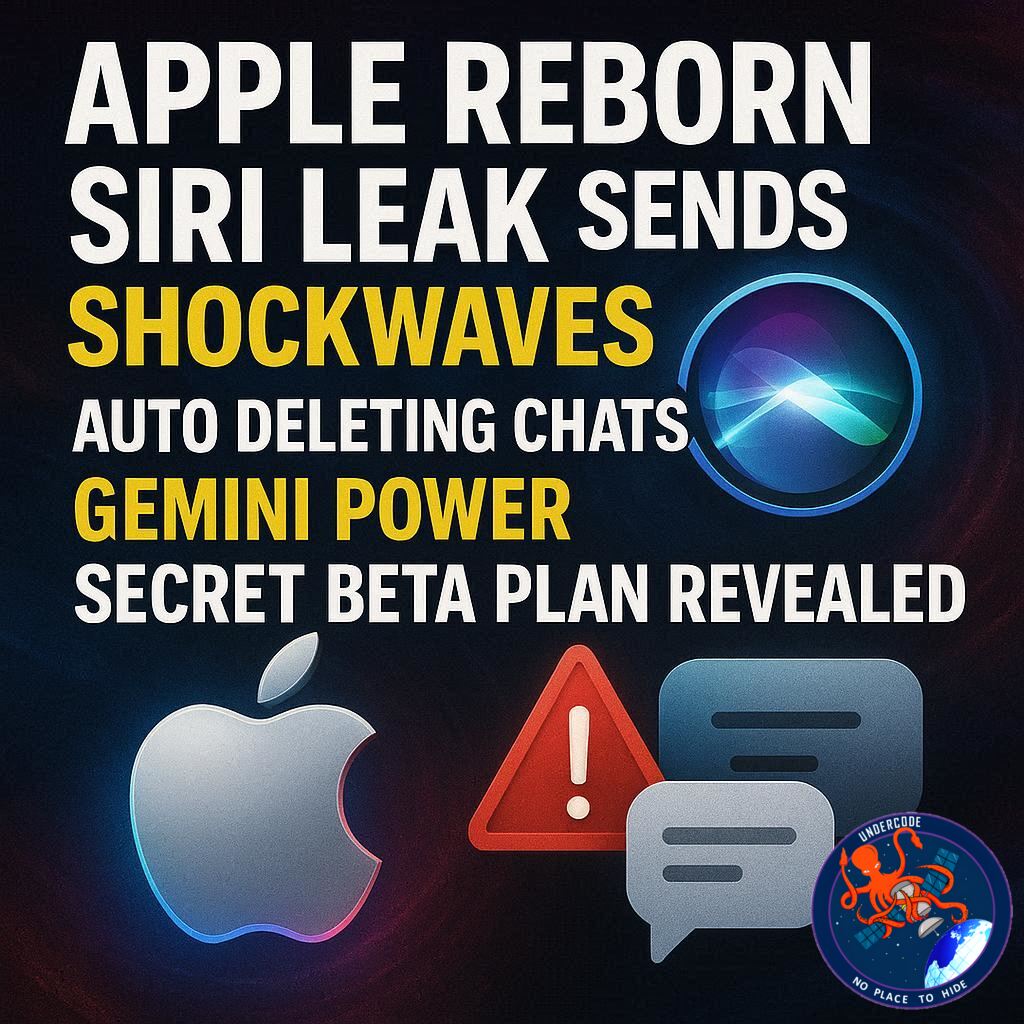
Apple is reportedly preparing one of the most significant upgrades in Siri’s history, aiming to transform the long-criticized voice assistant into a true AI-powered conversational system. Slated for unveiling around WWDC 2026, the new Siri is expected to debut as a standalone app with advanced chat capabilities, privacy-first design choices, and deep integration with Apple Intelligence. After years of delays and skepticism surrounding Apple’s AI ambitions, this move signals a major strategic shift toward competing directly with modern AI assistants like ChatGPT and Google Gemini-based systems.
the Original
Apple is preparing to launch a standalone Siri app as part of its WWDC 2026 announcements, marking a major step in its long-delayed AI strategy. The new Siri is expected to function more like a conversational chatbot, allowing users to engage in both text and voice interactions, view conversation history, start new chats, and even upload files for analysis. A key feature under development is a universal gesture that quickly opens a new Siri conversation, improving accessibility and speed of use.
One of the most notable additions is a privacy-focused auto-deleting chat system similar to iMessage, giving users the ability to automatically erase Siri conversations after a set period such as 30 days, one year, or indefinitely. Apple is also reportedly running Siri on its private cloud infrastructure while using Gemini-based models, ensuring user data is not directly exploited or used for model training by external partners.
The new Siri interface will offer two viewing modes: a ChatGPT-style conversational window or a traditional message-list layout. Despite these upgrades, Apple is expected to label the feature as a beta at launch, continuing its trend of releasing unfinished AI tools under gradual rollout strategies. Internal testing suggests users may even be able to opt out of the new Siri experience entirely. However, concerns remain about Apple’s delayed AI roadmap, especially since the revamped Siri was originally expected to arrive years earlier.
What Undercode Say:
Apple’s Strategic AI Reset and Market Pressure
Apple’s decision to rebuild Siri as a standalone AI app is not just an upgrade—it is a defensive response to the rapid acceleration of AI competitors. ChatGPT, Gemini, and other assistants have already reshaped user expectations, leaving Siri perceived as outdated. By introducing a conversational interface, Apple is essentially acknowledging that traditional command-based voice assistants are no longer sufficient. The standalone app approach also gives Apple more flexibility to iterate without being constrained by the system-level limitations of iOS. This signals a shift from Siri as a utility feature to Siri as a product ecosystem of its own.
Privacy as Apple’s Core Differentiator
Apple is doubling down on its long-standing privacy narrative by integrating auto-deleting conversations and private cloud processing. Unlike competitors that rely heavily on centralized data training, Apple is attempting to maintain a strict boundary between user interactions and AI model development. The inclusion of auto-deletion mirrors messaging apps, reinforcing the idea that AI conversations should be temporary and user-controlled. However, this also highlights Apple’s challenge: balancing AI performance with strict privacy constraints that may limit model learning compared to rivals.
Gemini Integration and Hidden Dependencies
The reliance on Gemini-based models introduces an interesting contradiction in Apple’s ecosystem independence. While Apple emphasizes privacy through its own infrastructure, the underlying intelligence is still partially powered by Google’s technology. This hybrid structure suggests Apple is prioritizing speed to market over full AI autonomy. It also raises strategic questions about long-term dependency on external AI providers, especially in a landscape where AI capabilities are becoming core competitive advantages.
The Beta Strategy and Controlled Rollout Philosophy
Apple’s decision to keep Siri labeled as “beta,” even after public release, reflects its cautious deployment philosophy. Historically, Apple uses beta branding to soften expectations while iterating in real time. This allows the company to release early while maintaining narrative control over imperfections. In Siri’s case, this approach also protects Apple from criticism if performance lags behind competitors. However, it also risks reinforcing the perception that Apple is still behind in the AI race.
User Experience Shift Toward Chat-Based Interaction
The introduction of a ChatGPT-style interface represents a fundamental redesign of how users interact with Siri. Instead of single-command responses, users will engage in continuous dialogue threads, upload files, and manage conversational histories. This moves Siri closer to being a productivity assistant rather than a simple voice tool. The addition of multiple interface modes also suggests Apple is experimenting with hybrid interaction models that blend traditional messaging with AI conversation flows.
Ecosystem Implications for Apple Intelligence
Siri’s transformation will likely become the central pillar of Apple Intelligence going forward. By embedding conversational AI deeply into iOS 27, Apple is attempting to unify its fragmented AI efforts into a single user-facing experience. However, the success of this ecosystem depends heavily on execution quality. If Siri fails to deliver meaningful intelligence improvements, Apple risks diluting its broader AI branding strategy.
Market Timing and Competitive Lag Concerns
Despite the ambitious redesign, Apple’s timeline remains a critical weakness. The revamped Siri was originally expected years earlier, and the current rollout still positions it as catching up rather than leading. In the fast-moving AI sector, delays can significantly reduce perceived innovation value. Competitors have already normalized advanced conversational agents, meaning Apple must not only match features but exceed user expectations to regain relevance.
🔍 Fact Checker Results
❌ Siri overhaul has been repeatedly delayed from earlier expected timelines.
✅ Apple is reportedly exploring standalone AI assistant experiences similar to chat-based models.
❌ Gemini integration details remain partially speculative and not fully confirmed publicly.
📊 Prediction
Apple’s new Siri will likely launch with strong marketing momentum but mixed real-world reception due to performance limitations. Over time, Apple will refine the assistant into a tightly integrated Apple Intelligence hub, but initial versions will probably lag behind competitors in reasoning depth. The biggest impact will not be immediate dominance, but gradual ecosystem lock-in that makes Siri harder to replace inside Apple devices.
🕵️📝Let’s dive deep and fact‑check.
References:
Reported By: 9to5mac.com
Extra Source Hub (Possible Sources for article):
https://www.github.com
Wikipedia
OpenAi & Undercode AI
Image Source:
Unsplash
Undercode AI DI v2
Bing
🔐JOIN OUR CYBER WORLD [ CVE News • HackMonitor • UndercodeNews ]
📢 Follow UndercodeNews & Stay Tuned:
𝕏 formerly Twitter 🐦 | @ Threads | 🔗 Linkedin | 🦋BlueSky | 🐘Mastodon


