
Listen to this Post
Introduction: Apple’s Unexpected Revival in Its Toughest Market
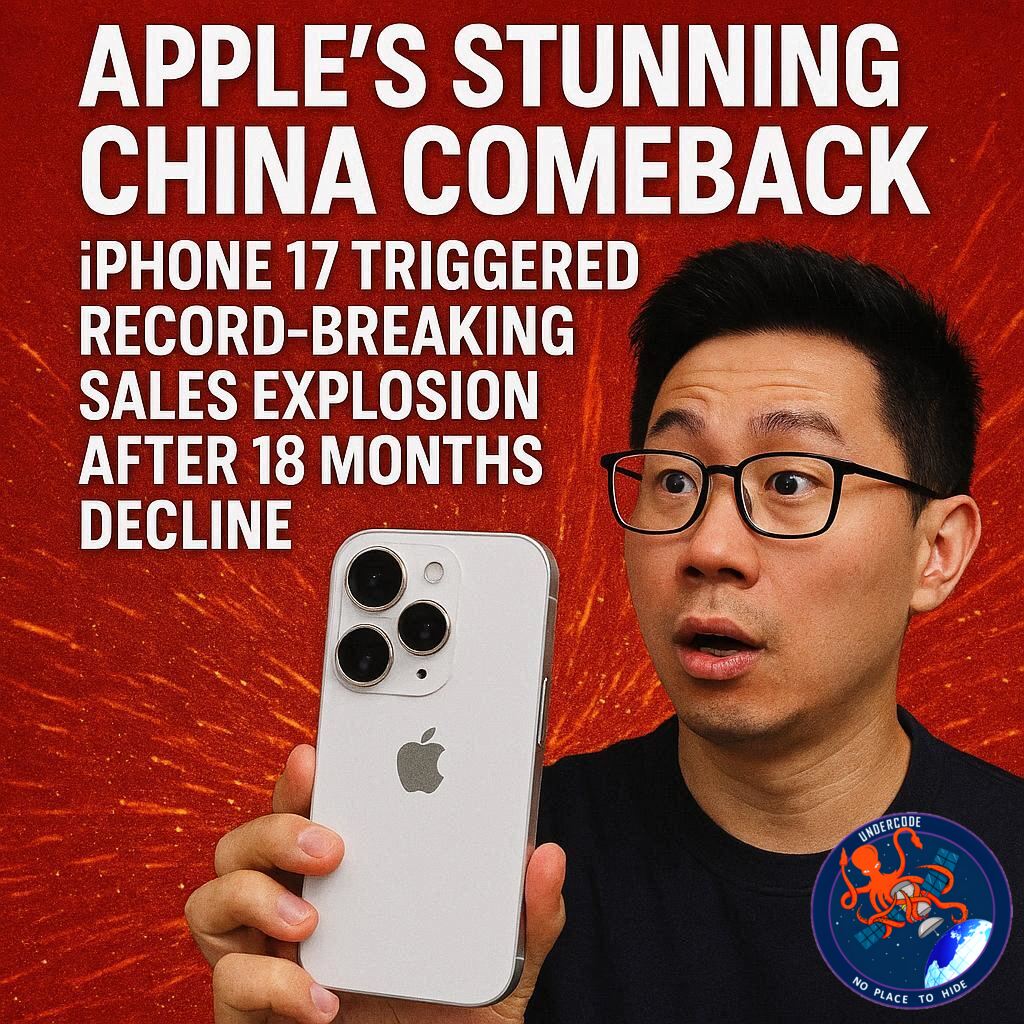
Apple closed the final quarter of last year with record-breaking earnings, delivering a surprise twist in a market many had written off. After nearly a year and a half of shrinking sales in China, the company staged a dramatic turnaround, powered by a sharp rebound in iPhone demand. CEO Tim Cook singled out China as a decisive growth engine, pointing to surging store traffic, a growing installed base, and a historic iPhone sales quarter. Analysts now say this revival was not accidental, but the result of three perfectly aligned factors that reshaped Apple’s position in one of the world’s most competitive smartphone markets.
the Original A Quarter That Rewrote Apple’s China Story
Apple reported that Greater China revenue jumped 38% year-on-year, marking the best iPhone quarter in the region’s history. Tim Cook emphasized that growth came from both loyal users upgrading to newer models and a strong wave of customers switching from Android devices. Store traffic across China rose by strong double digits, and Apple’s installed base reached an all-time high in both Mainland China and the wider region. According to Worldpanel survey data, iPhones ranked among the top three smartphones in urban China during the quarter, reinforcing the scale of the comeback.
This success followed an 18-month decline in iPhone sales, largely attributed to rapidly improving devices from domestic brands that challenged Apple on features and pricing. Analysts interviewed by Wired identified three main drivers behind the reversal. First, the base iPhone 17 delivered unusually strong value, offering premium features previously reserved for Pro models. With an Always-On display, ProMotion, an advanced 18MP selfie camera, and a 48MP Ultra Wide lens, the base model narrowed the gap with the Pro lineup more than any previous generation.
Second, Apple strategically priced the iPhone 17 in China at 5,999 RMB, just under the government’s 6,000 RMB subsidy threshold, equivalent to roughly $860. This allowed buyers to qualify for a discount of up to 15% under Beijing’s $43 billion consumer subsidy program aimed at stimulating domestic spending in 2025. Finally, timing played a critical role. Many Chinese iPhone users upgrade every three to four years, and the last major upgrade wave coincided with the iPhone 13 launch. The iPhone 17 arrived exactly when a large portion of Apple’s user base was ready to replace aging devices, amplifying demand at the perfect moment.
What Undercode Say: Why This Quarter Could Reshape Apple’s Long-Term China Strategy
Apple’s China rebound is more than a single strong quarter; it signals a recalibration of strategy that may define the company’s future in emerging and highly competitive markets. For years, Apple relied on brand prestige and ecosystem lock-in to justify premium pricing, but the iPhone 17 shows a clear shift toward value-driven flagship design. By pushing high-end features into the base model, Apple effectively reduced the psychological gap between “good enough” and “best,” a move that resonates strongly in price-sensitive markets like China.
The decision to deliberately undercut the subsidy ceiling by a razor-thin margin was not just clever pricing, but a sign of Apple’s growing willingness to adapt to local policy environments. In a market where domestic brands often benefit from national incentives, Apple’s alignment with government subsidy rules helped neutralize a structural disadvantage it has faced for years. This approach could become a template for Apple in other regions where state incentives influence consumer electronics demand.
Equally important is the upgrade cycle dynamic. The iPhone 13 represented a major design and performance leap, and many users held onto those devices longer than usual. The iPhone 17, by offering a meaningful step forward even in its base form, provided a compelling reason to upgrade sooner rather than later. This suggests Apple may be learning how to re-ignite demand without relying solely on radical redesigns or exclusive Pro-only features.
There is also a competitive message embedded in these numbers. Chinese smartphone makers have narrowed the hardware gap significantly, but Apple’s strength still lies in ecosystem integration, software longevity, and perceived reliability. When hardware value aligns closely enough with those strengths, Apple regains momentum quickly. The surge in Android switchers indicates that Apple is not only defending its base but actively expanding it again, a critical metric in a saturated market.
However, sustaining this growth will not be easy. Local brands are likely to respond aggressively, either by undercutting prices further or accelerating innovation cycles. Apple’s challenge will be to maintain this balance between premium identity and mass-market accessibility without eroding margins or brand equity. If the iPhone 17 marks a permanent shift rather than a one-off adjustment, Apple may have found a sustainable formula for China. If not, this quarter could prove to be a peak rather than a new baseline.
Fact Checker Results
Apple did report record quarterly earnings with a 38% year-on-year increase in Greater China revenue, confirming the scale of the rebound.
The subsidy threshold of 6,000 RMB and the estimated $860 price point align with China’s 2025 consumer stimulus policy.
Analyst commentary consistently supports the view that the base iPhone 17’s feature set played a central role in driving upgrades.
Prediction
If Apple continues pushing premium features into its base models while aligning pricing with local incentives, China could return to being one of its most reliable growth engines. Over the next two upgrade cycles, Apple is likely to prioritize value perception over strict product tier separation, especially in markets where domestic competitors dominate on price. This strategy may compress short-term margins but could significantly expand Apple’s installed base, setting the stage for stronger long-term services revenue in China.
🕵️📝✔️Let’s dive deep and fact‑check.
References:
Reported By: 9to5mac.com
Extra Source Hub (Possible Sources for article):
https://www.facebook.com
Wikipedia
OpenAi & Undercode AI
Image Source:
Unsplash
Undercode AI DI v2
Bing
🔐JOIN OUR CYBER WORLD [ CVE News • HackMonitor • UndercodeNews ]
📢 Follow UndercodeNews & Stay Tuned:
𝕏 formerly Twitter 🐦 | @ Threads | 🔗 Linkedin | 🦋BlueSky | 🐘Mastodon


