
Listen to this Post
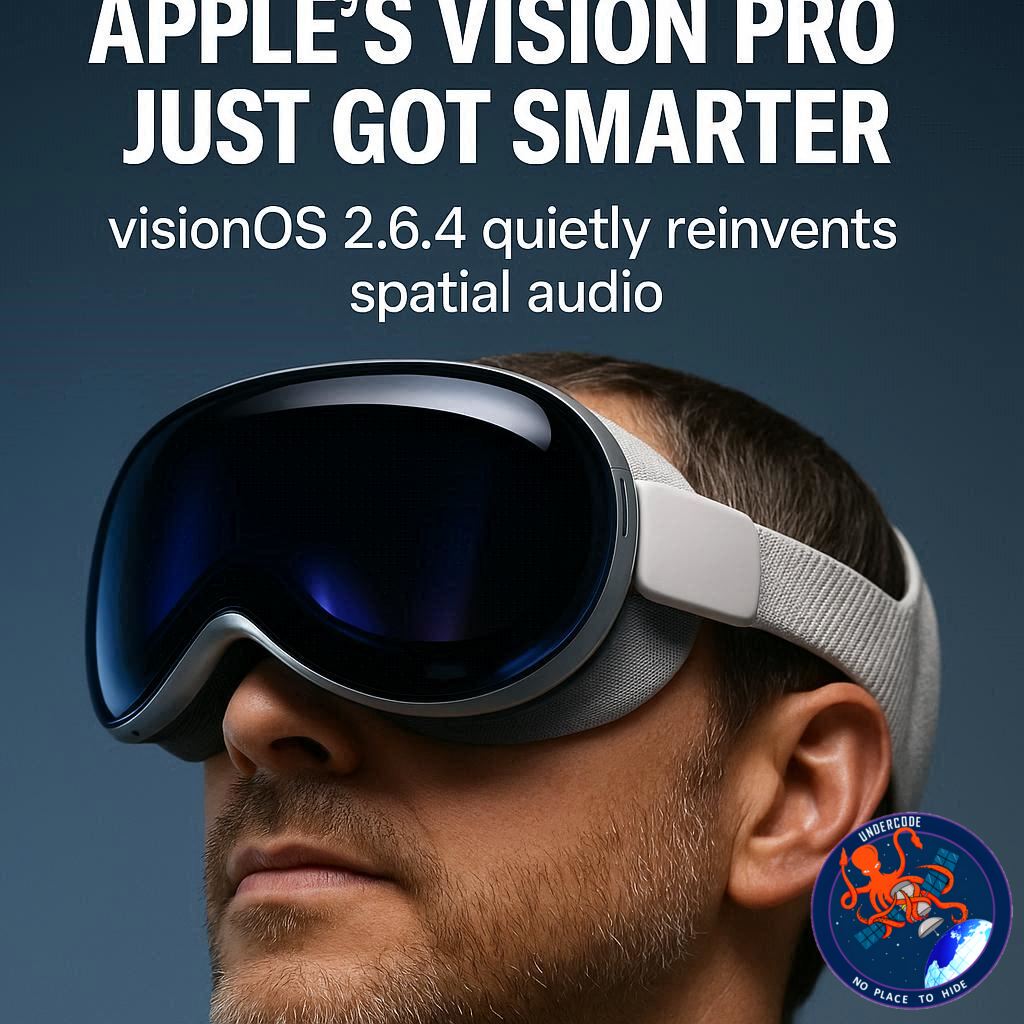
A Subtle Update with Big Implications
Apple has rolled out visionOS 26.4 this week, introducing a mix of visible enhancements and deeply technical upgrades for the Apple Vision Pro. While the headline features include new emoji additions and an improved video podcast experience, the real innovation lies beneath the surface. This update refines how Spatial Audio behaves, making it faster and more intelligent through a clever engineering approach that most users may never consciously notice—but will certainly feel.
Faster Spatial Audio Through Memory of Space
One of the most intriguing upgrades in visionOS 26.4 is the improvement to Spatial Audio initialization. Apple has enabled the system to remember the acoustic characteristics of rooms users have previously occupied. In simple terms, the headset learns how sound behaves in familiar environments and uses that memory to deliver audio faster the next time you return to the same space.
Previously, Spatial Audio would adapt dynamically to surroundings, but now it goes a step further. Instead of recalculating everything from scratch, the system recalls past data, reducing the time it takes for immersive audio to kick in. It’s a subtle shift, but one that demonstrates Apple’s focus on refining user experience through invisible yet impactful changes.
A Feature You Didn’t Know You Needed
Interestingly, most users probably never thought about how long Spatial Audio takes to start. It’s one of those features that works so seamlessly it rarely draws attention. However, Apple’s update highlights just how much effort goes into shaving off milliseconds in performance.
By optimizing something as seemingly minor as audio initialization speed, Apple reinforces its commitment to precision. The company is not just improving what users see—it’s enhancing what they feel, often without them realizing it.
Vision Pro Learns Your Environment
The update also signals a broader evolution in how the Vision Pro interacts with the physical world. The headset is no longer just reacting to your environment in real time—it is learning from it. By storing acoustic data from previously visited spaces, it becomes more personalized over time.
This creates a more consistent and immersive experience. Whether you’re watching a movie, attending a virtual meeting, or playing a game, the audio feels more natural and immediate, tailored to the exact room you’re in.
Expanding Capabilities with Foveated Streaming
Beyond audio, visionOS 26.4 introduces support for foveated streaming, starting with Nvidia’s CloudXR technology. This advancement allows the system to prioritize rendering quality where your eyes are focused, reducing unnecessary processing in peripheral areas.
The result is more efficient performance and the ability to support demanding applications like flight simulations and racing games. Titles such as X-Plane and iRacing are now better equipped to deliver high-quality, immersive experiences through cloud-based rendering.
A Step Toward More Realistic Virtual Experiences
Foveated streaming is a key step in bridging the gap between local and cloud computing. By intelligently allocating resources based on eye tracking, Apple and its partners can deliver richer visuals without overloading the hardware.
This opens the door for more complex simulations and interactive environments, pushing the Vision Pro closer to becoming a true next-generation computing platform rather than just a premium headset.
What Undercode Say:
Apple’s Obsession with Invisible Innovation
Apple’s latest update reflects a long-standing philosophy: the best technology improvements are the ones users don’t notice directly but would miss instantly if removed. The enhancement to Spatial Audio is a perfect example. It doesn’t change how users interact with the device on the surface, yet it subtly elevates the entire experience.
The Rise of Context-Aware Computing
What stands out most is the shift toward context-aware systems. By remembering acoustic properties of rooms, Vision Pro is stepping into a new category of devices that build a memory of the user’s physical world. This is no longer just augmented reality—it’s adaptive reality, where the device evolves alongside the user’s habits and environments.
Data as the New User Experience Layer
Behind this feature lies a deeper trend: data-driven personalization. Every room scanned, every acoustic profile stored, becomes part of a growing dataset that improves performance. Apple is essentially turning everyday spaces into optimized environments without requiring any manual setup from the user.
Competitive Edge in Mixed Reality
From a competitive standpoint, this kind of refinement gives Apple an edge. While other companies focus heavily on hardware specifications or flashy features, Apple is investing in experiential polish. These micro-optimizations can create a noticeable difference over time, especially for users who spend hours in immersive environments.
The Importance of Speed Perception
Even though Spatial Audio initialization might only be faster by a fraction of a second, perception matters. Faster response times contribute to a sense of immediacy and realism. In immersive computing, delays—even tiny ones—can break the illusion. Apple understands that maintaining immersion is as much about eliminating friction as it is about adding features.
Foveated Streaming Signals a Bigger Strategy
The addition of foveated streaming support is not just a technical upgrade—it’s a strategic move. It shows Apple’s intent to integrate more cloud-based experiences into Vision Pro. By leveraging technologies like CloudXR, Apple can expand the device’s capabilities without being limited by onboard hardware.
Gaming and Simulation as Growth Drivers
Support for applications like flight and racing simulations suggests that Apple sees gaming and professional simulation as key growth areas. These use cases demand high performance, and foveated streaming provides a pathway to deliver that without compromising efficiency.
Building a Smarter Ecosystem
This update also hints at a future where Apple devices communicate more intelligently with their surroundings. Imagine a world where your devices not only recognize your home or office but adapt instantly to each environment’s unique characteristics. Vision Pro is laying the groundwork for that ecosystem.
Subtle Changes, Long-Term Impact
While visionOS 26.4 may not appear groundbreaking at first glance, its long-term implications are significant. Small improvements like faster Spatial Audio can accumulate into a noticeably better user experience over time, reinforcing user loyalty and satisfaction.
Apple’s Quiet Confidence
Ultimately, this update showcases Apple’s confidence in its technology. There’s no need for flashy announcements when the improvements speak for themselves. By focusing on precision and refinement, Apple continues to push the boundaries of what immersive technology can achieve.
🔍 Fact Checker Results
Verified Improvements in Spatial Audio
✅ Apple officially confirmed faster Spatial Audio initialization through room memory features in visionOS 26.4 release notes.
Confirmed Support for Foveated Streaming
✅ Integration with Nvidia CloudXR and support for simulation apps like X-Plane and iRacing aligns with announced capabilities.
No Evidence of Major Hardware Changes
❌ The update is purely software-based, with no new hardware upgrades introduced alongside it.
📊 Prediction
Smarter Headsets Will Redefine Everyday Spaces
The ability to remember and adapt to physical environments suggests that future mixed reality devices will become deeply integrated into daily life. Over time, headsets like Vision Pro may transform homes, offices, and public spaces into personalized digital environments, where audio, visuals, and interactions are automatically optimized without user input.
🕵️📝✔️Let’s dive deep and fact‑check.
References:
Reported By: 9to5mac.com
Extra Source Hub (Possible Sources for article):
https://www.twitter.com
Wikipedia
OpenAi & Undercode AI
Image Source:
Unsplash
Undercode AI DI v2
Bing
🔐JOIN OUR CYBER WORLD [ CVE News • HackMonitor • UndercodeNews ]
📢 Follow UndercodeNews & Stay Tuned:
𝕏 formerly Twitter 🐦 | @ Threads | 🔗 Linkedin | 🦋BlueSky | 🐘Mastodon


