
Listen to this Post
Introduction
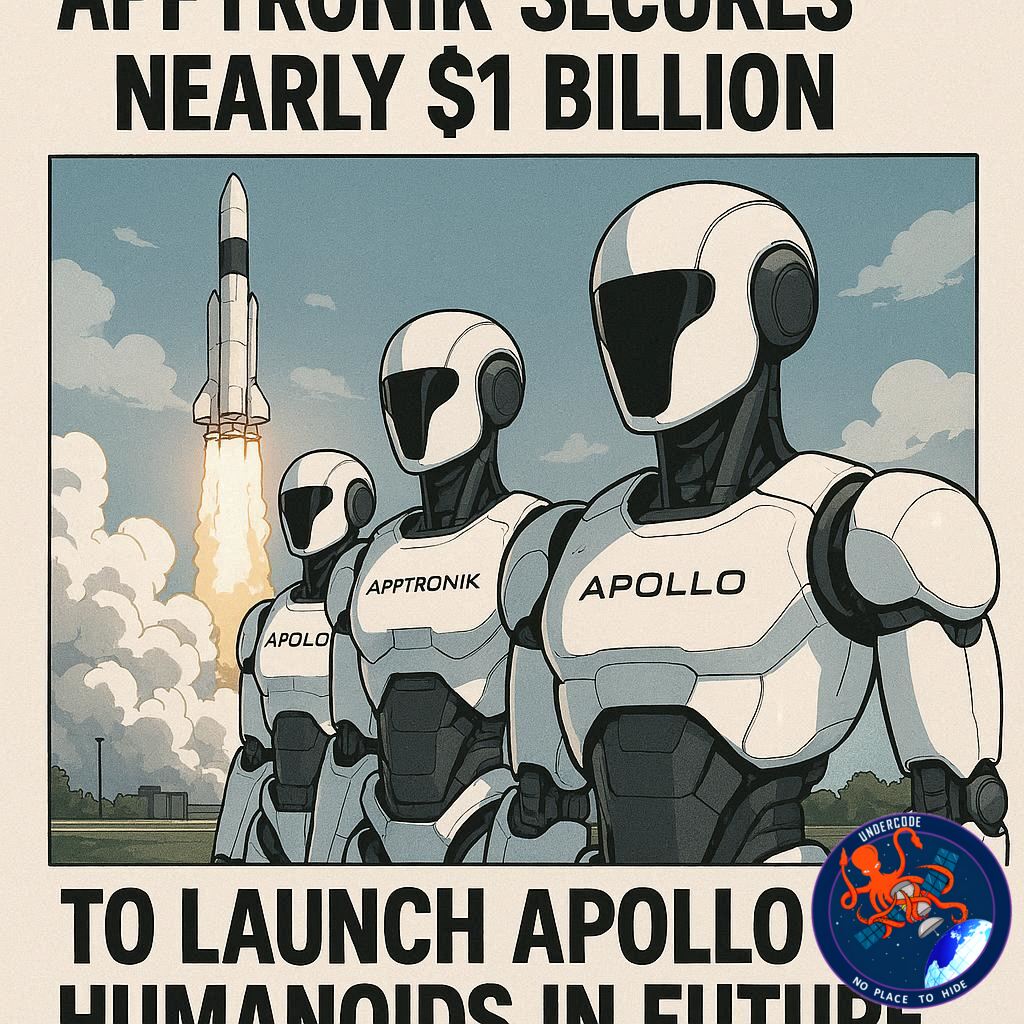
Austin-based robotics innovator Apptronik is capturing global attention with a nearly $1 billion Series A funding total, positioning its humanoid robot, Apollo, for rapid deployment across logistics and manufacturing sectors. The company is not just creating machines; it’s crafting collaborative partners designed to work alongside humans, addressing the growing demand for automation without replacing human labor. With established tech and industrial giants backing the venture, the stage is set for a transformative year in robotics.
Apptronik’s Record-Breaking Funding Round
Apptronik recently closed a $520 million Series A-X funding round, following an already oversubscribed $415 million Series A in 2025, bringing the total to over $935 million. Investors like Google, Mercedes-Benz, B Capital, and PEAK6 returned, while newcomers such as AT&T Ventures, John Deere, and the Qatar Investment Authority joined. Experts highlight that the Series A-X round was reportedly at a 3x multiple of the original valuation, signaling strong confidence in Apptronik’s long-term vision.
The capital injection is earmarked to expand production and pilot deployments worldwide. New facilities for robot training and data collection will improve Apollo’s performance in real-world environments, accelerating time-to-market and integration into industries that rely heavily on automation. Logistics, manufacturing, and other sectors with physically demanding tasks stand to gain the most from this collaboration between humans and robots.
Strategic Partnerships Accelerate Development
Apptronik is leveraging partnerships with influential companies like Mercedes-Benz, GXO Logistics, Jabil, and Google DeepMind. These collaborations aim to merge advanced robotics hardware with cutting-edge AI technologies, ensuring Apollo is capable of sophisticated, collaborative work. CEO Jeff Cardenas emphasizes that Apollo is designed not merely as a tool but as a trusted partner, capable of transporting components, sorting items, and performing repetitive tasks alongside humans. This approach marks a departure from traditional industrial robots, which often operate separately from human workers.
Apollo’s Initial Focus and Long-Term Ambitions
Apollo’s immediate target sectors are logistics and manufacturing, where repetitive and physically intensive tasks are most prevalent. By handling these operations, Apollo frees human employees for more strategic and creative work. Industry experts anticipate that after successful integration in these areas, Apptronik may expand into retail, healthcare, and eventually consumer markets. The company’s trajectory suggests that humanoid robotics could become a common fixture in everyday life sooner than many expect.
Building on a Decade of Experience
Apptronik has leveraged nearly ten years of research and development, building on its prior work with NASA’s Valkyrie robot and developing 15 prototype robots before Apollo. Nearly 300 employees contribute to design, testing, and deployment, drawing on the expertise cultivated at the University of Texas at Austin’s Human Centered Robotics Lab. The lab’s focus on human-robot collaboration aligns perfectly with Apptronik’s vision, positioning Apollo as a robot capable of seamless interaction with human teams.
What Undercode Say: The Strategic and Industry Implications
Apptronik’s growth signals a pivotal moment in the robotics landscape. The company is not merely chasing automation for efficiency; it is redefining the human-robot dynamic. By creating machines that complement rather than replace humans, Apptronik addresses one of the most pressing challenges in industrial automation: maintaining workforce engagement while improving productivity.
Financially, the massive funding—nearly $1 billion—demonstrates investor confidence in both the technology and the market potential. The reported 3x valuation increase underscores the belief that humanoid robotics will play a central role in next-generation industrial processes. Moreover, partnerships with Google DeepMind and major industrial players suggest that Apollo’s AI capabilities could leapfrog existing industrial robots, offering flexibility, learning, and collaboration that legacy systems lack.
Operationally, the focus on logistics and manufacturing is both pragmatic and strategic. These sectors demand high-volume, repetitive labor, which is ideal for early-stage humanoid deployment. If Apollo proves successful here, scaling to sectors like healthcare, retail, and domestic applications becomes a feasible next step. The ripple effects could be profound: improving workplace safety, reducing labor shortages, and reshaping labor economics across multiple industries.
From a technological standpoint, the integration of AI with humanoid hardware positions Apptronik at the forefront of a new class of robots capable of adaptive problem-solving and human-like interaction. The training and data collection infrastructure being developed suggests that Apollo could continuously improve its performance, creating a cycle of learning and deployment that accelerates adoption. This is a marked shift from one-off industrial robots that require extensive programming and human supervision.
Socially, the rise of collaborative humanoids like Apollo could redefine workforce structures. Rather than displacing jobs, these robots may allow companies to reallocate human talent to creative, strategic, or supervisory roles. Early adoption in high-demand, physically taxing sectors could serve as a model for responsible robotic integration worldwide.
The timing is critical. With Apptronik targeting 2026 for expanded deployment, the company may set the benchmark for humanoid robotics in real-world industrial environments. Success could trigger broader investment in the sector, accelerate AI-driven robotics R&D, and shift public perception toward viewing robots as collaborators rather than threats.
Fact Checker Results
✅ Apptronik’s total Series A funding exceeds $935 million.
✅ Investors include both legacy players like Google and new entrants such as John Deere.
✅ Apollo is designed for collaborative, not replacement, roles in logistics and manufacturing.
Prediction
📊 By 2026, Apollo humanoid robots could become a standard feature in high-demand industrial sectors.
📊 Partnerships with AI leaders suggest Apptronik’s robots may rapidly outperform traditional industrial bots in adaptability.
📊 If successful, expansion into healthcare and retail is likely within 3–5 years, reshaping workforce dynamics globally.
▶️ Related Video (84% Match):
🕵️📝✔️Let’s dive deep and fact‑check.
References:
Reported By: timesofindia.indiatimes.com
Extra Source Hub (Possible Sources for article):
https://www.github.com
Wikipedia
OpenAi & Undercode AI
Image Source:
Unsplash
Undercode AI DI v2
Bing
🔐JOIN OUR CYBER WORLD [ CVE News • HackMonitor • UndercodeNews ]
📢 Follow UndercodeNews & Stay Tuned:
𝕏 formerly Twitter 🐦 | @ Threads | 🔗 Linkedin | 🦋BlueSky | 🐘Mastodon


