
Listen to this Post
Introduction: A 24-Hour Window That Changed the Battlefield
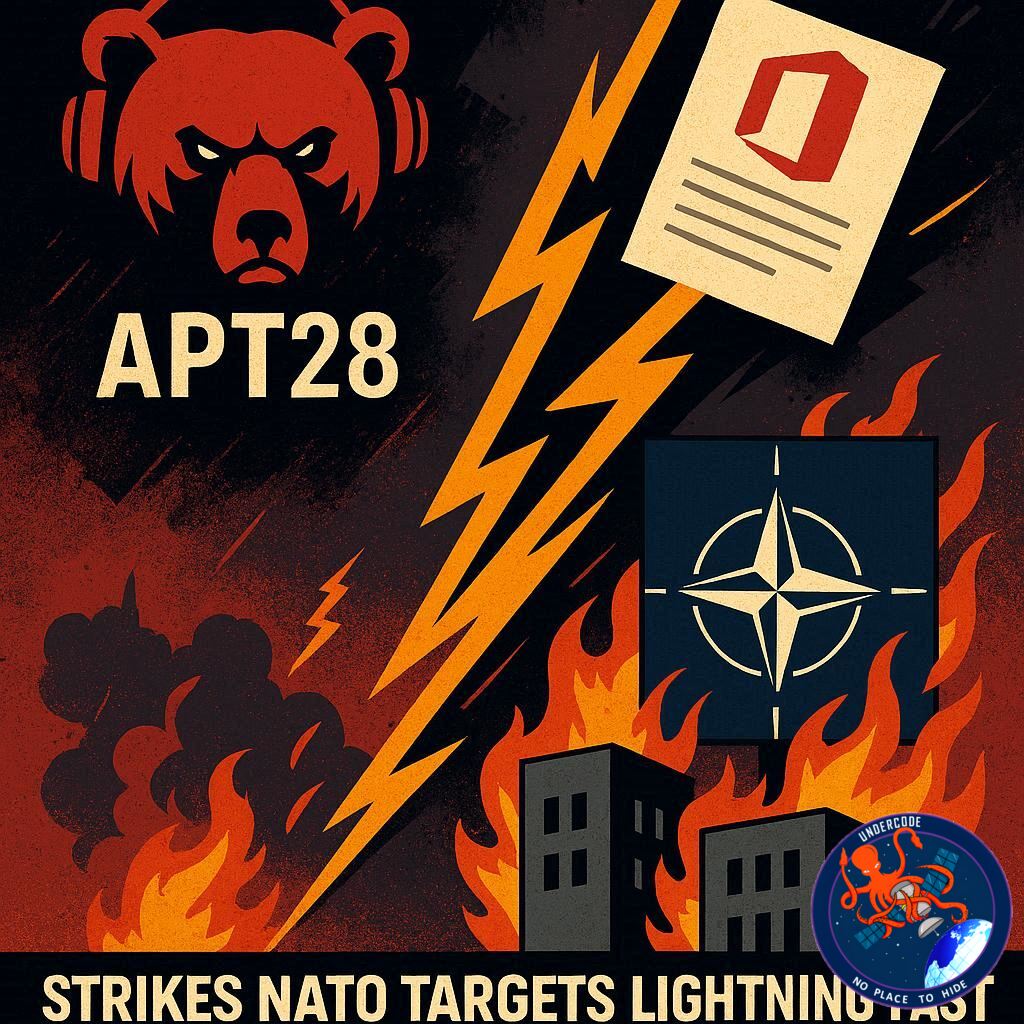
A familiar threat actor has once again demonstrated how quickly modern cyber-espionage can escalate. APT28, a well-known advanced persistent threat group, moved at exceptional speed to exploit a newly disclosed Microsoft Office vulnerability, CVE-2026-21509, launching a coordinated spear-phishing campaign against NATO-linked military and government entities. The operation unfolded within just 24 hours of the flaw becoming usable, highlighting a growing gap between vulnerability disclosure and real-world defensive readiness.
the Original Report
The report shared by Cybersecurity News Everyday outlines a rapid and aggressive cyber operation attributed to APT28. According to the information, the group weaponized the Microsoft Office vulnerability CVE-2026-21509 almost immediately after it became exploitable. Within a single day, targets connected to NATO military and government institutions—particularly with links to Poland—began receiving carefully crafted spear-phishing emails.
These phishing messages were not generic. They were tailored to appear operationally relevant, increasing the likelihood of engagement by high-value personnel. Once opened, the malicious documents delivered two known implants: BeardShell and NotDoor. Both tools are associated with stealthy persistence, reconnaissance, and long-term access rather than immediate disruption.
The campaign reportedly lasted around 72 hours, suggesting a tightly scheduled intelligence-gathering window rather than an open-ended intrusion. This limited timeframe points to a pre-planned operation, likely aligned with geopolitical or military intelligence priorities. The activity fits APT28’s historical pattern of targeting defense, government, and international organizations during periods of heightened political sensitivity.
The source emphasizes that the speed of exploitation is the most alarming aspect. APT28 did not wait for widespread proof-of-concept code to circulate. Instead, it appears the group either developed or acquired exploit capability internally, allowing it to strike before many organizations could patch or even assess exposure. This incident reinforces the ongoing role of cyber operations as a form of information warfare, where timing and precision are as critical as technical sophistication.
What Undercode Say:
This operation is less about a single vulnerability and more about what it reveals regarding the modern threat landscape. APT28’s ability to operationalize CVE-2026-21509 within 24 hours signals a mature exploit development pipeline, likely supported by dedicated research teams and pre-positioned infrastructure. This is not opportunistic hacking; it is industrialized cyber-espionage.
The 72-hour duration is also telling. Short, intense campaigns reduce exposure, limit forensic artifacts, and complicate attribution. It suggests the attackers knew exactly what data they were after and had already mapped their targets in advance. In many ways, this mirrors kinetic military operations: rapid insertion, intelligence extraction, and clean withdrawal.
The use of spear-phishing via Microsoft Office remains depressingly effective. Despite years of awareness training, document-based delivery continues to succeed, especially when paired with zero-day or near-zero-day vulnerabilities. For NATO-aligned organizations, this raises uncomfortable questions about reliance on legacy document workflows in high-risk environments.
BeardShell and NotDoor are not loud tools. Their presence indicates espionage rather than sabotage, reinforcing the likelihood that this campaign was intelligence-driven, possibly focused on military planning, logistics, or diplomatic communications. Poland’s mention in connection with the targeting aligns with its strategic role within NATO, especially given ongoing regional security tensions.
From a defensive standpoint, this incident underlines the shrinking margin of error. Patch cycles measured in days are no longer sufficient for high-value targets. Behavioral detection, rapid isolation of suspicious documents, and assume-breach models are no longer “best practices” but baseline requirements. Organizations that wait for confirmation before acting will consistently be operating one step behind adversaries like APT28.
Fact Checker Results
The attribution to APT28 aligns with previously documented tactics, techniques, and tooling associated with the group.
The rapid exploitation timeline is plausible given APT28’s historical access to advanced exploit development capabilities.
No evidence in the report contradicts known patterns of NATO-focused cyber-espionage activity.
Prediction
APT28 and similar state-aligned groups will increasingly exploit the gap between vulnerability disclosure and patch deployment, especially in widely used productivity software. Short-burst espionage campaigns will become more common, prioritizing speed and precision over persistence. NATO-linked organizations should expect more operations of this nature throughout 2026, particularly during periods of geopolitical tension or military coordination.
🕵️📝✔️Let’s dive deep and fact‑check.
References:
Reported By: x.com
Extra Source Hub (Possible Sources for article):
https://www.discord.com
Wikipedia
OpenAi & Undercode AI
Image Source:
Unsplash
Undercode AI DI v2
Bing
🔐JOIN OUR CYBER WORLD [ CVE News • HackMonitor • UndercodeNews ]
📢 Follow UndercodeNews & Stay Tuned:
𝕏 formerly Twitter 🐦 | @ Threads | 🔗 Linkedin | 🦋BlueSky | 🐘Mastodon


