
Listen to this Post
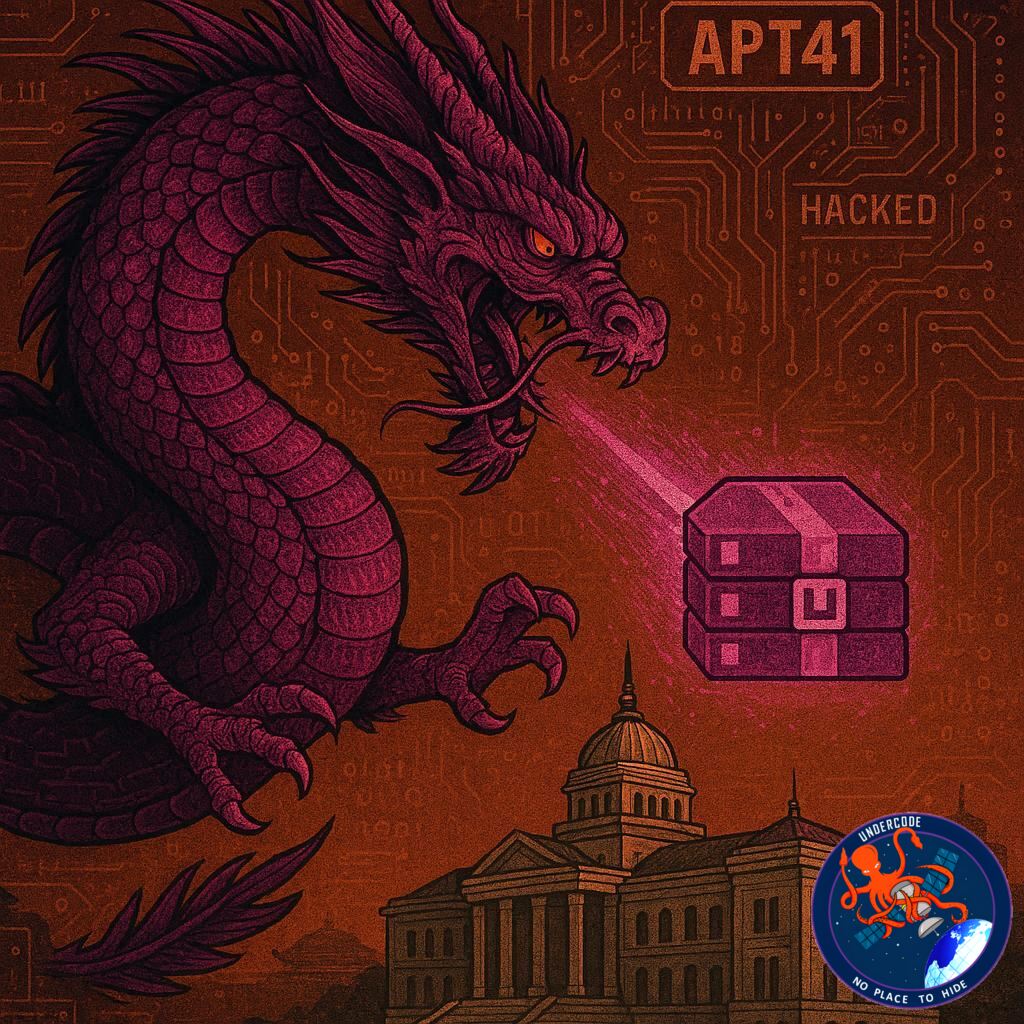
A Coordinated Cyber Espionage Campaign Comes Into Focus
A newly observed cyber-espionage operation has drawn sharp attention from the global security community after evidence surfaced linking the Amaranth Dragon threat cluster to APT41, one of the most notorious China-nexus advanced persistent threat groups. The campaign leverages a recently disclosed WinRAR vulnerability, CVE-2025-8088, to compromise high-value targets across Southeast Asia, with a particular focus on government agencies and law enforcement bodies. The operation stands out for its disciplined tradecraft, heavy use of encryption, and abuse of legitimate infrastructure to blend malicious activity into normal internet traffic.
the Original Reported Activity
The campaign was first highlighted through social media monitoring of threat intelligence feeds, pointing to an active exploitation of CVE-2025-8088, a flaw in WinRAR that allows attackers to execute malicious code when a victim opens a specially crafted archive. Amaranth Dragon weaponizes this weakness by distributing malicious compressed files that appear legitimate, often masquerading as official documents or internal communications relevant to public-sector employees.
Once opened, these archives deploy encrypted payloads designed to evade signature-based detection. The malware establishes persistence while maintaining a low operational footprint, avoiding noisy behaviors that might alert endpoint protection systems. A key component of the operation is its command-and-control (C2) infrastructure, which is routed through Cloudflare-backed services. This choice allows the attackers to hide their true server locations, complicate takedown efforts, and exploit the trust defenders often place in well-known content delivery networks.
The victims identified so far are predominantly located in Southeast Asia, a region that has become a strategic focal point for geopolitical intelligence collection. Law enforcement agencies appear to be a priority target, suggesting an interest in surveillance capabilities, investigative data, or insight into counterintelligence operations. The tactics, techniques, and procedures (TTPs) observed strongly overlap with historical APT41 activity, reinforcing attribution confidence among researchers.
Technical Characteristics of the Attack Chain
The initial access vector relies on social engineering combined with technical exploitation. The malicious WinRAR archives are engineered to trigger the vulnerability automatically upon extraction, requiring minimal user interaction. Payloads are layered and encrypted, often unpacking in memory to avoid leaving artifacts on disk. Network communications are carefully timed and throttled, reducing the chance of anomalous traffic spikes.
Cloudflare-backed C2 infrastructure plays a critical role in the campaign’s resilience. By hiding behind a widely used service, Amaranth Dragon gains plausible deniability and benefits from infrastructure that defenders are reluctant to block outright. This technique has been increasingly favored by sophisticated threat actors seeking longevity rather than rapid impact.
What Undercode Say:
Strategic Motives Behind the Target Selection
The focus on Southeast Asian government and law enforcement entities is not accidental. The region sits at the crossroads of major economic, political, and military interests, making it a high-value intelligence environment. Access to internal communications and investigative systems can provide long-term strategic advantages, from policy forecasting to countering regional security initiatives.
Exploiting Trust in Common Software
WinRAR remains widely used across public-sector environments, particularly in regions where legacy workflows persist. Exploiting CVE-2025-8088 reflects a calculated decision to target software that is both ubiquitous and often slow to receive updates. This highlights a persistent gap between vulnerability disclosure and real-world patch adoption in government networks.
Cloud Infrastructure Abuse as the New Normal
The use of Cloudflare-backed infrastructure underscores a broader trend: advanced threat actors increasingly hide in plain sight. Rather than relying on obscure servers, they blend into trusted platforms, forcing defenders into difficult trade-offs between security and operational continuity. Blocking such infrastructure outright is rarely feasible, giving attackers a durable advantage.
Implications for Regional Cyber Defense
This campaign reinforces the need for Southeast Asian governments to move beyond perimeter-based defenses. Endpoint visibility, behavioral detection, and rapid vulnerability management are no longer optional. Intelligence-sharing across agencies and borders will be critical, as campaigns like this rarely respect national boundaries.
Attribution and Escalation Risks
While links to APT41 are strong, public attribution carries diplomatic and strategic consequences. As such campaigns continue, governments face a balancing act between exposing adversary behavior and managing geopolitical fallout. The persistence of groups like Amaranth Dragon suggests that cyber espionage remains a preferred, low-risk tool of statecraft.
🔍 Fact Checker Results
✅ Amaranth Dragon has been repeatedly linked by researchers to APT41 based on overlapping TTPs.
✅ CVE-2025-8088 is a real WinRAR vulnerability enabling malicious archive-based exploitation.
❌ No evidence currently suggests this campaign is financially motivated; indicators point to espionage.
📊 Prediction
🔮 Exploitation of CVE-2025-8088 will expand beyond Southeast Asia as unpatched systems remain exposed.
🔮 More APT groups will adopt CDN-backed C2 infrastructure to evade detection and takedowns.
🔮 Governments that delay endpoint modernization will face increased long-term intelligence leakage rather than short, disruptive attacks.
🕵️📝✔️Let’s dive deep and fact‑check.
References:
Reported By: x.com
Extra Source Hub (Possible Sources for article):
https://www.digitaltrends.com
Wikipedia
OpenAi & Undercode AI
Image Source:
Unsplash
Undercode AI DI v2
Bing
🔐JOIN OUR CYBER WORLD [ CVE News • HackMonitor • UndercodeNews ]
📢 Follow UndercodeNews & Stay Tuned:
𝕏 formerly Twitter 🐦 | @ Threads | 🔗 Linkedin | 🦋BlueSky | 🐘Mastodon


