
Listen to this Post
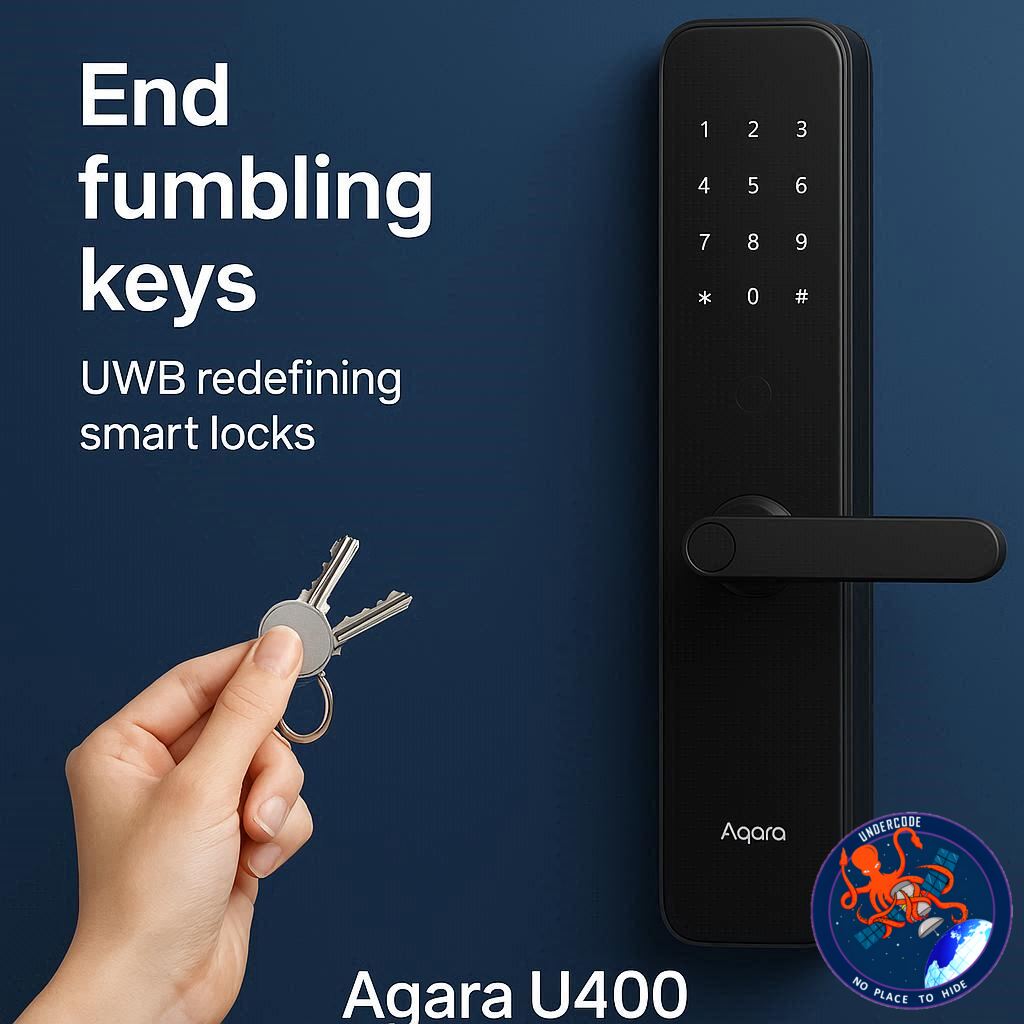
Introduction: The Last Annoyance Smart Locks Never Solved
For years, smart locks promised freedom from keys, but they quietly introduced a new friction point: timing. Whether it was pulling out your phone, tapping a watch, or hoping auto-unlock would trigger at the right moment, the experience was rarely seamless when your hands were full. This is where Ultra-Wideband (UWB) steps in, and it’s why the Aqara UWB Smart Lock U400 feels like a genuine turning point rather than just another incremental upgrade.
the Original A Practical Look at the Aqara U400
After testing dozens of smart locks over the years, the author frames the Aqara U400 as the first model that seriously addresses the “hands full” problem. Previous solutions, from early smart locks to modern Home Key-enabled models, reduced dependence on physical keys but still demanded deliberate user action. Even the best auto-unlock systems, including those found in premium locks, often fail at the worst possible moment.
The Aqara U400’s key innovation is its use of Ultra-Wideband technology, the same positioning system Apple relies on for Precision Finding. Instead of guessing when you might be near the door, the lock understands your exact location and direction of movement. This allows it to unlock with far greater reliability and intent, minimizing accidental triggers or missed unlocks.
The lock is built on Matter over Thread, giving it faster response times than Bluetooth and reducing reliance on Wi-Fi. In daily use, this translates into near-instant reactions inside the Apple Home app. Matter support also makes the lock platform-agnostic: Apple users can stay within HomeKit, while others in the household can control it through alternative ecosystems.
In terms of access methods, the U400 is flexible. It supports Home Key for tap-to-unlock with an iPhone or Apple Watch, a built-in fingerprint reader for biometric access, customizable PIN codes via a hidden touchscreen keypad, and even a traditional physical key that can be rekeyed to match existing locks.
Power management is handled by a rechargeable lithium battery rated for roughly six months per charge. While some users may prefer replaceable AA batteries, Aqara offsets this concern with a USB-C charging port built directly into the lock. This allows emergency charging with a power bank without disassembling the device or opening the door.
The original article concludes by positioning the Aqara U400 alongside the Level Lock Pro as one of the best smart locks currently available. With UWB, Home Key, and native PIN management inside Apple Home, the author argues that Apple’s smart home ecosystem has become the most polished environment for managing smart locks today.
Technology Explained: Why Ultra-Wideband Changes Everything
Ultra-Wideband isn’t just “better Bluetooth.” It’s a fundamentally different approach to spatial awareness. Instead of estimating distance based on signal strength, UWB calculates precise positioning down to centimeters. That’s why Apple uses it in Apple AirTag tracking and why it matters so much for doors and locks.
With UWB, the Aqara U400 knows not just that you are nearby, but that you are approaching the door from the outside. This directional awareness is what makes hands-free unlocking finally feel trustworthy rather than gimmicky.
Ecosystem Integration: Matter over Thread in the Real World
The U400’s Matter over Thread foundation is just as important as UWB. Thread offers low latency and low power consumption, which means faster responses and fewer battery compromises. More importantly, Matter ensures cross-platform compatibility. A household doesn’t have to standardize on one ecosystem to make the lock usable for everyone.
Apple users benefit from tight integration with Apple HomeKit, while others can interact through Google Home or Amazon Alexa. This flexibility future-proofs the lock in a way older, ecosystem-locked models never managed.
Access Methods: Redundancy Without Complexity
A major strength of the Aqara U400 is how it layers multiple access methods without making the system feel cluttered. Home Key allows a simple tap with your iPhone or Apple Watch. Fingerprint access is fast and intuitive for daily use. PIN codes are ideal for guests or service workers, and the physical key remains as a fallback for edge cases and emergencies.
Rather than forcing users to choose one “best” method, the lock treats redundancy as a feature, not a compromise.
Power Design: Convenience Over Tradition
Rechargeable batteries in smart locks are controversial, but Aqara’s implementation is thoughtful. The six-month rating is reasonable, and the ability to top up via USB-C without removing the lock or opening the door addresses the biggest anxiety users have about rechargeable systems. It’s a subtle design choice that prioritizes real-world convenience over theoretical perfection.
Market Positioning: Competing at the Top
In today’s market, the Aqara U400 stands shoulder-to-shoulder with premium competitors like the Level Lock Pro. Where it differentiates itself is not industrial design minimalism, but intelligence. UWB-powered intent awareness feels like the next logical step in smart lock evolution, and it’s something most competitors have yet to fully implement.
What Undercode Say:
UWB as the Missing Link in Smart Home UX
The Aqara U400 highlights a broader truth about smart homes: most frustrations come from ambiguity. Did the system detect me? Am I close enough? Did it misfire? UWB dramatically reduces this ambiguity by giving devices spatial context instead of vague proximity data.
Matter’s Quiet but Critical Role
While UWB grabs headlines, Matter over Thread is the unsung hero here. It ensures that this lock won’t become obsolete if household preferences shift between ecosystems. That’s crucial in a market where platform loyalty changes faster than hardware lifecycles.
Apple Home’s Strategic Advantage
With Home Key, PIN management, and UWB-enabled accessories all converging inside Apple Home, Apple is quietly building the most cohesive smart lock experience available. The Aqara U400 benefits directly from this maturity, even though it remains platform-neutral by design.
Design Philosophy Over Feature Count
What stands out is not how many features the U400 has, but how deliberately they’re implemented. Every access method solves a specific scenario, and none feel like filler. This restraint is rare in a category often bloated with half-working gimmicks.
The Beginning of a New Standard
Just as fingerprint sensors eventually became expected on smartphones, UWB-based intent detection is likely to become standard in smart locks. The U400 feels less like a luxury experiment and more like an early example of where the entire industry is heading.
Fact Checker Results 🔍
✅ Ultra-Wideband is already used by Apple for Precision Finding and spatial awareness.
✅ Matter over Thread provides faster, lower-power communication than Bluetooth alone.
❌ There is no evidence yet that all future smart locks will adopt UWB, though momentum is growing.
Prediction 📊
UWB-enabled smart locks will move from premium products to mainstream offerings within the next few years, and platforms that combine spatial awareness with cross-ecosystem support will dominate the market. The Aqara U400 is likely to be remembered as one of the first locks to make hands-free access feel genuinely reliable rather than aspirational.
🕵️📝✔️Let’s dive deep and fact‑check.
References:
Reported By: 9to5mac.com
Extra Source Hub (Possible Sources for article):
https://www.stackexchange.com
Wikipedia
OpenAi & Undercode AI
Image Source:
Unsplash
Undercode AI DI v2
Bing
🔐JOIN OUR CYBER WORLD [ CVE News • HackMonitor • UndercodeNews ]
📢 Follow UndercodeNews & Stay Tuned:
𝕏 formerly Twitter 🐦 | @ Threads | 🔗 Linkedin | 🦋BlueSky | 🐘Mastodon


