
Listen to this Post
🎯 Introduction
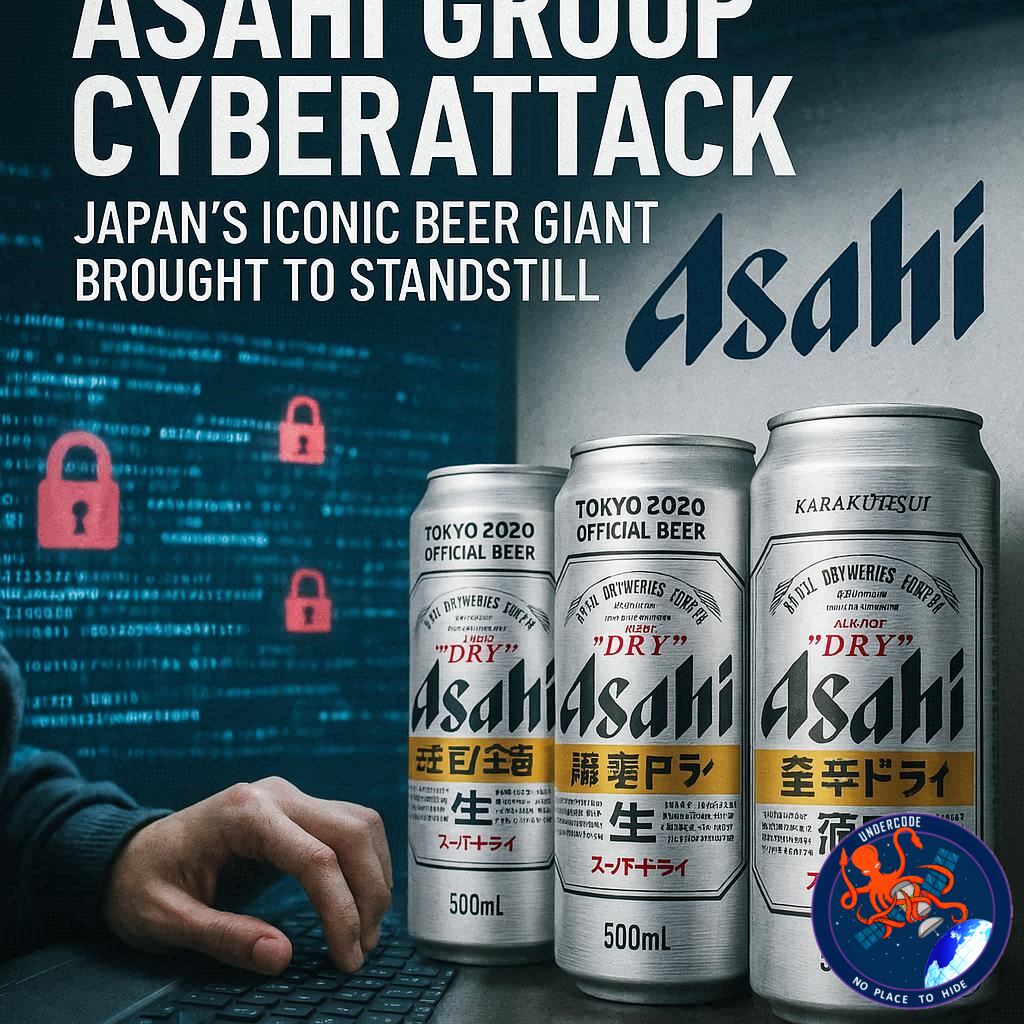
In a stunning blow to Japan’s beverage industry, Asahi Group Holdings—one of the world’s leading beer and beverage producers—has been crippled by a massive cyberattack. Factories across Japan have fallen silent, order systems have frozen, and production of household names like Asahi Super Dry Beer and Nikka Whisky has ground to a halt. As digital warfare escalates globally, the attack on Asahi underscores a chilling truth: no sector is immune, not even the most traditional brewers of Japan’s beloved beverages.
A Sudden Halt in Japan’s Beverage Heartbeat
Asahi Group Holdings, Japan’s beverage titan, has suffered a severe cyberattack that forced it to suspend operations at several domestic plants. According to Reuters, the company has been unable to restart production, and the timeline for recovery remains uncertain. The attack has triggered a wave of disruption, freezing everything from order processing and shipping to customer service functions.
With 30 plants across Japan, Asahi’s paralysis has sent ripples throughout the beverage market. Although no evidence of personal data leaks has emerged, the company’s production and logistics systems remain incapacitated. For now, stores and consumers alike await clarity as Asahi investigates the full scale of the damage.
The affected facilities produce a variety of products, including Asahi Super Dry Beer, Nikka Whisky, and Mitsuya Cider—brands that are deeply rooted in Japan’s national identity. Despite Asahi’s reassurances that cybersecurity teams are working around the clock, operations have yet to resume.
The company’s spokesperson confirmed that investigations are ongoing to determine which facilities are still offline, revealing a broader uncertainty that hints at the magnitude of the breach. This is not an isolated case. Just weeks earlier, British automaker Jaguar Land Rover (owned by Tata Motors) suffered a similar cyberattack that paralyzed its UK factories, forcing staff to stay home and freezing car sales.
Both incidents demonstrate the growing threat that cybercriminals pose to critical industries. In an era where factories are driven by automated systems and digital networks, the line between IT disruption and physical production collapse has all but vanished.
Understanding the Nature of the Attack
Cyberattacks like the one that hit Asahi can take multiple forms. Common methods include:
Malware: Malicious software such as ransomware or spyware that damages systems or steals sensitive data.
Phishing: Deceptive emails or messages designed to trick users into surrendering passwords or financial details.
Denial-of-Service (DoS): Flooding a system with traffic until it crashes or becomes inoperable.
Hacking: Unauthorized access to systems to alter, steal, or destroy data.
In Asahi’s case, the specifics remain undisclosed, but experts suggest the scale and speed of the disruption indicate a coordinated ransomware or supply-chain attack.
What Undercode Say:
The Asahi cyberattack marks a significant turning point for Japan’s industrial cybersecurity. Historically, Japanese corporations have excelled in engineering precision but lagged in digital defense maturity. Many traditional firms have relied on legacy systems—robust for manufacturing, yet dangerously exposed to cyber vulnerabilities.
This breach serves as a wake-up call not only for Asahi but for Japan’s broader manufacturing ecosystem. Beer production might seem worlds away from high-tech industries, but in reality, every automated brewing system, temperature sensor, and supply chain database operates on interconnected digital platforms. Once infiltrated, even a small vulnerability can cripple an entire production network.
What makes this attack particularly alarming is its timing and target. The beverage industry, often overlooked by hackers focused on finance or tech, has now become a lucrative target because of its reliance on just-in-time production and perishable supply chains. Cybercriminals understand that every minute of downtime costs millions—and that urgency gives them leverage in ransom negotiations.
Moreover, Asahi’s reputation is at stake. Trust and consistency are cornerstones of consumer loyalty, especially for a company whose identity is tied to craftsmanship and reliability. The disruption to Asahi’s distribution network not only threatens immediate revenue but could reshape its brand image in a fiercely competitive market where rivals like Kirin and Suntory are poised to capitalize.
If history is any guide, Asahi will respond by overhauling its digital infrastructure, investing heavily in cybersecurity frameworks, and collaborating with government agencies to fortify Japan’s industrial resilience. Yet, prevention is always cheaper than recovery. The cost of halting 30 factories, compensating partners, and rebuilding trust could reach into the hundreds of millions.
Globally, the Asahi incident aligns with a broader trend: the industrialization of cybercrime. From the Colonial Pipeline in the United States to JLR in the UK, cyberattacks are evolving from digital theft to full-scale operational sabotage. These incidents blur the line between cyber warfare and corporate extortion.
In the near future, industries must treat cybersecurity not as a back-office IT issue but as a strategic priority equivalent to quality control or product safety. Japan’s National Center of Incident Readiness (NISC) has already warned that 2025 could be a record year for ransomware attacks targeting manufacturing sectors.
For Asahi, the road ahead depends on transparency, swift recovery, and a redefined digital mindset. The company’s global reputation was built on precision and purity. To survive this digital storm, it must now embody resilience as much as refinement.
🔍 Fact Checker Results:
✅ Asahi Group Holdings confirmed a cyberattack causing nationwide production suspension.
✅ Reuters verified no personal data leaks have been detected as of yet.
❌ No official recovery timeline or cause of attack has been disclosed.
📊 Prediction:
🔮 Cyberattacks on traditional industries will rise by over 40% in 2026 as hackers target supply chains.
💻 Asahi will likely invest in AI-driven cybersecurity monitoring and partner with Japan’s tech sector for rapid defense upgrades.
🍺 Consumer trust will return gradually, but Asahi’s production losses in Q4 2025 could exceed 15%, reshaping Japan’s beverage market dynamics.
🕵️📝✔️Let’s dive deep and fact‑check.
References:
Reported By: timesofindia.indiatimes.com
Extra Source Hub (Possible Sources for article):
https://www.quora.com
Wikipedia
OpenAi & Undercode AI
Image Source:
Unsplash
Undercode AI DI v2
Bing
🔐JOIN OUR CYBER WORLD [ CVE News • HackMonitor • UndercodeNews ]
📢 Follow UndercodeNews & Stay Tuned:
𝕏 formerly Twitter 🐦 | @ Threads | 🔗 Linkedin | 🦋BlueSky | 🐘Mastodon


