
Listen to this Post
Introduction: A Strategic Pause in the EV Supply Chain
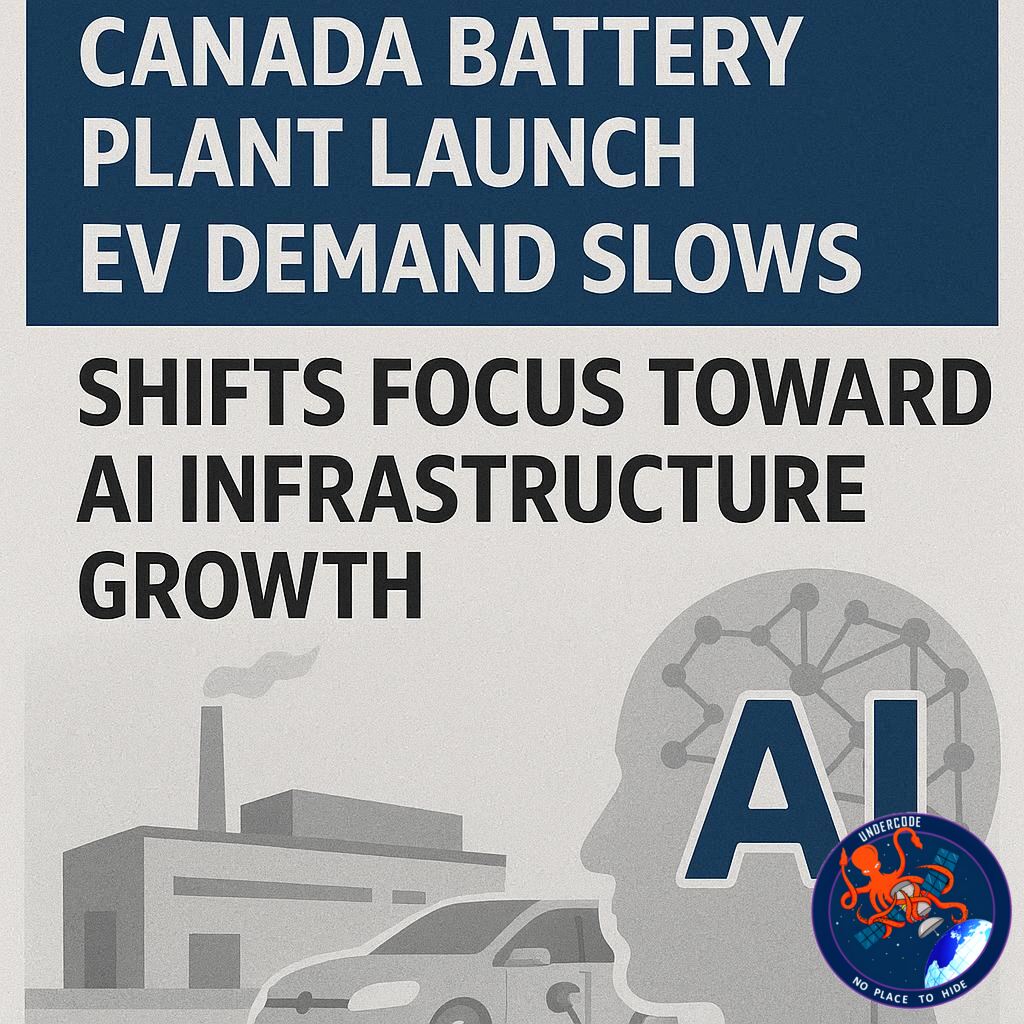
The global electric vehicle (EV) race has long been viewed as unstoppable, fueled by climate goals, government incentives, and technological innovation. Yet, even industry leaders are beginning to reassess their timelines. Japan’s industrial giant Asahi Kasei has made a significant decision to delay the launch of its new battery materials plant in Canada, signaling a broader shift in how companies are responding to slowing EV demand. Instead of rushing into uncertain markets, the company is pivoting toward a rapidly expanding opportunity: artificial intelligence (AI) infrastructure.
Summary: Delayed Expansion Reflects Changing Market Realities
Asahi Kasei has announced that it will postpone the start of operations at its battery materials plant currently under construction in Ontario, Canada, pushing the timeline beyond 2029. This decision stems largely from weakening demand projections in the EV sector, particularly influenced by one of its key partners, Honda, which has also delayed its own EV production plans in the region. The ripple effect is clear, as suppliers like Asahi Kasei are forced to recalibrate their expectations and investment strategies.
The facility in question was initially positioned as a major step forward in North America’s EV supply chain. It is designed to produce separators, a critical insulating component used in lithium-ion batteries. These separators play a vital role in ensuring battery safety and efficiency by preventing direct contact between electrodes while allowing ionic flow. When the project was first announced in April 2024, it was expected to support battery production equivalent to around one million electric vehicles annually, underscoring its scale and strategic importance.
However, the EV market has recently encountered headwinds. Slower-than-expected adoption rates, high vehicle costs, charging infrastructure limitations, and shifting consumer preferences have all contributed to a cooling demand outlook. Automakers are becoming more cautious, scaling back aggressive expansion plans that once defined the industry’s momentum. Honda’s decision to delay its EV factory in Canada has had a direct impact on Asahi Kasei’s anticipated customer base, leaving the new plant without sufficient immediate demand.
Rather than allowing the facility to sit idle or operate below capacity, Asahi Kasei is exploring alternative markets to justify an earlier launch. One of the most promising avenues lies in the booming AI sector. Data centers, which power everything from cloud computing to generative AI models, require substantial energy storage and advanced battery solutions. This creates a new demand stream for lithium-ion battery components, including separators, offering a potential lifeline for the delayed project.
The company is actively seeking to tap into this demand by positioning its products as essential components for AI-related infrastructure. With data centers expanding rapidly across North America and globally, driven by increasing reliance on machine learning and large-scale computation, the need for reliable, efficient energy storage systems has never been higher. Asahi Kasei aims to align its production capabilities with this trend, potentially accelerating the plant’s operational timeline if sufficient demand materializes.
This strategic shift highlights a broader trend within the manufacturing and energy sectors, where flexibility and adaptability are becoming critical survival traits. Companies are no longer able to rely solely on one growth narrative, such as EVs, but must diversify into adjacent high-growth industries. AI, with its insatiable demand for power and infrastructure, presents an attractive alternative.
Despite the delay, Asahi Kasei has not abandoned its long-term commitment to the EV market. The company still views electric vehicles as a key pillar of future growth but acknowledges that the timeline for widespread adoption may be longer and more uneven than initially anticipated. By postponing the plant’s launch, it avoids the financial risks associated with overcapacity and underutilization, opting instead for a more measured approach.
The decision also reflects a cautious stance toward capital expenditure in an uncertain economic environment. Large-scale industrial projects require significant upfront investment, and delaying operations can help preserve resources while market conditions stabilize. At the same time, the company’s willingness to pivot toward AI-related opportunities demonstrates a proactive mindset rather than a purely defensive one.
In essence, Asahi Kasei’s move is not just about delaying a factory. It represents a recalibration of strategy in response to evolving market dynamics. The intersection of EVs and AI, once seen as separate domains, is now becoming increasingly intertwined, with energy storage technologies playing a crucial role in both sectors. How effectively companies navigate this transition will likely determine their competitive positioning in the years ahead.
What Undercode Say: The Hidden Shift from EV Hype to Infrastructure Reality
The delay of Asahi Kasei’s Canadian plant is more than a simple scheduling adjustment. It reveals a deeper transformation happening beneath the surface of the global tech and energy economy. For years, EVs were treated as the inevitable future, a straight-line trajectory toward electrification. But reality rarely follows straight lines.
What we are witnessing now is the normalization phase of the EV industry. Early excitement has given way to practical constraints, including affordability, infrastructure readiness, and consumer hesitation. The assumption that demand would scale rapidly and consistently has proven overly optimistic. Companies that built their strategies on aggressive growth curves are now forced to adapt.
Asahi Kasei’s response is particularly telling because it highlights where the real momentum is shifting. AI is not just a software revolution. It is an infrastructure revolution. Massive data centers require enormous amounts of electricity, backup systems, and energy stability solutions. Batteries, once seen primarily as EV components, are becoming foundational to digital infrastructure.
This creates an interesting convergence. The same technologies that power electric cars are now essential for powering AI systems. Separators, for example, are no longer tied exclusively to mobility. They are becoming critical components in energy storage systems that support server farms and cloud platforms. This diversification could redefine how battery manufacturers position themselves in the global market.
Another important aspect is risk management. By delaying the plant, Asahi Kasei avoids the trap of overproduction, which has historically plagued industrial sectors during demand downturns. Instead of chasing uncertain EV demand, the company is effectively buying time while exploring more stable or rapidly growing sectors. This is a calculated move, not a retreat.
There is also a geopolitical dimension. North America has been pushing for localized supply chains, especially in critical technologies like batteries. While the delay may slow progress, it does not eliminate the strategic importance of the facility. If AI demand continues to surge, the plant could still become a key asset, just serving a different primary market than originally intended.
The shift toward AI-related demand also raises questions about future competition. Tech companies, energy firms, and traditional manufacturers may increasingly overlap in their needs and supply chains. This could lead to new partnerships, but also new rivalries, as industries converge around shared infrastructure requirements.
Ultimately, this situation underscores a fundamental truth about modern industry: flexibility is more valuable than certainty. Companies that can pivot quickly, reallocate resources, and identify emerging opportunities are the ones most likely to succeed. Asahi Kasei appears to be positioning itself within that category.
Fact Checker Results
✅ Asahi Kasei has officially delayed the operation of its Canadian battery materials plant beyond 2029 due to weak EV demand.
✅ The delay is linked to Honda’s postponement of its EV production plans in Canada.
✅ The company is actively exploring AI data center demand as an alternative market for its battery components.
Prediction
📊 AI-driven infrastructure demand will accelerate investment in battery technologies beyond the EV sector.
📊 EV market growth will continue but at a slower, more uneven pace than originally forecast.
📊 Companies that bridge energy storage between mobility and digital infrastructure will dominate the next industrial cycle.
▶️ Related Video (74% Match):
🕵️📝✔️Let’s dive deep and fact‑check.
References:
Reported By: xtechnikkeicom_9d40dc1277b8133f559a00a9
Extra Source Hub (Possible Sources for article):
https://stackoverflow.com
Wikipedia
OpenAi & Undercode AI
Image Source:
Unsplash
Undercode AI DI v2
Bing
🔐JOIN OUR CYBER WORLD [ CVE News • HackMonitor • UndercodeNews ]
📢 Follow UndercodeNews & Stay Tuned:
𝕏 formerly Twitter 🐦 | @ Threads | 🔗 Linkedin | 🦋BlueSky | 🐘Mastodon


