
Listen to this Post
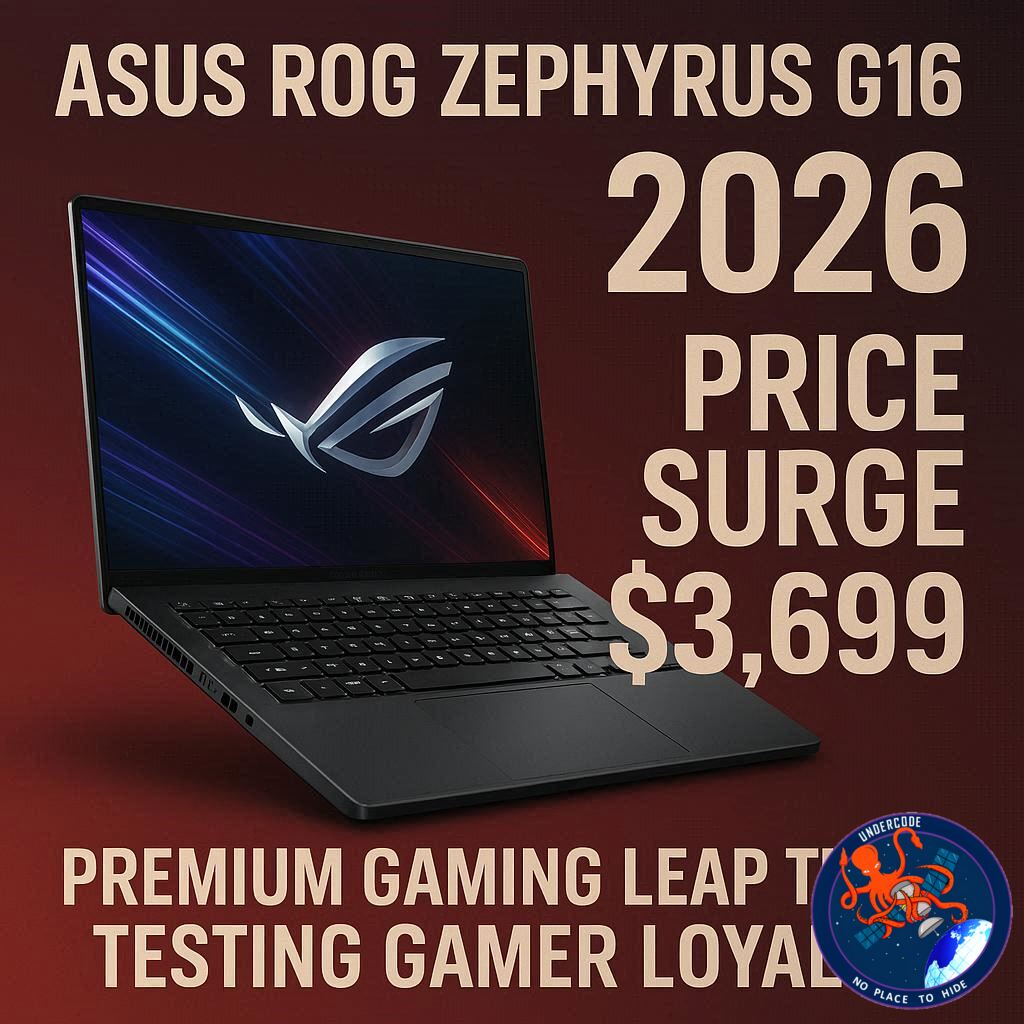 Introduction: A Price Reveal That Sparked Shockwaves Across the Gaming Community
When Asus unveiled its latest ROG Zephyrus G16 lineup at CES 2026, expectations were high. Performance gains, refined design, and next-gen components were all anticipated. What wasn’t expected, however, was the magnitude of the price increase. As official pricing surfaced in the UK, the reaction was immediate and intense, with many gamers questioning whether the leap in cost truly matches the value being offered.
Summary: A Steep Climb in Pricing Redefines the Entry Point for Premium Gaming Laptops
The newly announced ROG Zephyrus G16 models have introduced a pricing structure that significantly raises the bar for entry into high-performance gaming laptops. The base configuration now starts at £3,199, which translates to roughly $4,200 USD. This model features an Nvidia RTX 5070 GPU, paired with 32GB of RAM, a 1TB SSD, and an Intel Core Ultra 9 386H CPU. While these specifications are undeniably powerful, the cost increase compared to the previous generation is striking.
One of the most notable changes is the removal of the lower-tier GPU option. Previously, buyers could opt for an RTX 5060 model, offering a more affordable entry point. With that option gone, the new baseline model effectively shifts the entire pricing structure upward, resulting in an approximate 28% increase compared to last year’s starting price. Even when factoring in the improved GPU tier, the jump remains difficult for many consumers to justify.
For those seeking higher-end configurations, the pricing becomes even more daunting. The RTX 5080 variant is listed at £4,099 (around $5,400 USD), while the flagship RTX 5090 model reaches £4,899 (approximately $6,400 USD). These premium versions include upgraded specifications such as 64GB of RAM and a 2TB SSD, but the cost places them firmly in ultra-premium territory.
Compounding the issue is the comparison with discounted previous-generation models. Current 2025 versions of the Zephyrus G16 are seeing price reductions of around £400, making the new models appear even more expensive by comparison. In fact, when factoring in these discounts, the new entry-level model can cost over 50% more than its predecessor, a gap that has amplified consumer frustration.
The gaming community’s reaction has been swift and vocal. Across forums and social platforms, users have expressed disbelief at the pricing strategy. Many expected incremental increases due to rising component costs, but few anticipated such a dramatic shift. Some have even joked that the announcement felt like an April Fool’s prank, highlighting just how unexpected the numbers were.
Beyond the UK, there is growing concern about how these prices will translate globally. While direct currency conversion suggests extremely high US prices, regional pricing differences often result in slightly more favorable numbers for American consumers. Still, the UK figures serve as a warning sign for what could be coming in other markets.
The broader context cannot be ignored. The PC hardware industry has been facing ongoing supply chain challenges, rising manufacturing costs, and increased demand for advanced components. GPUs, memory, and CPUs have all seen price pressures, contributing to higher retail costs for finished products. Yet, despite these factors, many consumers feel that the increases for the Zephyrus G16 go beyond what can be reasonably explained.
Interestingly, comparisons have emerged with non-gaming laptops such as the MacBook Neo, which demonstrates that competitive pricing is still achievable under certain conditions. This contrast has led some gamers to reconsider their options, even if it means stepping outside the traditional gaming laptop ecosystem.
Ultimately, the situation underscores a growing divide between cutting-edge performance and affordability. While the new Zephyrus G16 models deliver impressive hardware, their pricing may limit accessibility to a narrower audience. For many gamers, the decision now involves weighing the benefits of the latest technology against the value offered by discounted previous-generation models.
What Undercode Say: The Real Story Behind the Price Explosion in Gaming Hardware
The pricing shift seen with the Zephyrus G16 is not an isolated ঘটনা but rather a signal of a broader transformation in the gaming hardware market. What Asus has done here is reposition its product line, not just as high-performance machines, but as luxury-tier devices. This is a strategic move, and it reflects how manufacturers are redefining what “premium” means in the current era.
At its core, this pricing model leverages a simple psychological principle: if enthusiasts are willing to pay more for incremental gains, companies will continue to push boundaries. The jump from RTX 4060-class to RTX 5070-class hardware is meaningful, but it does not necessarily justify a near 30% price increase in isolation. The real driver is market tolerance, not just component cost.
Another layer to consider is the removal of mid-tier options. By eliminating the RTX 5060 variant, Asus effectively forces consumers into a higher spending bracket. This tactic reshapes the perception of “entry-level” within the premium category. What used to be accessible is now exclusive, and that shift changes buying behavior across the board.
There is also a timing element. The industry is currently navigating a period of inflation, supply instability, and evolving demand. Gaming laptops are no longer just gaming machines; they are content creation tools, AI workstations, and status symbols. This multi-purpose identity allows manufacturers to justify higher prices under the umbrella of versatility.
However, this strategy carries risk. The gaming community is highly price-sensitive despite its passion for performance. When price increases outpace perceived value, loyalty begins to erode. The Reddit reactions are not just emotional responses; they are early indicators of potential market resistance.
Another overlooked factor is competition. Brands like Razer and Apple are influencing consumer expectations in different ways. Razer pushes premium gaming design, while Apple demonstrates pricing efficiency at scale. Asus is now positioned between these two philosophies, and that is not an easy place to dominate.
From a long-term perspective, this could accelerate a shift toward alternative purchasing strategies. Consumers may increasingly favor last-generation models, refurbished units, or even desktop builds, which offer better price-to-performance ratios. Cloud gaming and external GPU solutions could also gain traction as cost-effective alternatives.
There is also the question of sustainability. If each new generation introduces significant price hikes, the upgrade cycle will inevitably slow down. Fewer users will feel compelled to upgrade annually, which could impact overall sales volume. In that sense, short-term profit gains might come at the expense of long-term market stability.
The comparison to devices like the MacBook Neo is particularly telling. It highlights that pricing is not solely dictated by hardware costs but also by supply chain efficiency, negotiation power, and ecosystem strategy. Asus, while strong in gaming, does not have the same vertical integration advantages as Apple, which limits its flexibility.
In essence, the Zephyrus G16 pricing is a reflection of a market testing its limits. It is a bold move, but one that walks a fine line between innovation and alienation. Whether this strategy succeeds will depend on how consumers respond over the next product cycle.
Fact Checker Results
✅ The price increase of up to 28% compared to previous models is accurate based on official UK listings.
✅ Removal of the RTX 5060 option directly contributed to a higher entry price tier.
❌ Direct currency conversion does not reflect actual US pricing due to regional differences.
Prediction
📊 High-end gaming laptops will continue rising in price, pushing mid-range buyers toward older models or alternatives.
📊 Manufacturers may reintroduce lower-tier options if backlash significantly impacts sales.
📊 The gap between premium and mainstream gaming hardware will widen further in the next 2–3 years.
🕵️📝✔️Let’s dive deep and fact‑check.
References:
Reported By: www.techradar.com
Extra Source Hub (Possible Sources for article):
https://www.stackexchange.com
Wikipedia
OpenAi & Undercode AI
Image Source:
Unsplash
Undercode AI DI v2
Bing
🔐JOIN OUR CYBER WORLD [ CVE News • HackMonitor • UndercodeNews ]
📢 Follow UndercodeNews & Stay Tuned:
𝕏 formerly Twitter 🐦 | @ Threads | 🔗 Linkedin | 🦋BlueSky | 🐘Mastodon


