
Listen to this Post
Introduction: Cyber Power Becomes a Core Military Weapon
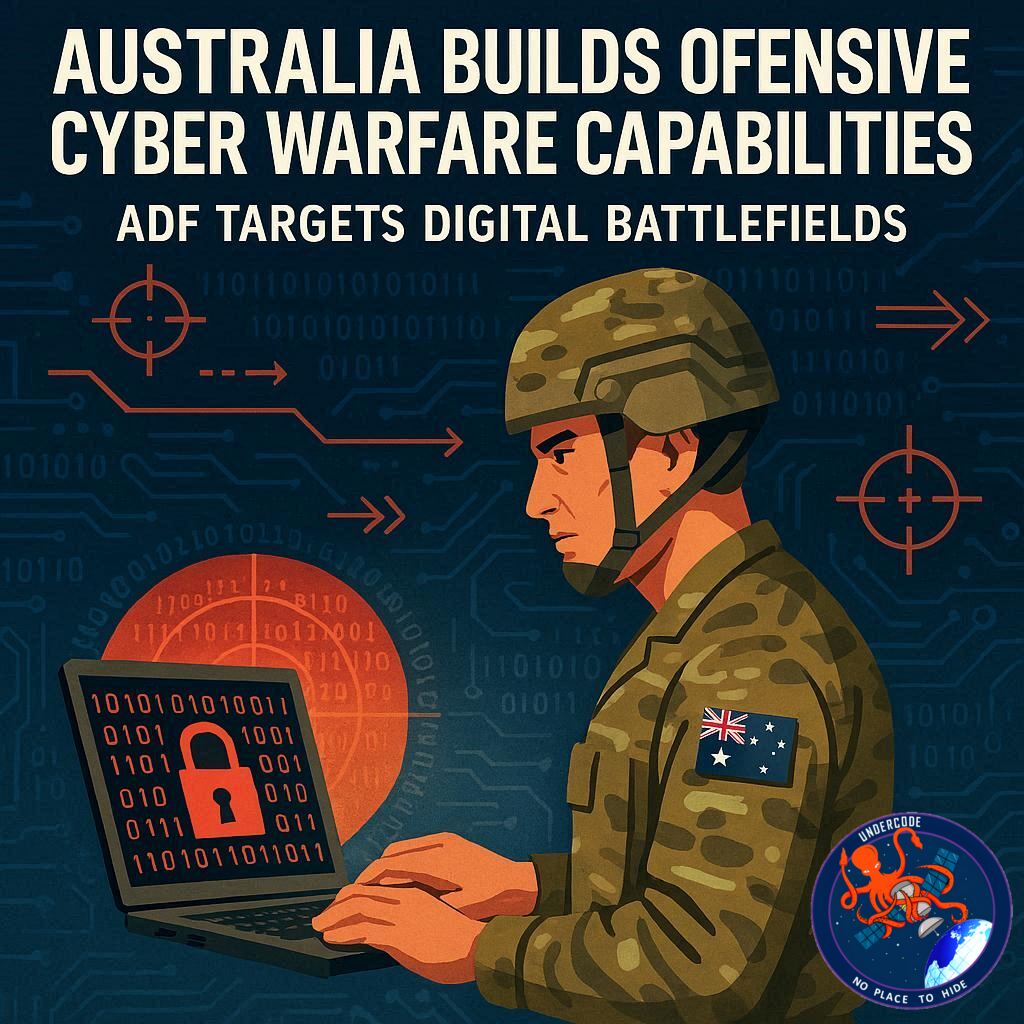
Australia is no longer treating cyberspace as a defensive afterthought. As global conflicts increasingly spill into digital networks, the Australian Defence Force (ADF) is moving to develop offensive cyber capabilities designed to disrupt, deceive, and disorient potential adversaries. This strategic shift places cyber operations alongside land, sea, air, and space as a critical domain of modern warfare. The plan goes beyond simple network protection, embracing disruption, deception, and even online disinformation as deliberate tools of military power. In an era where a keyboard can cause damage equal to missiles, Australia is positioning itself to fight—and win—in invisible battles.
Background: Why Cyber Threats Matter to Australia
Australia’s strategic environment has changed dramatically over the past decade. The nation’s advanced digital infrastructure, close alliance networks, and geopolitical positioning make it an attractive target for cyber attackers ranging from lone political activists to highly organized state-sponsored groups. Government systems, military communications, energy grids, and financial networks are all potential targets. Recognizing this reality, Australian leaders have publicly acknowledged that cyber threats now pose risks equal to conventional military attacks.
Official Warning from National Leadership
Former Prime Minister Julia Gillard underscored this reality while discussing Australia’s National Security Strategy, warning that the country faces persistent threats from politically motivated hackers, criminal organizations, and hostile nation-states. Her remarks reflected a broader consensus within government that cyber conflict is not hypothetical—it is already happening. These warnings helped justify a more aggressive posture that treats cyber capabilities as a frontline military asset rather than a purely defensive safeguard.
Summary of the Original ADF’s Cyber Ambitions Explained
The original article highlights the Australian Defence Force’s intent to develop offensive cyber tools capable of disrupting enemy networks during times of conflict. Rather than limiting itself to protecting domestic systems, the ADF aims to actively interfere with adversaries’ communications, command structures, and digital infrastructure. This includes strategies centered on deception and disinformation delivered through the internet, transforming information warfare into a formal component of military operations.
The article emphasizes that Australia’s attractiveness as a cyber target stems from its political alliances, economic strength, and technological maturity. Malicious cyber actors view Australian systems as valuable targets for espionage, sabotage, and influence campaigns. In response, the ADF is preparing to counter these threats not just defensively, but offensively—by striking first in cyberspace if necessary.
The piece also reflects a broader shift in military thinking, where cyber operations are no longer confined to intelligence agencies or support units. Instead, they are being integrated directly into strategic and tactical planning. Deception, psychological operations, and digital disruption are portrayed as essential tools that can weaken adversaries before physical conflict even begins.
Cyber Operations as a Force Multiplier
Offensive cyber capabilities offer militaries a way to project power without firing a single shot. By disabling communications, corrupting data, or spreading confusion through disinformation, a nation can significantly weaken an adversary’s ability to respond. The article suggests that Australia recognizes this advantage and is seeking to embed cyber tools into its broader military doctrine.
Ethical and Strategic Considerations
While the article focuses on capability development, it also implicitly raises ethical and strategic questions. Offensive cyber operations blur the line between war and peace, often operating below the threshold of open conflict. This ambiguity can be both an advantage and a risk, potentially escalating tensions without clear attribution or accountability.
What Undercode Say:
Cyber Power Signals Strategic Maturity
Australia’s move toward offensive cyber capabilities signals a recognition that modern power is defined by digital dominance as much as physical strength. Nations that fail to adapt risk being outmaneuvered before traditional forces are even mobilized. The ADF’s approach reflects a strategic maturity that acknowledges cyber conflict as a permanent feature of global security.
Deception and Disinformation as Tactical Weapons
The explicit inclusion of deception and disinformation marks a significant shift in military doctrine. Information manipulation has long been part of warfare, but formalizing it as a cyber operation suggests Australia is preparing for conflicts where public perception and narrative control are as important as battlefield success. This approach mirrors tactics already used by major cyber powers.
Deterrence Through Capability Disclosure
By openly discussing offensive cyber ambitions, Australia may be engaging in strategic signaling. Demonstrating capability—even without revealing technical details—can deter adversaries by increasing uncertainty about potential retaliation. In cyberspace, uncertainty itself becomes a weapon.
Risks of Escalation in the Digital Domain
Offensive cyber operations carry inherent escalation risks. A successful attack on an adversary’s networks could provoke retaliation against civilian infrastructure, blurring the line between military and civilian targets. Australia will need robust rules of engagement and political oversight to manage these dangers.
Integration with Allied Cyber Strategies
Australia’s cyber posture cannot be viewed in isolation. As a close ally of technologically advanced nations, its cyber strategy is likely aligned with broader coalition doctrines. This integration enhances collective defense but also ties Australia’s cyber actions to wider geopolitical dynamics.
Talent, Training, and Human Capital
Developing offensive cyber capabilities is not just about technology—it requires highly skilled personnel. Recruiting, training, and retaining cyber specialists within the military will be a decisive factor in whether these ambitions translate into real-world effectiveness.
Legal and Normative Challenges
International law in cyberspace remains underdeveloped. Australia’s embrace of offensive cyber tools places it at the center of ongoing debates about acceptable behavior, proportionality, and sovereignty in digital conflict. How it navigates these issues may influence future global norms.
Cyber Warfare as a Cost-Effective Strategy
Compared to traditional weapons systems, cyber tools can be relatively low-cost while delivering outsized impact. For a nation like Australia, this offers a way to enhance deterrence without matching larger powers ship-for-ship or missile-for-missile.
Domestic Resilience Remains Critical
Offense does not replace defense. As Australia expands its cyber reach, it must simultaneously strengthen domestic resilience to withstand inevitable counterattacks. Public-private cooperation will be essential, as many critical systems are owned by civilian entities.
A Long-Term Strategic Commitment
Offensive cyber capability is not a one-time investment. Threats evolve rapidly, requiring continuous adaptation. Australia’s decision represents a long-term commitment to remain competitive in a constantly shifting digital battlespace.
Fact Checker Results
Assessment of Core Claims
✅ Australia faces cyber threats from hackers, criminal groups, and nation-states, as stated in official security strategies.
✅ The ADF has publicly acknowledged cyber operations as a military domain.
❌ Specific operational details of offensive cyber capabilities remain classified and cannot be independently verified.
Prediction
The Future of Australia’s Cyber Warfare Posture
🔮 Australia is likely to formalize cyber operations alongside traditional forces in future defense white papers.
🔮 Offensive cyber tools will increasingly be used as deterrence rather than overt weapons.
🔮 International pressure will grow for clearer cyber warfare rules as more nations follow Australia’s path.
🕵️📝✔️Let’s dive deep and fact‑check.
References:
Reported By: www.itsecurityguru.org
Extra Source Hub (Possible Sources for article):
https://stackoverflow.com
Wikipedia
OpenAi & Undercode AI
Image Source:
Unsplash
Undercode AI DI v2
Bing
🔐JOIN OUR CYBER WORLD [ CVE News • HackMonitor • UndercodeNews ]
📢 Follow UndercodeNews & Stay Tuned:
𝕏 formerly Twitter 🐦 | @ Threads | 🔗 Linkedin | 🦋BlueSky | 🐘Mastodon


