
Listen to this Post
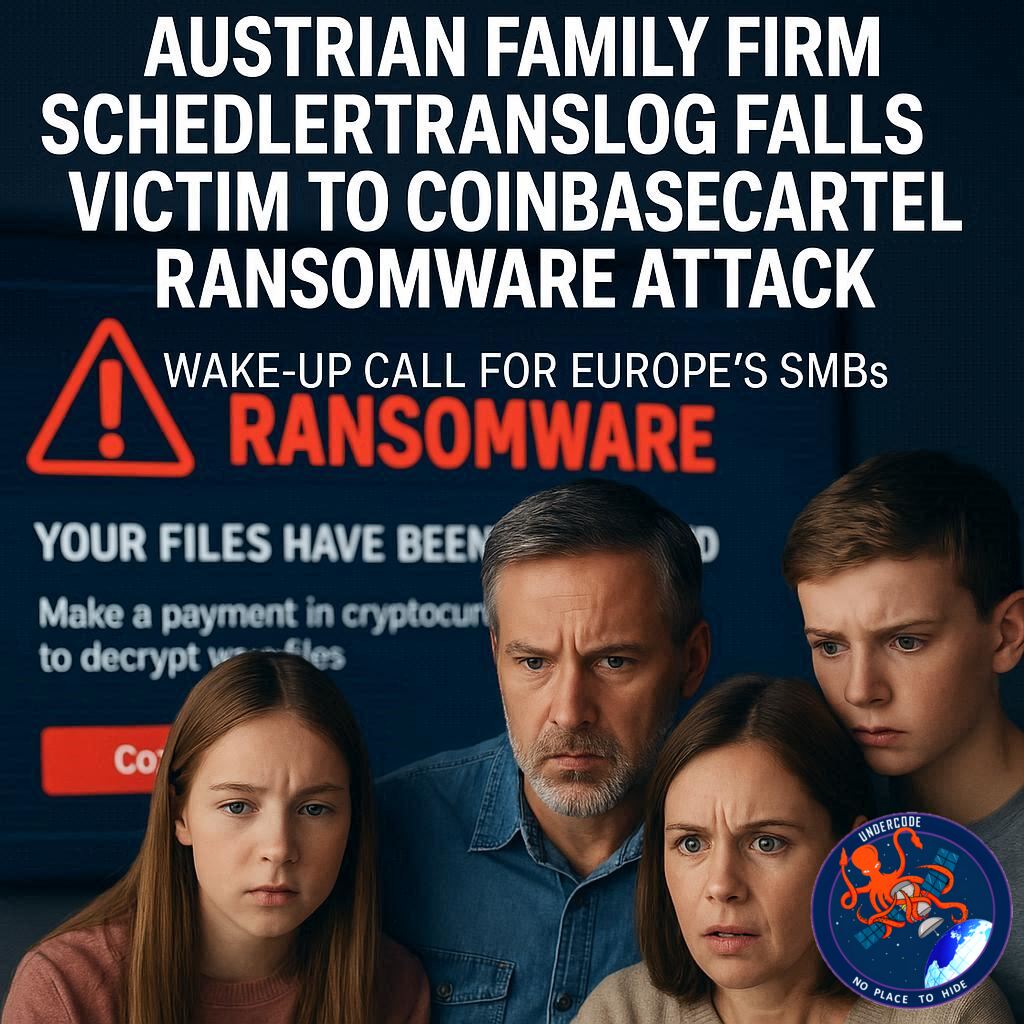
The Silent Breach That Shook a Family Legacy
Schedler-Translog, a respected Austrian family-owned logistics company founded in 1984, has become the latest casualty in Europe’s intensifying wave of ransomware assaults. The attack, allegedly carried out by the cybercrime group known as CoinbaseCartel, paralyzed the company’s operations and compromised confidential corporate data.
This incident marks a disturbing escalation in the cyber threat landscape targeting small and mid-sized enterprises (SMEs) — the economic backbone of Europe. While large corporations often have advanced security frameworks, many family businesses like Schedler-Translog rely on trust, tradition, and operational continuity over digital defense. Unfortunately, that made them the perfect target.
The ransomware reportedly infiltrated the company’s internal systems late last week, encrypting critical logistics data, payroll information, and client records. Early reports suggest that CoinbaseCartel — a relatively new but aggressive ransomware group — may have used phishing vectors and unpatched software vulnerabilities to gain access.
The attack forced Schedler-Translog to temporarily halt transportation and supply chain operations, leaving dozens of clients stranded and deliveries delayed. For a business that has built its name on reliability and punctuality for over four decades, this breach hit not only the servers but also the heart of its brand identity.
Cybersecurity analysts suspect that the group demanded payment in cryptocurrency, consistent with their previous patterns of extortion. Although the company has not released an official statement about whether it plans to pay the ransom, sources close to the investigation indicate law enforcement agencies in Austria and the EU are collaborating to trace the perpetrators’ digital footprint.
This ransomware strike didn’t occur in isolation. The same week, multiple security alerts circulated worldwide: Australia launched “CI Fortify,” a program aimed at shielding critical infrastructure from escalating cyber threats, while Oracle rushed to patch vulnerabilities in its E-Business Suite following Cl0p-style exploitations, including incidents targeting Harvard University. Meanwhile, cyber gangs like RondoDox, ChaosBot, and Astaroth continue leveraging GitHub persistence to sustain attacks — a trend suggesting the industrialization of cybercrime.
Schedler-Translog’s tragedy underscores a grim reality: ransomware is no longer a distant threat reserved for billion-dollar conglomerates. Every connected business, from freight companies to family manufacturers, is now a potential target in a global cyber conflict that grows more ruthless by the day.
What Undercode Say:
The Schedler-Translog ransomware event isn’t just another cyber headline — it’s a reflection of the widening gap between digital innovation and cyber readiness across Europe’s SME ecosystem.
Most family-run companies were built in the pre-digital era, where trust was the firewall and physical locks protected critical assets. But in 2025, trust alone cannot defend data. The CoinbaseCartel attack highlights three essential truths about today’s cyber battlefield:
Attackers Are Scaling Faster Than Defenders.
Cyber gangs have adopted automation, AI-driven reconnaissance, and decentralized infrastructures. They exploit zero-day vulnerabilities minutes after discovery. Meanwhile, SMEs struggle with outdated IT policies and limited budgets.
The Supply Chain is the Weakest Link.
Schedler-Translog’s position as a logistics intermediary makes it a high-value node. Attackers understand that compromising a single logistics hub can ripple across multiple industries — from retail to pharmaceuticals.
Cryptocurrency Remains the Criminal Currency of Choice.
CoinbaseCartel’s name itself is an ironic nod to the crypto economy’s darker corners. Even with blockchain transparency, laundering and obfuscation services make tracing ransomware payments an uphill battle for authorities.
Family Businesses Must Rethink Security as Culture, Not Cost.
Too many heritage companies treat cybersecurity as an external IT function rather than a cultural foundation. Training, zero-trust architecture, and regular audits must be seen as routine as accounting.
Governmental Intervention is Rising — But Too Slowly.
Initiatives like Australia’s “CI Fortify” show national awareness, but Europe still lacks a unified defense grid for SMEs. The EU’s NIS2 Directive is a step forward, yet many small firms remain unaware or unprepared for compliance.
If Schedler-Translog’s incident serves as a wake-up call, it should ring beyond Austria. The family business community must confront a hard truth: digital resilience is now as vital as financial stability. A ransomware strike can erase decades of reputation in a single night.
Moreover, the attack timing — aligning with global patch cycles and new exploit releases — suggests that cybercriminals monitor corporate vulnerabilities almost like investors track stock markets. They attack during digital “low seasons,” exploiting distraction and resource gaps.
Looking deeper, CoinbaseCartel’s tactics reveal a psychological dimension. By targeting family enterprises, they’re not just stealing data — they’re shattering emotional trust, coercing victims into paying ransoms faster to “protect the family name.” This manipulation of legacy and pride is an under-discussed yet potent weapon in modern ransomware psychology.
For cybersecurity professionals, this case underlines the urgency of adaptive defense models — systems that don’t just react but anticipate based on behavioral analytics, predictive modeling, and cross-sector intelligence sharing.
In short, Schedler-Translog’s story is not merely about a breach — it’s about a generation of businesses being forced into digital adulthood overnight. The question now is not “if” another family firm will fall, but “when.”
Fact Checker Results:
✅ Attack on Schedler-Translog confirmed by multiple cybersecurity monitoring sources.
✅ CoinbaseCartel identified as an emerging ransomware actor in 2025 threat reports.
❌ No verified evidence yet on ransom payment or full data exfiltration disclosure.
Prediction 🔮
Expect a wave of ransomware incidents targeting mid-sized European firms over the next six months. Threat actors like CoinbaseCartel will expand operations using shared exploit kits and crypto-based laundering networks. Insurance premiums for SMEs in logistics, healthcare, and manufacturing will surge, and by 2026, cyber resilience may become a mandatory compliance requirement under EU industrial policy.
🕵️📝✔️Let’s dive deep and fact‑check.
References:
Reported By: x.com
Extra Source Hub (Possible Sources for article):
https://www.discord.com
Wikipedia
OpenAi & Undercode AI
Image Source:
Unsplash
Undercode AI DI v2
Bing
🔐JOIN OUR CYBER WORLD [ CVE News • HackMonitor • UndercodeNews ]
📢 Follow UndercodeNews & Stay Tuned:
𝕏 formerly Twitter 🐦 | @ Threads | 🔗 Linkedin | 🦋BlueSky | 🐘Mastodon


