
Listen to this Post
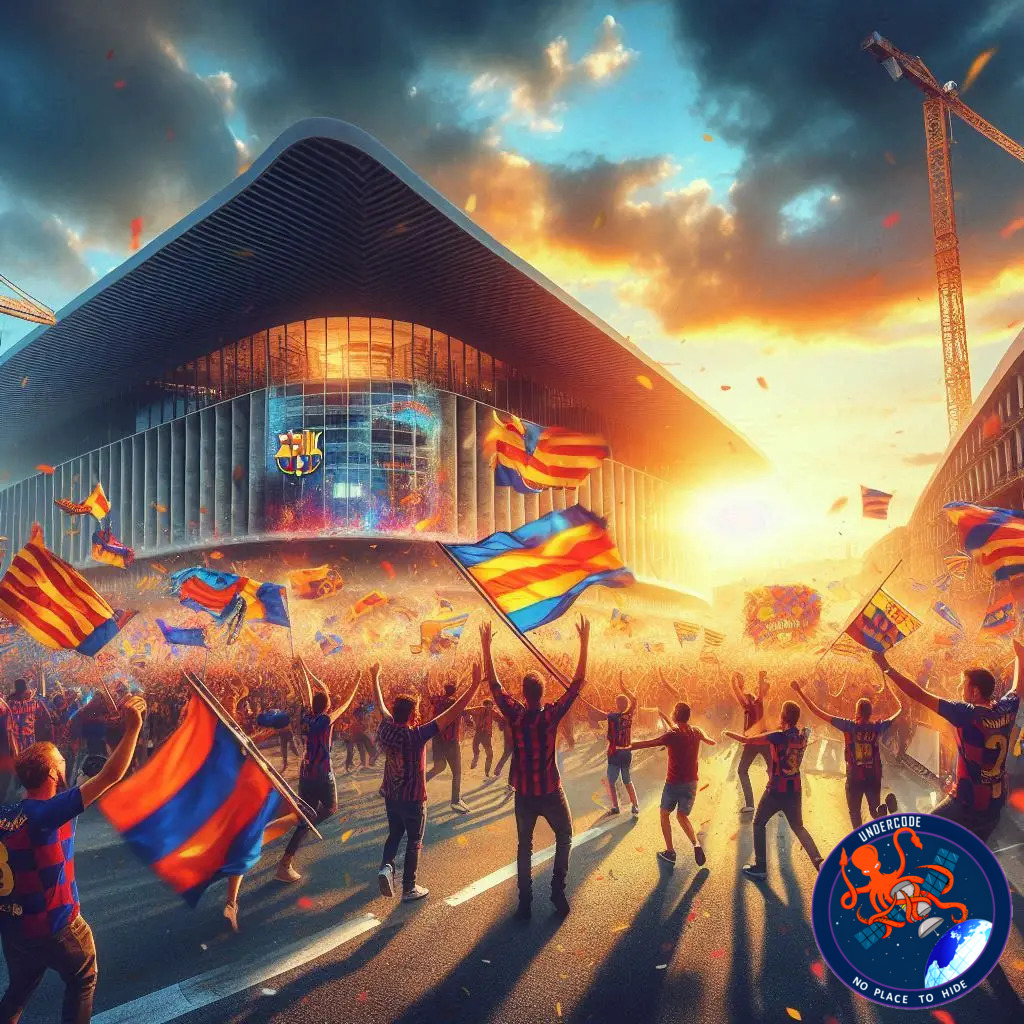
After more than two years away, Barcelona’s iconic Camp Nou finally welcomed fans back on Saturday night, offering a bittersweet glimpse of the stadium’s transformation. Around 45,000 supporters, roughly half of the stadium’s final capacity, poured in to celebrate their team in their historic home once again. For many, this marked the end of a long 900-day exile at the distant Olympic Stadium, a period filled with nostalgia, longing, and anticipation for the revamped Camp Nou.
The atmosphere was electric, with fans waving banners, chanting familiar songs, and soaking in the familiar yet evolving surroundings of their beloved stadium. Yet, despite the joy, it was impossible to ignore the work still underway. Massive construction cranes towered above the stands, while the top tier remained largely a skeletal framework of metal beams and concrete pillars. Parts of the stadium still resembled an active construction site, signaling that the ambitious renovation is far from complete. When finished, Camp Nou will expand its capacity to 105,000 fans, promising an unparalleled football experience.
The partial reopening offers a glimpse into the future of Camp Nou, blending modern amenities with the rich history and tradition the stadium embodies. New seating arrangements, enhanced viewing perspectives, and upgraded facilities hint at a world-class venue, even as construction continues. For the players, the return to Camp Nou brings renewed motivation, with fans once again able to cheer them on from the stands rather than from a distant stadium.
Beyond the emotional and sporting significance, the reopening also represents a major financial and logistical milestone for Barcelona. Renovations of this scale require careful planning, significant investment, and meticulous execution. The club’s leadership faces the dual challenge of completing the stadium while ensuring it remains functional for ongoing matches and events.
What Undercode Say:
The reopening of Camp Nou, even at half capacity, is a strategic move by Barcelona, balancing fan engagement with construction realities. The 900-day hiatus at the Olympic Stadium disrupted fan rituals and matchday revenue streams, making the partial reopening not only symbolic but also economically essential. Observing the skeletal structure of the top tier and the presence of cranes highlights that the project is still in its advanced construction phase. This phase typically involves integrating seating, roofing, and premium hospitality sections while ensuring structural safety and compliance with modern stadium standards.
From an architectural perspective, the renovation of Camp Nou represents a delicate balance between preservation and modernization. The iconic design elements of the original stadium are maintained to retain historical and emotional value, while upgrades focus on enhancing spectator experience, security, and revenue-generating areas. Modern stadiums increasingly rely on mixed-use spaces, VIP boxes, and advanced fan technology; Camp Nou’s renovations align with these global trends, reflecting Barcelona’s intention to compete with Europe’s premier venues.
The decision to reopen at half capacity is also tactically significant. It allows fans to reconnect with their home ground while providing construction teams uninterrupted access to critical areas. Safety remains paramount, and the phased approach minimizes disruption while maximizing fan engagement. This strategy mirrors practices in other large-scale stadium renovations globally, where partial occupancy maintains excitement without compromising timelines.
Financially, the project underscores Barcelona’s broader strategic ambitions. A fully realized Camp Nou with 105,000 seats promises substantial ticketing revenue, enhanced hospitality profits, and increased global brand visibility. Yet, delays and ongoing construction could pose challenges, potentially affecting matchday operations, sponsorship contracts, and international event hosting. The club must manage expectations carefully, balancing transparency with enthusiasm to maintain fan loyalty.
For supporters, the reopening marks a symbolic homecoming. The chants, the vibrant energy, and the communal spirit all reinforce the club’s identity. Even in its unfinished state, Camp Nou continues to serve as a cultural and emotional anchor, reminding fans that their club is moving forward without losing sight of its heritage.
Moreover, the renovation reflects Barcelona’s adaptive strategy in stadium management. Integrating modern safety codes, digital experiences, and spectator comfort into a historic structure requires precision engineering and smart project management. Observers can see cranes and skeletal structures as a visible testament to the club’s long-term vision—merging tradition with future-ready infrastructure.
Ultimately, the partial reopening is more than a physical event; it’s a statement of resilience. After a prolonged absence, fans are reminded that the club values their presence, even amid ongoing construction challenges. The excitement, mixed with patience, epitomizes modern sports culture—where fan experience, tradition, and strategic development coexist.
As the renovation progresses, key areas such as the top tier, hospitality suites, and fan zones will define the stadium’s final appeal. Attention to acoustics, sightlines, and comfort will be essential in transforming Camp Nou into a venue that not only holds more fans but delivers an immersive football experience. This phased approach also provides opportunities to incorporate feedback, refine designs, and optimize operational efficiency before full-scale reopening.
Looking ahead, Barcelona’s management faces a delicate balancing act. They must complete construction efficiently, maintain fan enthusiasm, and ensure financial sustainability. The symbolic return to Camp Nou signals progress and ambition while reminding the world that the stadium’s evolution is ongoing. It’s a moment of celebration tempered by pragmatism—a duality that will shape the club’s strategy in the months ahead.
Fact Checker Results:
✅ Partial reopening hosted 45,000 fans, about half of final capacity.
❌ Top tier remains unfinished; full 105,000 capacity not yet achieved.
✅ Construction cranes visible from stands, indicating ongoing renovation.
Prediction:
🏟️ Camp Nou will likely reach full operational capacity within the next 12–18 months, combining modern amenities with historical significance. The phased reopening strategy suggests Barcelona will leverage fan engagement and revenue while finalizing construction, ultimately creating one of Europe’s most advanced and iconic stadiums.
🕵️📝✔️Let’s dive deep and fact‑check.
References:
Reported By: www.euronews.com
Extra Source Hub (Possible Sources for article):
https://www.instagram.com
Wikipedia
OpenAi & Undercode AI
Image Source:
Unsplash
Undercode AI DI v2
Bing
🔐JOIN OUR CYBER WORLD [ CVE News • HackMonitor • UndercodeNews ]
📢 Follow UndercodeNews & Stay Tuned:
𝕏 formerly Twitter 🐦 | @ Threads | 🔗 Linkedin | 🦋BlueSky | 🐘Mastodon


