
Listen to this Post
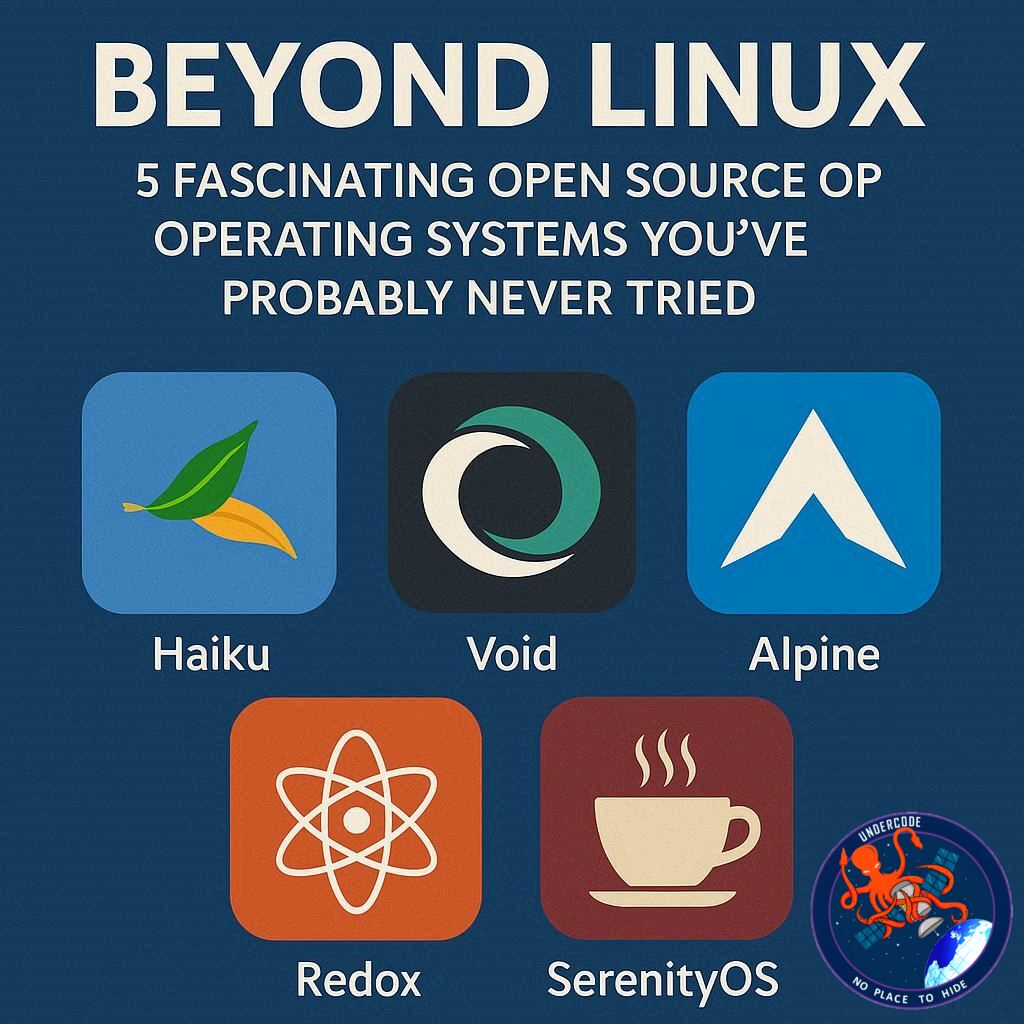
Introduction: The Hidden World Outside Linux
When people talk about open-source operating systems, the conversation almost always begins and ends with Linux. Its dominance is undeniable, powering everything from servers to smartphones. Yet beneath this towering presence lies a lesser-known ecosystem of alternative open-source operating systems, each with its own philosophy, design, and purpose.
Some of these systems are nostalgic reimaginings of past computing eras. Others are experimental playgrounds built by small teams or even a single developer. None of them aim to dethrone Linux, but they offer something equally valuable: perspective. They challenge assumptions about how operating systems should look, behave, and evolve.
Exploring these systems is less about replacing your daily driver and more about rediscovering the roots of computing creativity. Here are five standout open-source operating systems that prove Linux is not the only story worth telling.
Summary: A Deep Dive Into Five Non-Linux Open-Source OS Projects
The open-source ecosystem extends far beyond Linux, offering a range of experimental and niche operating systems that reflect diverse design philosophies. One of the most intriguing examples is Haiku, a modern reimagining of the classic BeOS. Despite its decades-long development journey, Haiku stands out for its lightning-fast performance and minimalistic design. Applications launch almost instantly, and the system installs in seconds. However, its limited software ecosystem makes it more suitable for experimentation than everyday use.
Then there’s the BSD family, which represents a more mature and practical alternative. Rooted in Unix history, BSD systems like FreeBSD and OpenBSD are renowned for their stability and reliability. Unlike most experimental systems on this list, BSD distributions can actually serve as daily operating systems, especially for users who prioritize performance consistency and security.
On the more experimental side lies ReactOS, an ambitious attempt to recreate the Windows experience in an open-source environment. Designed to mimic the look and compatibility of older Windows versions like XP and 7, ReactOS allows users to run certain Windows applications. However, its slow development and frequent instability highlight the immense challenge of replicating a proprietary ecosystem.
Another retro-inspired system is AROS, which reimagines the classic Amiga OS. While visually approachable, AROS quickly reveals itself as a technical curiosity rather than a polished platform. Installation can be confusing, and software reliability is inconsistent, reinforcing its status as a niche or research-oriented system.
Finally, there is TempleOS, perhaps the most unconventional entry. Created entirely by a single developer, TempleOS is less a practical tool and more a philosophical and artistic statement. Its text-based interface and biblical themes make it a unique, one-time experience that showcases the extremes of individual creativity in software development.
Together, these operating systems illustrate the breadth of innovation within the open-source world. While most are not suitable for daily use, they offer valuable insights into alternative approaches to computing, from performance optimization to user interface design and even personal expression through code.
What Undercode Say: The Real Meaning Behind These Experimental Systems
The existence of these operating systems reveals something deeper than technical experimentation. It exposes a fundamental truth about open-source culture: freedom often matters more than practicality.
Take Haiku, for example. Its obsession with speed and simplicity feels like a direct rebellion against modern operating systems bloated with features. It asks a provocative question: what if efficiency, not compatibility, was the priority? That alone makes it valuable, even if it never becomes mainstream.
The BSD ecosystem tells a different story. It represents discipline and engineering maturity. While Linux evolved rapidly with massive community input, BSD systems took a slower, more controlled path. The result is stability that borders on obsession. This makes BSD less flashy but often more dependable, especially in enterprise or security-focused environments.
ReactOS highlights the difficulty of breaking into proprietary dominance. Recreating Windows is not just about copying features; it requires replicating decades of undocumented behavior, APIs, and compatibility layers. Its slow progress is not a failure but a reflection of how complex modern operating systems truly are.
AROS and similar retro-inspired systems reveal another pattern: nostalgia-driven innovation. Developers are not just building tools; they are preserving ideas. The Amiga OS philosophy still resonates with a niche audience, proving that old design concepts can remain relevant, even decades later.
TempleOS, on the other hand, stands apart as a symbol of pure individual expression in programming. In an era where software is increasingly built by massive teams and corporations, TempleOS reminds us that one person can still create something entirely unique. It may not be practical, but it is undeniably powerful as a statement.
The broader insight is this: these systems are not competing with Linux or Windows. They are exploring possibilities those platforms cannot afford to pursue. Large ecosystems prioritize stability, compatibility, and mass adoption. Smaller projects can take risks, experiment wildly, and even fail spectacularly. That freedom is where innovation often begins.
In many ways, today’s mainstream features were yesterday’s experiments. Concepts like lightweight interfaces, modular design, and system transparency often emerge from niche projects before being adopted at scale. Ignoring these smaller systems means overlooking the early signals of future trends.
Fact Checker Results
✅ BSD systems are widely recognized for their stability and real-world usability
✅ ReactOS aims for Windows compatibility but remains incomplete and unstable
❌ Most non-Linux open-source OS options are not viable for daily mainstream use
Prediction
The next wave of operating system innovation will likely borrow ideas from these experimental projects, especially in performance optimization and minimal design ⚙️
Niche open-source systems may remain small, but their influence on mainstream platforms will quietly grow over time 📈
Single-developer or small-team OS projects could gain more attention as interest in digital independence and transparency increases 🔍
▶️ Related Video (86% Match):
🕵️📝Let’s dive deep and fact‑check.
References:
Reported By: www.zdnet.com
Extra Source Hub (Possible Sources for article):
https://www.linkedin.com
Wikipedia
OpenAi & Undercode AI
Image Source:
Unsplash
Undercode AI DI v2
Bing
🔐JOIN OUR CYBER WORLD [ CVE News • HackMonitor • UndercodeNews ]
📢 Follow UndercodeNews & Stay Tuned:
𝕏 formerly Twitter 🐦 | @ Threads | 🔗 Linkedin | 🦋BlueSky | 🐘Mastodon


