
Listen to this Post
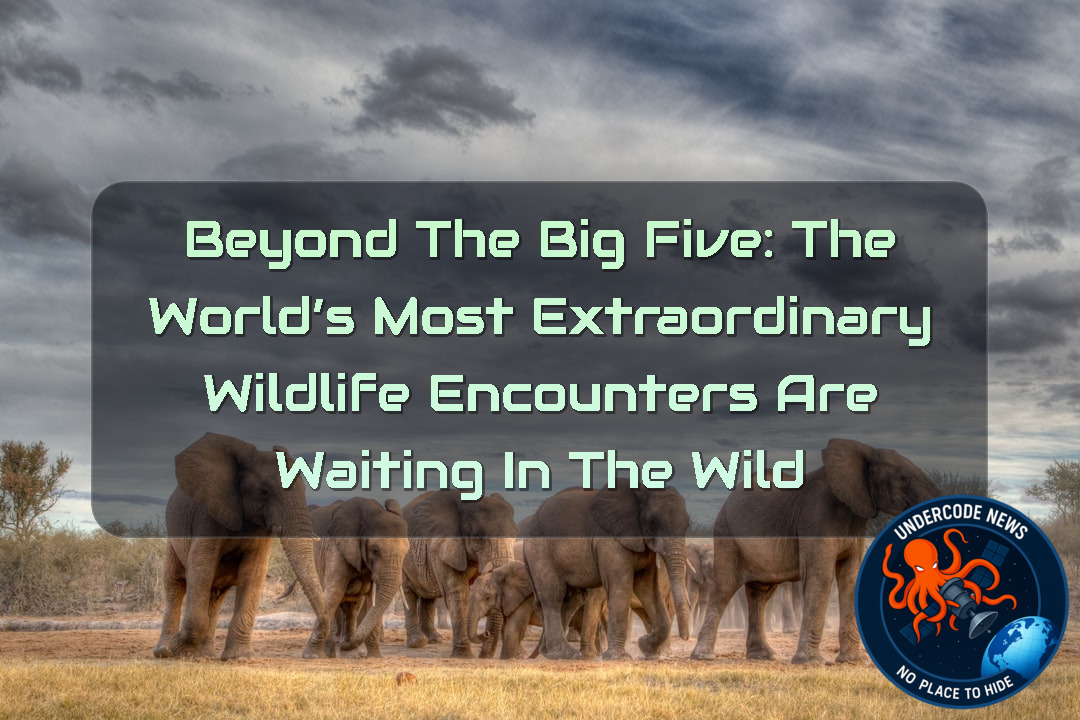 Introduction: Some Journeys Give You Photographs, Others Change the Way You See the Planet
There are moments in travel that no luxury hotel, famous landmark, or crowded tourist attraction can truly reproduce. Standing silently in a mist-covered forest as a mountain gorilla emerges from the vegetation is one of them. Watching emperor penguins survive against the brutal frozen landscape of Antarctica is another. Seeing a rare snow leopard move across the Himalayas can feel almost unreal.
These are not ordinary holidays.
They are encounters with a planet that still has places untouched by highways, skyscrapers, and mass tourism. They require patience, distance, preparation, and, in many cases, a willingness to travel far beyond the comfortable edges of the modern world.
A new Wildlife Experience Index created by travel company Bailey Robinson has ranked 30 remarkable wildlife experiences across the globe, examining which encounters offer the rarest, most remote, exclusive, and meaningful opportunities to see animals in their natural environments.
The results reveal something important about modern wildlife travel. The greatest luxury is no longer simply staying somewhere expensive. Real luxury may be the privilege of entering a wilderness where nature still controls the rules.
From mountain gorillas in Rwanda and Uganda to African wild dogs in Botswana and Tanzania, these experiences represent some of the most extraordinary wildlife encounters available to travelers willing to go deeper into the wild.
The Original Ranking: A Search for the World’s Greatest Wildlife Experiences
Bailey Robinson’s Wildlife Experience Index examined 30 wildlife encounters around the world and ranked them according to a combination of factors designed to measure more than simple popularity.
The company evaluated each experience based on rarity, remoteness, conservation importance, exclusivity, accessibility, and the likelihood of successfully encountering the animal.
Each category received a score out of 10 before being combined into a final score out of 100.
This approach created a ranking that focused on the overall value and significance of an experience rather than simply asking which animal is the most famous.
That distinction matters.
The world is full of famous wildlife destinations, but the most memorable encounters are often connected to animals that are difficult to find, live in remote environments, or require carefully controlled access to protect fragile populations.
How Rarity Became One of the Most Important Factors
The rarity category examined both the size of an animal’s population and the difficulty of encountering it in the wild.
An animal can be famous without being rare, but seeing a genuinely rare species in its natural environment is an entirely different experience.
For travelers, rarity creates anticipation.
For conservationists, rarity is also a warning.
Many of the animals featured near the top of the ranking face pressure from habitat destruction, climate change, poaching, human expansion, or declining food sources.
This means wildlife tourism can become complicated.
Responsible tourism can generate money for conservation and local communities, but poorly managed tourism can also create additional pressure on the very species travelers want to see.
The balance between access and protection is therefore one of the most important challenges facing the future of wildlife travel.
Why Remoteness Makes Wildlife Encounters More Powerful
The ranking found a strong relationship between extraordinary wildlife encounters and geographical remoteness.
The further travelers move away from major tourism infrastructure, the greater the possibility of experiencing something truly unusual.
Antarctica, the Himalayas, the forests of Central Africa, the deserts of Namibia, and the wilderness of Kazakhstan all require effort to reach.
That effort is part of the experience.
Modern tourism has made many parts of the world easier to access than ever before, but some wildlife encounters still demand patience, physical preparation, specialist guides, and long journeys.
There is something powerful about reaching a place where nature does not feel organized around human convenience.
In those environments, travelers are visitors.
The wildlife remains in control.
Mountain Gorilla Trekking Takes First Place
Mountain gorilla trekking in Rwanda or Uganda received the highest overall score in the Wildlife Experience Index, achieving 90 out of 100.
The experience stood out particularly because of its exceptional encounter potential.
Unlike searching independently through a vast wilderness with no guarantee of success, visitors are accompanied by experienced trackers who understand gorilla movements and behavior.
This significantly increases the possibility of seeing the animals.
Yet the experience remains highly controlled.
In Rwanda, permit numbers are limited, helping restrict the number of visitors entering gorilla habitats each day.
Uganda also applies strict limitations around visits to habituated gorilla families, reducing human pressure and helping protect the animals.
This combination of rarity, careful management, high encounter potential, and conservation importance helped mountain gorilla trekking reach the top of the ranking.
Rwanda and Uganda Show How Controlled Tourism Can Work
Gorilla tourism is often presented as an example of how tightly managed wildlife tourism can support conservation.
Visitors pay significant amounts for the opportunity to enter protected forests and observe gorillas under strict rules.
That money can support conservation programs, protected areas, employment, local communities, guides, trackers, and tourism infrastructure.
The model is not perfect, and conservation requires constant monitoring.
However, limiting visitor numbers creates an important principle.
Not everyone can go everywhere, all the time.
Sometimes protecting nature requires accepting limits.
The exclusivity of the experience is therefore not only a luxury feature. It is also part of the conservation strategy.
Antarctica’s Emperor Penguins Claim Second Place
The emperor penguin expedition in Antarctica ranked second with a score of 88.5 out of 100.
The experience achieved perfect scores for remoteness and exclusivity.
That result is easy to understand.
Antarctica is one of the most extreme environments on Earth.
Reaching emperor penguins can involve complicated logistics, severe weather, ice conditions, and expedition-level travel.
This is not a destination that can simply be added to an ordinary weekend itinerary.
The frozen landscape itself becomes part of the experience.
Travelers are not only searching for wildlife. They are entering one of the most isolated environments on the planet.
The Frozen Wilderness Makes Every Penguin Encounter Feel Different
Seeing emperor penguins in documentaries is familiar to millions of people.
Seeing them in Antarctica is something else entirely.
The scale of the environment changes the encounter.
The ice appears endless.
The weather can be unforgiving.
The silence can feel almost overwhelming.
The penguins are not performing inside a controlled attraction. They are surviving in one of the harshest ecosystems on Earth.
That reality is what makes the experience so powerful.
Kazakhstan’s Saiga Antelope Expedition Reaches Third Place
Third place went to saiga antelope expeditions in Kazakhstan, receiving 87 out of 100.
The saiga is one of the most visually distinctive animals in the world, instantly recognizable because of its unusual enlarged nose.
But beyond its appearance lies a remarkable conservation story.
Saiga populations have faced serious challenges over the years, including disease events, hunting pressures, and environmental threats.
Encountering these animals in the vast landscapes of Central Asia offers travelers a wildlife experience far removed from conventional safari tourism.
It is also a reminder that some of the world’s most remarkable animals are not necessarily the ones featured most frequently in travel advertisements.
Snow Leopard Tracking Brings Travelers Into the Himalayas
Snow leopard tracking in Ladakh or the wider Himalayan region ranked fourth with a score of 85.5.
The snow leopard has become one of the ultimate symbols of elusive wildlife.
It lives in mountainous environments where simply reaching the habitat can be physically demanding.
Seeing one requires patience.
There are no guarantees.
Days can pass without a sighting.
For some travelers, that uncertainty is precisely what makes the experience special.
A snow leopard encounter cannot simply be scheduled like a hotel reservation.
Nature decides.
The Mystery of the Snow Leopard Is Part of Its Appeal
The snow leopard is famous partly because it is so difficult to see.
Its camouflage allows it to disappear into rocky landscapes.
Its habitat is vast and remote.
Its movements are unpredictable.
Wildlife encounters become more emotionally powerful when they cannot be completely controlled.
A guaranteed experience may be convenient.
An uncertain one can become unforgettable.
That is why the snow leopard continues to hold such a powerful position in the imagination of wildlife travelers.
Indonesia’s Javan Rhino Is Among the Rarest Encounters
Javan rhino tracking in Indonesia ranked fifth with 85 points.
The Javan rhinoceros is among the rarest large mammals on Earth, making any opportunity connected to its conservation and observation exceptionally significant.
Unlike conventional safari experiences, encounters involving critically rare animals require strict protection and careful control.
The challenge is clear.
The greater the rarity of an animal, the greater the responsibility attached to tourism surrounding it.
For species with extremely small populations, conservation must always come before entertainment.
Black Rhino Tracking Remains One of Africa’s Great Wildlife Experiences
Black rhino tracking in Namibia or Kenya ranked sixth with 84.5 points.
Rhinos have become powerful symbols of the global fight against wildlife crime.
Poaching has devastated populations in different regions, while conservation programs continue to work to protect remaining animals.
Tracking a rhino on foot, under professional guidance and appropriate safety conditions, creates a completely different experience from observing wildlife from a vehicle.
The traveler becomes more aware of the landscape.
Every footprint matters.
Every sound becomes important.
The experience requires respect because the environment is not controlled by the visitor.
Svalbard Offers One of the World’s Most Iconic Polar Bear Expeditions
Polar bear expeditions in Svalbard ranked seventh with 84 points.
Few animals represent the Arctic as powerfully as the polar bear.
Yet the future of polar bear tourism is increasingly connected to a much larger environmental question.
Climate change is transforming Arctic ecosystems.
Sea ice patterns are changing.
Wildlife habitats are under pressure.
Seeing polar bears in the wild can therefore be both an extraordinary experience and an uncomfortable reminder of what humanity risks losing.
Borneo’s Orangutans Bring Travelers Face to Face With Intelligence
The Bornean orangutan encounter ranked eighth with 84 points.
Few wildlife experiences create such an immediate emotional connection.
Orangutans are intelligent, expressive, and deeply connected to the forests they inhabit.
Their survival, however, remains closely linked to the protection of rainforest ecosystems.
Deforestation and habitat fragmentation continue to threaten wildlife across Borneo.
This makes responsible tourism particularly important.
The goal should not be to bring wildlife closer to tourists.
The goal should be to protect the forests where wildlife can continue to live naturally.
Eastern Lowland Gorillas Enter the Top Ten
Eastern lowland gorilla expeditions in the Democratic Republic of the Congo ranked ninth with 81.5 points.
The Democratic Republic of the Congo contains some of the planet’s most important rainforest ecosystems.
These forests are home to extraordinary biodiversity and species found nowhere else.
Travel to such regions can be complex, but the ranking reflects the incredible significance of the wildlife encounters available there.
For travelers seeking something beyond conventional tourism, the Congo represents one of the planet’s great wilderness frontiers.
African Wild Dogs Complete the Top Ten
African wild dog safaris in Botswana or Tanzania ranked tenth with 81 points.
African wild dogs are among the most fascinating predators on the continent.
Their highly social behavior, coordinated hunting strategies, and distinctive appearance make them one of Africa’s most compelling species to observe.
Unlike lions and elephants, however, wild dogs are often more difficult to encounter.
Their movements can cover large territories.
Their populations face pressure from habitat fragmentation, disease, and conflict with human activity.
That combination of rarity and unpredictability makes a successful sighting particularly memorable.
The Complete Top 10 Wildlife Experiences
First Place: Mountain Gorilla Trekking in Rwanda or Uganda, 90/100
The highest-ranked experience combines rarity, strong encounter potential, strict visitor management, and major conservation importance.
Second Place: Emperor Penguin Expedition in Antarctica, 88.5/100
Extreme remoteness and highly limited access make this one of the planet’s most exclusive wildlife experiences.
Third Place: Saiga Antelope Expedition in Kazakhstan, 87/100
A rare and unusual encounter in the vast wilderness landscapes of Central Asia.
Fourth Place: Snow Leopard Tracking in Ladakh or the Himalayas, 85.5/100
Patience, altitude, and uncertainty define the search for one of the world’s most elusive predators.
Fifth Place: Javan Rhino Tracking in Indonesia, 85/100
An encounter connected to one of the rarest and most conservation-sensitive large mammals on Earth.
Sixth Place: Black Rhino Tracking in Namibia or Kenya, 84.5/100
A powerful wildlife experience connected to Africa’s continuing rhino conservation efforts.
Seventh Place: Polar Bear Expedition in Svalbard, 84/100
A journey into the Arctic wilderness to observe one of the planet’s most iconic predators.
Eighth Place: Bornean Orangutan Encounter in Borneo, 84/100
An emotional and unforgettable experience connected to the survival of Southeast Asia’s rainforest ecosystems.
Ninth Place: Eastern Lowland Gorilla Expedition in the Democratic Republic of the Congo, 81.5/100
A rare opportunity to explore one of the world’s most important rainforest regions.
Tenth Place: African Wild Dog Safari in Botswana or Tanzania, 81/100
An encounter with one of Africa’s most endangered and socially complex predators.
What Undercode Say:
The Real Luxury Is Becoming Scarce
The most interesting message behind this ranking is that wildlife tourism is changing.
For decades, luxury travel was often defined by hotels, private flights, expensive restaurants, and exclusive resorts.
Today, another form of luxury is becoming increasingly valuable.
Silence.
Distance.
Limited access.
A landscape without crowds.
An animal that cannot be summoned on demand.
Rarity Is Becoming a New Currency in Tourism
The rarest wildlife experiences attract attention because they offer something modern life increasingly struggles to provide.
Authenticity.
People can watch thousands of wildlife videos online.
They can see snow leopards in high-definition documentaries.
They can watch emperor penguins through social media clips.
But standing in the actual environment is different.
Digital access cannot reproduce physical presence.
Conservation and Tourism Are Becoming Financially Connected
Wildlife tourism can generate powerful economic incentives to protect ecosystems.
When local communities benefit from conservation, living wildlife can become economically more valuable than destroyed habitat.
This is one of the strongest arguments for carefully managed eco-tourism.
However, tourism must never become an excuse for unlimited access.
Too Many Visitors Can Destroy the Experience
The paradox of wildlife tourism is simple.
The more famous an experience becomes, the greater the risk that tourism damages it.
More visitors can mean more infrastructure.
More roads.
More accommodation.
More disturbance.
More pressure on ecosystems.
The industry must therefore understand that growth has limits.
Exclusivity Can Sometimes Protect Nature
Visitor restrictions may sound frustrating to travelers.
But limited permits can protect sensitive habitats.
A waiting list may be better than a destroyed ecosystem.
Higher prices can be controversial, but carefully designed systems can reduce visitor numbers while directing funds toward conservation.
The important question is where the money goes.
Local Communities Must Benefit
Conservation cannot survive if people living near wildlife receive none of the benefits.
Communities must have reasons to support protected ecosystems.
Employment.
Revenue sharing.
Education.
Infrastructure.
Sustainable business opportunities.
Wildlife conservation works best when local people are partners rather than spectators.
Climate Change Is Reshaping Wildlife Tourism
Some of the most extraordinary destinations in the ranking are also among the most vulnerable to environmental change.
Antarctica and the Arctic are directly affected by changing temperatures.
Mountain ecosystems face shifting weather patterns.
Forests face increasing pressure.
Wildlife travel may therefore become increasingly emotional in the future.
People may not only travel to see beauty.
They may travel because they fear losing it.
The Future Traveler Will Need to Become More Responsible
The future of adventure tourism cannot simply be about collecting destinations.
It should be about understanding impact.
Travelers should ask difficult questions.
Who operates the tour?
How are animals protected?
How many visitors are allowed?
Do local communities benefit?
Does the company follow environmental rules?
These questions will become increasingly important.
Technology Can Help Protect Wildlife
Satellite monitoring can track habitat changes.
Artificial intelligence can analyze wildlife images.
Camera traps can identify individual animals.
Drones can assist conservation teams in certain environments.
Data analytics can help researchers understand migration patterns.
Technology is becoming an increasingly important ally for conservation.
But Technology Cannot Replace Wilderness
No simulation can fully reproduce a mountain forest.
No virtual reality experience can replace the cold air of Antarctica.
No AI-generated animal can reproduce the emotional impact of unexpectedly seeing a real creature in its natural habitat.
Technology can help protect wilderness.
It should not convince us that wilderness itself is replaceable.
Wildlife Tourism Needs Better Data
Ranking experiences is useful, but conservation decisions require continuously updated information.
Population numbers change.
Habitats change.
Political situations change.
Climate conditions change.
A destination considered sustainable today may require new restrictions tomorrow.
Responsible Operators Will Become More Valuable
The best wildlife travel companies of the future may not be the ones offering the cheapest or fastest trips.
They may be the ones willing to say no.
No to overcrowding.
No to disturbing animals.
No to irresponsible photography.
No to unsafe encounters.
No to tourism that damages ecosystems.
The Best Wildlife Encounter May Be the One That Leaves No Trace
A successful wildlife journey should not be measured only by photographs.
It should also be measured by what remains unchanged after the traveler leaves.
The animal should continue its natural behavior.
The habitat should remain protected.
The local community should benefit.
The visitor should return home with a greater understanding of conservation.
That may be the true definition of sustainable luxury.
✅ The Ranking Was Based on Multiple Evaluation Factors
The Wildlife Experience Index described in the original article evaluates experiences using factors including rarity, remoteness, conservation importance, exclusivity, accessibility, and encounter potential.
✅ Mountain Gorilla Trekking Was Ranked First in the Presented Results
The original ranking places mountain gorilla trekking in Rwanda or Uganda at the top with a score of 90 out of 100.
✅ Many Top-Ranked Experiences Involve Threatened Wildlife
The list heavily features species facing significant conservation pressures, highlighting the connection between rare wildlife encounters and global conservation challenges.
Prediction
(+1) Responsible Wildlife Tourism Will Become More Valuable and More Restricted
More countries are likely to introduce tighter visitor limits around endangered species and fragile ecosystems.
Conservation-focused travel experiences will increasingly attract travelers willing to pay for smaller, more carefully managed groups.
Technology, including AI-assisted wildlife monitoring and satellite data, will become more important for protecting animals and managing tourism.
The definition of luxury travel will continue shifting toward rare, authentic, remote experiences rather than simply expensive accommodation.
Deep Analysis
The Wildlife Experience Index Can Be Viewed as a Data Model
A ranking system like this can be understood as a weighted scoring model.
Researchers and analysts can represent the six factors mathematically to compare wildlife experiences.
For example, a simplified dataset could be created using a CSV file:
nano wildlife_experiences.csv
The data could then be analyzed with Python:
python3 -c "import pandas as pd; df=pd.read_csv('wildlife_experiences.csv'); print(df.sort_values('score', ascending=False))"
A conservation analyst could identify the highest-ranked experiences:
awk -F',' 'NR>1 {print $1,$NF}' wildlife_experiences.csv | sort -k2 -nr
A basic calculation of average scores could also be performed:
python3 -c "import pandas as pd; df=pd.read_csv('wildlife_experiences.csv'); print(df.mean(numeric_only=True))"
The deeper analytical question, however, is whether every factor should have equal importance.
Should accessibility receive the same weight as conservation importance?
Probably not in every situation.
A wildlife experience involving a critically endangered species may deserve stronger conservation weighting than convenience.
Analysts could therefore create alternative weighted models.
python3 wildlife_weighted_analysis.py
The script could assign greater importance to rarity and conservation:
score = (rarity 0.25) + (remoteness 0.15) + (conservation 0.30) + (exclusivity 0.15) + (accessibility 0.05) + (encounter 0.10)
This type of analysis could produce a very different ranking.
That is the key limitation of every index.
Numbers can organize complex information, but they cannot completely capture the emotional, ecological, cultural, and ethical importance of wildlife.
A mountain gorilla is not simply a score.
A snow leopard is not simply a tourism asset.
An emperor penguin is not simply an attraction.
The greatest danger of ranking wildlife experiences is forgetting that the animals themselves do not exist for tourism.
Tourism exists around ecosystems that must survive independently of tourism.
The most successful future model will therefore combine data, conservation science, local community participation, strict visitor management, and responsible travel behavior.
The ranking offers travelers inspiration.
But the deeper lesson is far more important.
The world’s wildest places are extraordinary precisely because they are still wild.
Protecting that wildness must always come before selling the experience.
▶️ Related Video (78% Match):
🕵️📝Let’s dive deep and fact‑check.
🎓 Live Courses & Certifications:
Join Undercode Academy for Verified Certifications
🚀 Request a Custom Project:
Secure, high-velocity infrastructure and disruptive technological engineering. Contact our engineering team for high-tier development and proprietary systems:
[email protected]
💎 Smart Architecture | 🛡️ Secure by Design | ⭐ Trusted by Thousands
References:
Reported By: www.euronews.com
Extra Source Hub (Possible Sources for article):
https://www.quora.com
Wikipedia
OpenAi & Undercode AI
Image Source:
Unsplash
Undercode AI DI v2
🔐JOIN OUR CYBER WORLD [ CVE News • HackMonitor • UndercodeNews ]
📢 Follow UndercodeNews & Stay Tuned:
𝕏 formerly Twitter 🐦 | @ Threads | 🔗 Linkedin | 🦋BlueSky | 🐘Mastodon | 📺Youtube


