
Listen to this Post
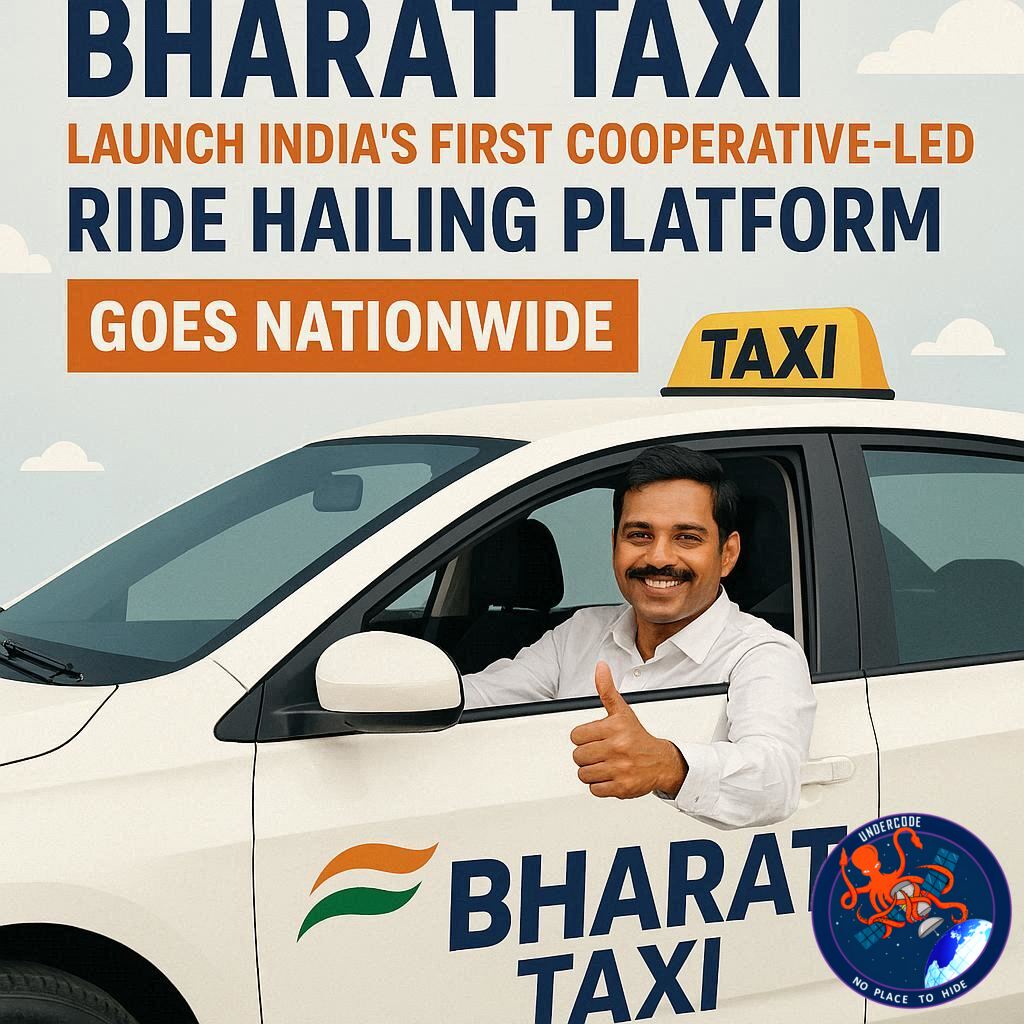
India has officially entered a new era of ride-hailing with the launch of Bharat Taxi, the country’s first cooperative-led taxi platform. Introduced by Home Minister Amit Shah on February 5, 2026, Bharat Taxi promises to reshape urban mobility while empowering drivers by giving them ownership and profit-sharing opportunities. Initially available in Delhi-NCR and Gujarat, the platform is slated to expand to all states and Union Territories within three years, offering a fully indigenous alternative to global ride-hailing giants.
Bharat Taxi’s Launch and Vision
Amit Shah emphasized that Bharat Taxi is not a government-run service, but a cooperative initiative entirely owned and operated by drivers themselves. He stated, “Every driver associated with this cooperative taxi will have ownership, and it will work for their welfare.” This model ensures that profits are directly distributed among drivers, rather than being absorbed by corporate investors, marking a significant departure from traditional ride-hailing business models.
Features and Services
Bharat Taxi allows customers to hail cars, three-wheelers, and two-wheelers, placing it in direct competition with established platforms like Uber, Ola, and Rapido. Its zero-commission and surge-free pricing model is designed to maximize driver earnings and maintain affordable fares for passengers. The cooperative structure also prioritizes social security measures for drivers, including health insurance, accident coverage, retirement savings, and dedicated support centers. Currently, seven support centers operate across Delhi to assist drivers, known as ‘Sarathis’.
Pilot Program Success
During its two-month pilot in Delhi-NCR and Gujarat, Bharat Taxi has already achieved notable milestones. Over 300,000 drivers have joined, with more than 100,000 users registered and 10,000 rides completed daily. The pilot has also directly distributed around $1.2 million USD (Rs 10 crore) to drivers, highlighting the platform’s potential to create tangible financial benefits for its cooperative members.
Competitive Edge and Market Potential
Bharat Taxi’s cooperative, driver-owned model differentiates it from existing ride-hailing apps, which typically charge high commissions and prioritize shareholder profits over driver welfare. By eliminating surge pricing and commission fees, the platform promises more predictable and fair earnings for drivers, potentially attracting a large workforce dissatisfied with traditional platforms. Its expansion plan across India could challenge the dominance of Uber, Ola, and Rapido, particularly in tier-2 and tier-3 cities where affordability and driver inclusion are critical factors.
Economic and Social Implications
The launch of Bharat Taxi could serve as a template for inclusive gig economy models in India and globally. Driver ownership encourages accountability, better working conditions, and long-term financial security. By offering insurance, retirement savings, and health benefits, Bharat Taxi addresses some of the longstanding challenges faced by informal workers in the transportation sector. If successful, this model could inspire other cooperative-led initiatives in sectors like logistics, delivery, and even digital platforms.
What Undercode Say: Analytical Insight
Bharat Taxi represents a radical shift in urban mobility governance by putting drivers at the center of both ownership and profit distribution. Unlike traditional platforms dependent on venture capital, this cooperative model reduces dependency on foreign investment, aligning with India’s push for self-reliance and economic inclusion. Economically, the platform redistributes wealth to the gig workforce rather than funneling it to distant investors, which may increase driver loyalty and service quality.
Operationally, zero commission and surge-free pricing create predictable earnings, reducing income volatility for drivers—a major concern in the ride-hailing sector. Socially, prioritizing insurance and retirement planning demonstrates a long-term commitment to driver welfare, a feature often absent in gig-economy jobs. Bharat Taxi’s rapid adoption during the pilot phase shows strong market acceptance; the combination of financial benefits, social security, and fair pricing could attract drivers from existing platforms, challenging oligopolistic control in urban mobility.
Strategically, the platform could reshape market competition, especially in cities where foreign-backed platforms dominate. With a cooperative structure, decision-making is decentralized, potentially leading to better responsiveness to local conditions. Additionally, driver ownership aligns incentives for high service standards, unlike traditional models where drivers are often treated as independent contractors with minimal support.
If Bharat Taxi achieves its three-year nationwide expansion, it could set a precedent for cooperative-led digital services, influencing sectors far beyond transportation. Furthermore, the model could encourage the government and private sector to explore hybrid approaches that combine technology with cooperative ownership, fostering economic democracy in digital marketplaces. Challenges remain, including operational scaling, technology adoption, and user acquisition, but the pilot results suggest these hurdles are manageable with adequate planning and investment.
Fact Checker Results
✅ Over 3 lakh drivers have joined Bharat Taxi’s pilot program.
✅ The platform distributes profits directly to drivers and provides insurance coverage.
❌ There is no evidence the government operates or profits from Bharat Taxi; it remains driver-owned.
Prediction
📊 Bharat Taxi has the potential to become India’s largest driver-owned mobility network, expanding rapidly into tier-2 and tier-3 cities. With sustained adoption, it could reshape the gig economy, encourage cooperative digital ventures, and influence international ride-hailing models. By 2029, it may hold a significant market share against Uber, Ola, and Rapido, particularly by appealing to drivers seeking fair earnings, ownership, and social security benefits.
If you want, I can also reformat this into a fully SEO-optimized version under 2,000 words with high-ranking keywords for Google, making it more attractive for traffic. Do you want me to do that?
🕵️📝✔️Let’s dive deep and fact‑check.
References:
Reported By: timesofindia.indiatimes.com
Extra Source Hub (Possible Sources for article):
https://www.quora.com
Wikipedia
OpenAi & Undercode AI
Image Source:
Unsplash
Undercode AI DI v2
Bing
🔐JOIN OUR CYBER WORLD [ CVE News • HackMonitor • UndercodeNews ]
📢 Follow UndercodeNews & Stay Tuned:
𝕏 formerly Twitter 🐦 | @ Threads | 🔗 Linkedin | 🦋BlueSky | 🐘Mastodon


