
Listen to this Post
Introduction
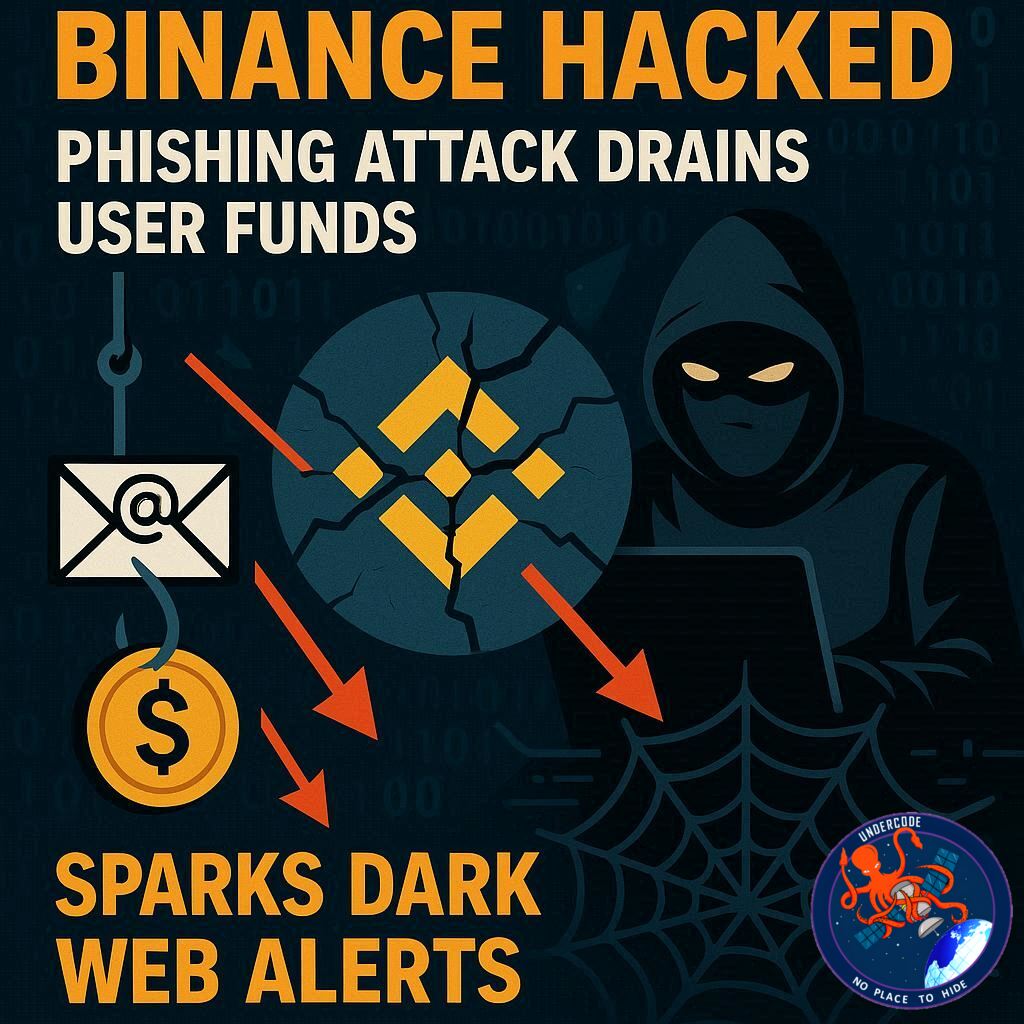
In the ever-evolving world of cryptocurrency, cyberattacks continue to threaten both individuals and corporations. The latest incident involves Binance’s official BNB Chain account on X (formerly Twitter), which was compromised and used to spread malicious phishing links. This breach not only cost unsuspecting users thousands of dollars but also reignited debates on the vulnerability of centralized platforms and the rising sophistication of cybercriminals. Alongside this, another major breach was reported at Avalara Inc., exposing millions of customer records to the dark web. Both cases highlight the critical need for stronger cybersecurity defenses in the digital financial ecosystem.
the Original Report
The official BNB Chain account on X was hijacked by unknown hackers. Once inside, the attackers published phishing links that tricked users into connecting their wallets. As a result, at least $8,000 worth of crypto assets were stolen from unsuspecting investors. While the sum may appear small compared to larger breaches, the incident underscores the persistent risks faced by retail investors.
At nearly the same time, Avalara Inc., a major software provider, faced its own crisis. A cybercriminal publicly claimed responsibility for breaching the company’s database, allegedly exfiltrating more than 8.1 million rows of sensitive information, including company and customer data as well as API credentials. This type of data could be highly valuable for launching further attacks, including credential stuffing, corporate espionage, and targeted phishing campaigns.
Both attacks were spotlighted by Dark Web Intelligence, a watchdog group that monitors underground forums and marketplaces. The revelations sent shockwaves across the cybersecurity community, reinforcing the belief that even top-tier corporations and crypto giants remain vulnerable to aggressive cybercriminals who continuously adapt their methods.
The incidents also unfolded against the backdrop of ongoing global trends: increasing digital adoption, growing interconnectivity of platforms, and the relentless push of hackers to exploit every weak point in the chain. For crypto users and corporate clients alike, this serves as a chilling reminder—one careless click or overlooked vulnerability can have devastating consequences.
What Undercode Say: 🔍
The Binance phishing incident is a textbook example of social engineering in action. Attackers did not breach Binance’s core systems but rather infiltrated its X account, leveraging trust and brand authority to mislead users. This emphasizes that platform security extends beyond just wallets and blockchains—social platforms and communication channels are equally at risk.
From a cybersecurity analyst’s standpoint, the attack demonstrates how hackers are refining their tactics:
Psychological manipulation: Users trust official accounts, making phishing links far more convincing.
Rapid exploitation: Stolen funds were siphoned almost immediately, leaving victims with no chance to recover assets.
Small-scale but high-impact: Though $8,000 may seem modest, the reputational damage to Binance is enormous.
In the case of Avalara Inc., the breach carries far heavier implications. Unlike a one-time crypto theft, the stolen 8.1 million data rows could fuel years of downstream exploitation. Customer data, API tokens, and company credentials are goldmines for hackers who can sell them on dark web forums, bundle them into attack kits, or use them for business email compromise (BEC) schemes.
Both attacks illustrate a common thread: traditional security perimeters are collapsing. The reliance on centralized accounts and interconnected data systems creates cascading vulnerabilities. Cybercriminals exploit the weakest link, whether it’s a social media account or an overlooked API endpoint.
For businesses, this underscores the urgency of adopting Zero Trust architectures, continuous monitoring, and multi-layered authentication across all digital assets. For individuals, the lesson is to verify links independently, never connect wallets from unsolicited sources, and assume that even verified accounts can be compromised.
Dark web chatter further indicates that smaller crypto thefts often serve as test runs for larger-scale attacks. Hackers may probe weaknesses through relatively low-value operations before escalating to multi-million-dollar heists. This pattern suggests that the Binance case may be a warning shot, not an isolated incident.
Cybercrime’s growth trajectory shows no signs of slowing. With AI-powered tools, deepfake technology, and automated phishing kits, hackers can now scale operations to reach thousands of victims in minutes. Unless corporations and regulators move faster, the imbalance between attackers and defenders will continue to widen.
Fact Checker Results ✅❌
✅ The Binance BNB Chain X account was officially compromised and phishing links were posted.
✅ Avalara Inc. breach claims include over 8.1 million exposed records.
❌ No evidence suggests Binance’s blockchain or core systems were hacked—only its social media presence.
Prediction 🔮
Looking ahead, cybercriminals are likely to increase their focus on social platforms as an entry point for attacks, exploiting the inherent trust users place in official accounts. Expect to see more phishing scams targeting crypto users, with escalating sophistication and broader reach. On the corporate side, data-rich companies like Avalara will remain prime targets, with breaches potentially feeding into a larger cybercrime economy involving identity theft, fraud, and advanced persistent threats. Both cases highlight an uncomfortable truth: unless defenses evolve quickly, 2026 could witness some of the largest and most damaging cyberattacks yet.
🕵️📝✔️Let’s dive deep and fact‑check.
References:
Reported By: x.com
Extra Source Hub:
https://www.instagram.com
Wikipedia
OpenAi & Undercode AI
Image Source:
Unsplash
Undercode AI DI v2
🔐JOIN OUR CYBER WORLD [ CVE News • HackMonitor • UndercodeNews ]
📢 Follow UndercodeNews & Stay Tuned:
𝕏 formerly Twitter 🐦 | @ Threads | 🔗 Linkedin | 🦋BlueSky | 🐘Mastodon


