
Listen to this Post
Introduction: Crypto Markets in Turmoil
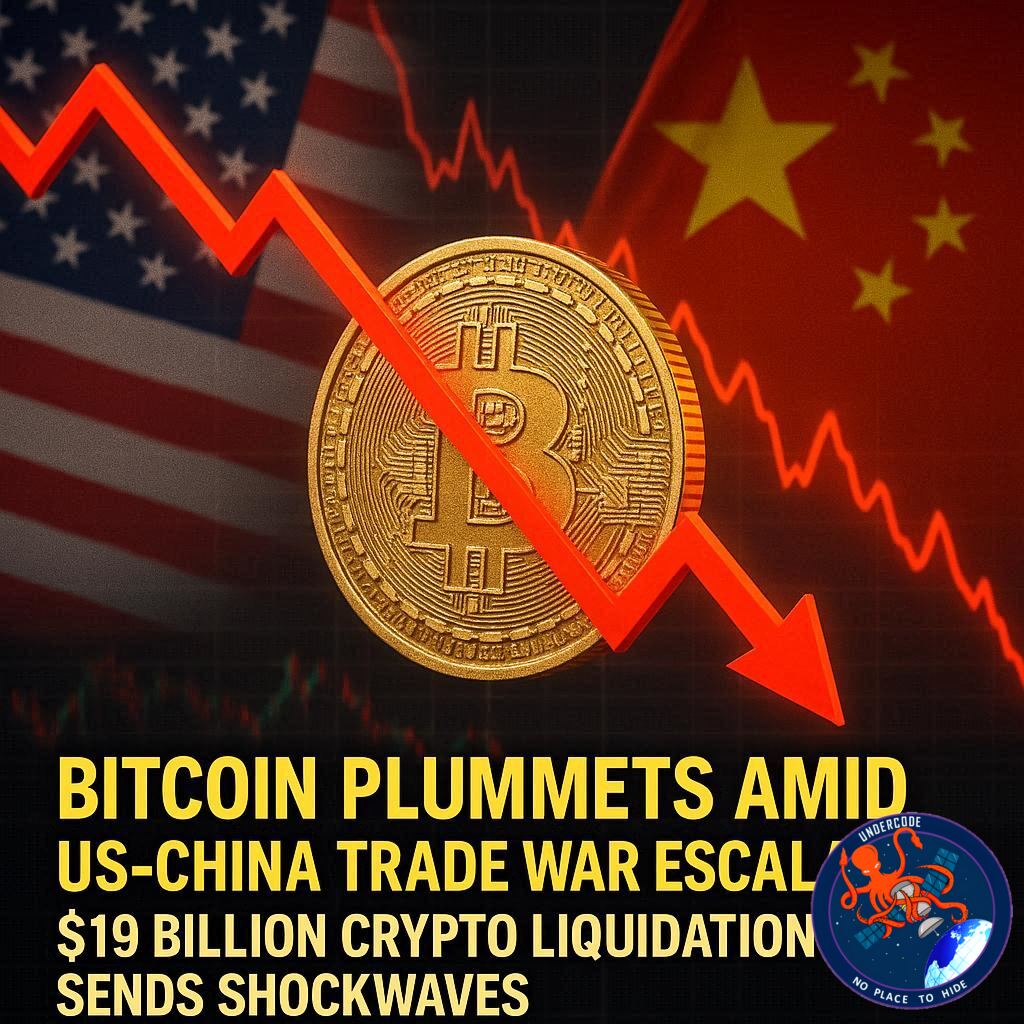
Bitcoin and the broader cryptocurrency market faced one of their most dramatic single-day downturns in history as geopolitical tensions escalated between the U.S. and China. On October 10, Bitcoin plunged sharply by 8.4% to $104,782, triggering a massive $19 billion wipeout across digital assets. This sudden crash has reignited concerns about crypto’s vulnerability to global events and the potential ripple effects on investors, both retail and institutional. The market’s extreme reaction underscores the sensitivity of digital currencies to macroeconomic pressures and policy shifts.
Bitcoin Faces the Brunt of Trade Tensions
The immediate trigger for the market turbulence was U.S. President Donald Trump’s aggressive stance on the U.S.-China trade conflict. He announced 100% tariffs on Chinese technology exports, along with strict controls on critical software, accusing China of using rare earth mineral restrictions to gain unfair advantages. This move, shared on Truth Social, sent global financial markets into a tailspin. The S&P 500 Index dropped over 2% on Friday, amplifying investor fears.
Widespread Liquidations Shake the Crypto Market
Crypto investors experienced unprecedented turmoil as Coinglass reported over 1.6 million traders liquidated within just 24 hours. Approximately $7 billion in positions were sold off in under an hour, and experts warn that total liquidations could exceed $30 billion. Brian Strugats, head trader at Multicoin Capital, expressed concerns about counterparty exposure and the potential for broader market contagion as panic selling intensified.
Impact on Major Cryptocurrencies
Other cryptocurrencies were also heavily affected. Ethereum fell 5.8% to $3,637, Binance Coin dropped 6.6% to $1,094.09, and XRP crashed a staggering 22.85% to $2.33, reducing its market capitalization by over 16% to $140.19 billion. Even stablecoins like Tether were not entirely immune, slipping slightly by 0.1% to $1.
Market Perspective and Future Opportunities
Despite the chaos, some analysts see a silver lining. Edul Patel, CEO of Mudrex, highlighted that Bitcoin briefly tested $102,000 before rebounding to $113,000. Patel pointed to historical trends in October, noting that major corrections often precede relief rallies of up to 21%. He suggested that capital rotation out of gold and anticipated U.S. spot altcoin ETF approvals could provide additional liquidity, presenting potential buying opportunities for long-term investors in Bitcoin and Ethereum.
Geopolitical Risks Amplify Market Vulnerability
October 10’s crash represents the largest single-day liquidation in crypto history, emphasizing the extreme volatility digital assets face amid geopolitical crises. As tensions between the U.S. and China continue to escalate, investors remain on edge, monitoring for signs of broader market fallout. The event serves as a stark reminder that while crypto offers high returns, it also carries heightened risks linked to external economic and political factors.
What Undercode Say:
The recent crypto meltdown highlights several critical lessons about the intersection of geopolitics and digital assets. First, Bitcoin and other cryptocurrencies, despite their decentralized nature, are far from insulated from global economic events. The 8.4% drop in Bitcoin and the 22.85% plunge in XRP show how quickly market sentiment can shift when investors perceive heightened systemic risk. The magnitude of liquidations—over 1.6 million accounts wiped out—reflects the leverage-driven fragility of modern crypto trading.
Secondly, U.S.-China trade relations are emerging as a dominant factor in market volatility. Investors often focus on macroeconomic data like inflation rates or interest rate decisions, but this episode underscores that policy decisions with direct geopolitical impact can provoke sharper, faster reactions. The sudden imposition of 100% tariffs on tech exports and software restrictions signals that even “digital-native” assets are deeply entangled with traditional markets.
Liquidity dynamics also play a crucial role. Edul Patel’s observation about October correction patterns is rooted in historical trends where sell-offs often trigger subsequent rebounds. The potential rotation from gold into crypto, alongside ETF approvals, could provide inflows that stabilize markets. However, this is contingent on broader investor confidence, which remains fragile amid ongoing trade war uncertainties.
Furthermore, the scale of liquidations reveals counterparty risk exposure in centralized and decentralized trading platforms. As traders are forced to unwind positions rapidly, it raises concerns about contagion effects where stress spreads from crypto into broader financial ecosystems. Margin calls and automated liquidations exacerbate volatility, highlighting the need for more robust risk management strategies.
Investor behavior during such crises is instructive. Panic selling may dominate short-term movements, but long-term fundamentals—like Bitcoin’s fixed supply and Ethereum’s network utility—remain intact. Smart investors could view the current turbulence as a strategic entry point, though timing and risk tolerance are critical.
Finally, the episode emphasizes the importance of geopolitical awareness in crypto investing. Traders and institutional investors alike must incorporate macro-political developments into risk models, as ignoring these signals can amplify losses. While technical analysis offers insights into price patterns, the influence of global policy events demonstrates that markets are not purely algorithmic.
This incident may also catalyze regulatory scrutiny. With massive liquidations and potential systemic risk, governments might accelerate oversight of crypto derivatives, leverage limits, and cross-border trading, impacting the industry’s future trajectory.
Overall, the October 10 crash serves as a microcosm of crypto’s promise and peril: enormous profit potential shadowed by equally substantial systemic vulnerability. For informed investors, understanding these dynamics is essential for navigating future volatility and positioning portfolios for long-term growth.
Fact Checker Results:
✅ Bitcoin fell 8.4% to $104,782, confirming major market volatility.
✅ XRP and other altcoins faced massive single-day losses, with XRP down 22.85%.
❌ Some reports suggesting the crash was unrelated to U.S.-China tensions are misleading.
Prediction:
Given historical patterns and the potential inflow from ETF approvals, Bitcoin may stabilize and test $120,000 within the next quarter. However, intermittent spikes in volatility are likely as U.S.-China trade tensions continue. Altcoins could see even sharper rebounds or drops depending on regulatory signals and market liquidity.
If you want, I can also create an SEO-optimized version with clickbait headings and meta descriptions that could rank well on Google for crypto crash news. It would maximize visibility while keeping the content fully human-like. Do you want me to do that next?
🕵️📝✔️Let’s dive deep and fact‑check.
References:
Reported By: timesofindia.indiatimes.com
Extra Source Hub (Possible Sources for article):
https://www.quora.com
Wikipedia
OpenAi & Undercode AI
Image Source:
Unsplash
Undercode AI DI v2
Bing
🔐JOIN OUR CYBER WORLD [ CVE News • HackMonitor • UndercodeNews ]
📢 Follow UndercodeNews & Stay Tuned:
𝕏 formerly Twitter 🐦 | @ Threads | 🔗 Linkedin | 🦋BlueSky | 🐘Mastodon


