
Listen to this Post
Introduction
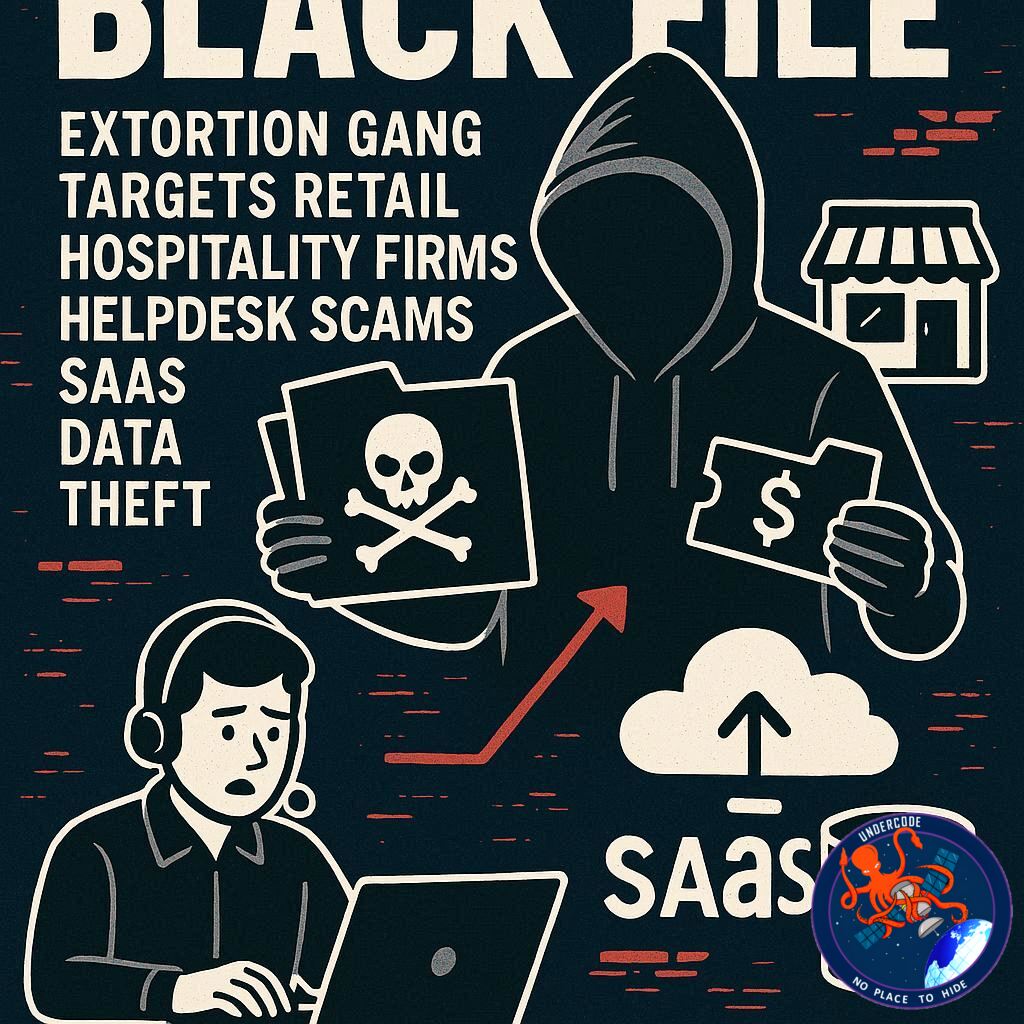
A newly exposed cyber extortion group known as BlackFile has emerged as a serious threat to retail and hospitality organizations in 2026. Security researchers say the attackers are using deception instead of advanced malware, relying on phone scams, stolen credentials, and abuse of trusted cloud platforms to steal sensitive business data. Their methods show how modern cybercriminals no longer need ransomware encryption tools to cause major damage. By blending into normal corporate systems, BlackFile can quietly infiltrate networks, gather confidential records, and demand million-dollar payouts.
BlackFile’s Growing Campaign Against Businesses
Security researchers recently revealed new findings about an extortion group that has been actively targeting retail and hospitality businesses since February 2026. The investigation was published in a joint report by Palo Alto Networks’ Unit 42 and the Retail and Hospitality Information Sharing and Analysis Center (RH-ISAC) on April 23.
The report links the activity to a threat cluster known as CL-CRI-1116, which overlaps with previously reported groups such as BlackFile, UNC6671, and Cordial Spider. Researchers also believe the operation may be connected to the criminal underground collective known as The Com, a group widely associated with social engineering and financially motivated attacks.
Unlike traditional ransomware gangs, these attackers do not depend on custom malware or expensive exploit kits. Instead, they abuse legitimate systems, internal tools, and application programming interfaces (APIs). This tactic, often called “living off the land,” makes malicious activity harder to detect because it appears similar to ordinary employee behavior.
How the Attacks Begin
BlackFile commonly starts its intrusions through vishing, or voice phishing. Attackers call employees while pretending to be internal IT helpdesk staff. They use spoofed phone numbers and fake caller ID names so the calls appear legitimate.
During these conversations, employees are tricked into revealing passwords or one-time authentication codes. Victims may also be directed to fake login pages designed to imitate corporate single sign-on portals.
The group reportedly uses antidetect browsers and residential proxy networks to hide their real locations. This helps them avoid suspicion from IP reputation systems and security filters.
Bypassing MFA and Expanding Access
Once the attackers steal employee credentials, they often register a new device under the compromised account. This allows them to bypass multi-factor authentication protections and keep long-term access.
From there, the criminals move laterally through the organization. They target accounts with higher privileges and search employee directories to identify executives and senior staff.
By socially engineering these leadership accounts, they can gain broad access that resembles legitimate executive activity. This gives them deeper visibility into the organization and greater ability to move unnoticed.
Data Theft Through Trusted Cloud Platforms
Instead of deploying ransomware immediately, BlackFile appears focused on stealing valuable data from cloud services such as SharePoint and Salesforce.
Researchers say the attackers search internal systems using keywords like confidential and SSN to locate sensitive reports, employee information, and business documents.
Large datasets are then exported through standard browser downloads or APIs. This may include CSV files containing employee phone numbers, customer data, and internal reports.
Because the activity happens through legitimate authenticated sessions, many basic monitoring systems may fail to recognize it as malicious behavior.
Extortion Tactics and Pressure Campaigns
After stealing data, BlackFile contacts victims using random Gmail accounts or hijacked employee email addresses. They typically demand seven-figure ransom payments.
In some cases, the group reportedly escalates pressure using SWAT-ing, where false emergency reports are sent to law enforcement in order to harass executives and create panic.
This marks a disturbing trend where cyber extortion blends digital attacks with real-world intimidation.
What Organizations Should Do
Researchers recommend stronger identity verification for all helpdesk interactions, especially requests involving passwords, MFA resets, or device enrollment.
Companies should establish clear rules for what IT staff can do during a single call and when management approval is required.
Training frontline staff to recognize manipulation tactics is also essential. Warning signs include vague identity answers, urgency, emotional pressure, and requests that bypass normal procedures.
Security teams should also improve logging for SaaS platforms, monitor unusual API exports, and alert on suspicious downloads of sensitive data.
What Undercode Say:
BlackFile demonstrates one of the most important truths in cybersecurity today: people are still the easiest path into enterprise networks. While many organizations spend heavily on firewalls, endpoint tools, and zero-day defenses, attackers continue to succeed by simply calling employees and pretending to be support staff.
This campaign also highlights the weakness of relying only on MFA as a silver bullet. Multi-factor authentication remains valuable, but if criminals can socially engineer users into approving requests or registering new devices, MFA becomes less effective. Security must be layered, not symbolic.
Another major lesson is the shift from ransomware encryption to pure extortion through data theft. Encrypting systems creates noise, attracts incident responders quickly, and may trigger backup recovery plans. Quietly stealing sensitive data first can be faster, stealthier, and more profitable.
Retail and hospitality are especially attractive targets because they often manage large customer databases, payment environments, seasonal workforces, and distributed staff. High employee turnover can also create gaps in training and account management.
The abuse of SharePoint and Salesforce is especially significant. Many organizations trust cloud platforms by default, yet attackers increasingly see them as treasure vaults full of contracts, employee records, and operational intelligence.
This case also proves that threat actors understand corporate psychology. By impersonating helpdesk staff, they exploit urgency and trust. Employees are trained to cooperate with IT, making that role an ideal disguise.
SWAT-ing adds another dangerous layer. When criminals extend pressure into victims’ homes and personal lives, extortion becomes more coercive and traumatic. This raises the stakes beyond financial loss.
The future of enterprise defense will require identity-centric security, behavioral analytics, and constant verification of privileged actions. Companies must stop assuming that activity from a valid login is safe.
BlackFile is not just another gang. It represents the next generation of cybercrime: low-malware, high-deception, cloud-native extortion.
Fact Checker Results
✅ BlackFile was reported as targeting retail and hospitality sectors beginning in February 2026.
✅ Researchers linked the activity to CL-CRI-1116 and possible ties to The Com ecosystem.
✅ Attack methods relied heavily on vishing, credential theft, SaaS data exfiltration, and extortion rather than ransomware encryption.
Prediction
🔮 More extortion groups will abandon ransomware payloads and focus on stealing cloud data silently.
🔮 Helpdesk impersonation attacks will rise sharply because they bypass expensive security controls.
🔮 Companies will begin enforcing stricter identity checks for internal IT support calls and privileged account actions.
🕵️📝✔️Let’s dive deep and fact‑check.
References:
Reported By: www.infosecurity-magazine.com
Extra Source Hub (Possible Sources for article):
https://www.discord.com
Wikipedia
OpenAi & Undercode AI
Image Source:
Unsplash
Undercode AI DI v2
Bing
🔐JOIN OUR CYBER WORLD [ CVE News • HackMonitor • UndercodeNews ]
📢 Follow UndercodeNews & Stay Tuned:
𝕏 formerly Twitter 🐦 | @ Threads | 🔗 Linkedin | 🦋BlueSky | 🐘Mastodon


