
Listen to this Post
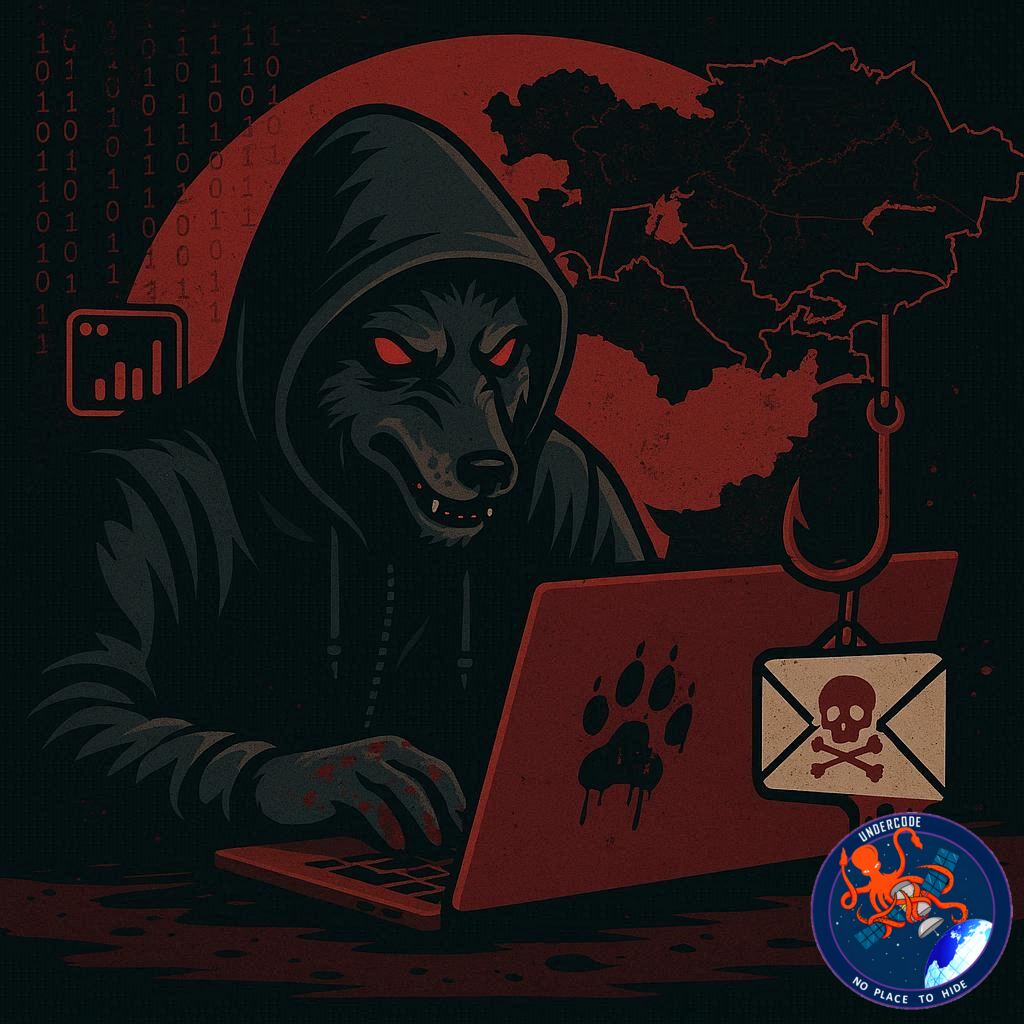
Introduction: A Quiet but Calculated Cyber Offensive
A long-running cyber espionage group known as Bloody Wolf, also tracked as Stan Ghouls, has intensified its operations across Central Asia and Russia. By blending carefully localized phishing emails with legitimate remote administration software, the group has managed to quietly compromise dozens of organizations. Their latest campaign highlights a growing trend: attackers increasingly abuse trusted tools and simple social engineering instead of relying on loud, easily detected malware.
Campaign Overview and Target Regions
Bloody Wolf has been active since 2023, with a clear geographic focus on Russia, Kyrgyzstan, Kazakhstan, and Uzbekistan. In its most recent wave, Uzbekistan became the primary target, accounting for roughly 50 confirmed infections. Russia followed with around 10 victims, while smaller numbers were identified in Kazakhstan, Turkey, Serbia, and Belarus, likely as collateral infections rather than deliberate targets.
Targeted Industries and Victim Profile
The group does not limit itself to a single sector. Manufacturing firms, financial institutions, IT companies, government bodies, logistics providers, healthcare organizations, and educational institutions have all been affected. In total, more than 60 victims have been identified, suggesting a campaign large enough to require sustained manual oversight by the attackers.
Spear-Phishing as the Primary Entry Point
The attack begins with highly tailored spear-phishing emails written in local languages, including Uzbek. These messages impersonate official court communications, exploiting fear and urgency. One commonly observed lure warns recipients about a supposed “court notice” or “retrial application,” increasing the likelihood that the attachment will be opened without suspicion.
Malicious PDF Attachments
Attached to these emails is a PDF file with a convincing legal-style name, such as E-SUD_705306256_ljro_varaqasi.pdf. The document itself does not immediately contain malware but instead manipulates the user into taking the next dangerous step.
Java Runtime Installation Trick
The PDF instructs the victim to install the Java Runtime Environment if it is not already present. Once Java is available, the document redirects the user to download a malicious JAR file hosted on attacker-controlled domains designed to look legitimate, including tax- or finance-themed names.
Custom Java Loader Execution
The downloaded JAR file acts as a custom Java loader. When executed, it displays a fake error message stating that the application cannot run on the current operating system. This deception is meant to lower suspicion while the malicious process continues in the background.
Installation Limits to Evade Detection
To reduce exposure, the loader limits execution attempts to fewer than three times per machine. This constraint helps the attackers avoid sandbox environments and automated analysis systems that rely on repeated execution.
NetSupport RAT Payload Delivery
After the initial checks, the loader downloads approximately 20 files related to NetSupport RAT, a legitimate remote administration tool frequently abused by threat actors. Key components include client32.exe, PCICHEK.DLL, and client32.ini, retrieved from backup domains to ensure resilience.
Persistence Through Multiple Mechanisms
Once installed, the malware establishes persistence using three distinct methods. It drops a batch script into the Startup folder, creates a registry run key under the current user, and sets up a scheduled task that triggers on user logon. This layered approach makes removal more difficult and ensures the RAT survives reboots.
Full Remote Control Capabilities
With NetSupport RAT active, attackers gain full control over infected systems. This includes screen viewing, file manipulation, command execution, and potentially credential harvesting, enabling both espionage and financial theft, particularly against banking environments.
Shift From STRRAT to NetSupport
Earlier Bloody Wolf campaigns relied on STRRAT, a more overt remote access trojan. The switch to NetSupport reflects a strategic shift toward abusing legitimate tools that blend in with normal administrative activity, significantly reducing the chance of immediate detection.
Rapid Infrastructure Rotation
The group frequently changes domains and hosting infrastructure, with more than 35 related domains identified so far. This constant rotation complicates takedown efforts and extends the lifespan of each campaign.
Attribution to Bloody Wolf
Security researchers, including Kaspersky, attribute the campaign to Bloody Wolf based on reused Java code snippets, identical decoy PDF documents, and the consistent use of rare Java-based loaders across incidents.
Possible IoT Connections
A previously associated domain was found hosting Mirai IoT botnet samples in mid-2025. While this link is considered low confidence, it raises the possibility that the group may experiment with IoT exploitation or share infrastructure with other threat actors.
Defensive Recommendations
Organizations are advised to closely scan PDF attachments, restrict Java execution from untrusted sources, and monitor for NetSupport-related files appearing unexpectedly. Changes to autorun locations and suspicious scheduled tasks should be investigated immediately.
Importance of Endpoint Detection
Modern EDR solutions are essential for detecting this type of activity, especially when legitimate tools are abused. Signature-based defenses alone are unlikely to be sufficient against such campaigns.
What Undercode Say:
Abuse of Trust as the Core Strategy
Bloody Wolf’s success lies less in technical novelty and more in psychological precision. By impersonating court systems and using local languages, the group exploits institutional trust that is deeply ingrained in many regions.
Living-Off-the-Land Tactics Evolve
The use of NetSupport RAT highlights a broader industry problem: legitimate software is increasingly weaponized. This blurs the line between normal IT operations and malicious behavior, forcing defenders to rely on behavioral analysis rather than simple blacklists.
Java Loaders as a Regional Weak Spot
Java remains widely installed in government and enterprise environments across CIS regions. Bloody Wolf leverages this dependency, knowing that Java-based threats often receive less scrutiny than native Windows malware.
Manual Operations Signal High Intent
The scale of the campaign suggests hands-on keyboard activity rather than automated botnet behavior. This points to targeted objectives such as financial theft, long-term surveillance, or access resale rather than opportunistic mass infection.
Infrastructure Hygiene as a Defensive Priority
Frequent domain rotation demonstrates the attackers’ operational maturity. Defenders must prioritize threat intelligence feeds and proactive blocking rather than reactive cleanup.
The Real Risk to Financial Institutions
Given the remote control capabilities of NetSupport, banks and financial service providers remain the most at-risk targets. Even a single compromised workstation can lead to cascading financial losses.
Localized Phishing Is the New Normal
This campaign reinforces a critical lesson: phishing is no longer generic. Localization, cultural awareness, and realistic document design are now standard tools in advanced threat actor playbooks.
Fact Checker Results
Attribution Evidence Review
The linkage between Bloody Wolf and this campaign is supported by consistent technical artifacts and infrastructure reuse. ✅
Tooling and Malware Assessment
NetSupport RAT usage aligns with documented attacker behavior in previous Bloody Wolf operations. ✅
IoT Botnet Connection Confidence
The Mirai hosting link remains speculative and should be treated with caution. ❌
Prediction
Continued Expansion in Central Asia 🌍
Bloody Wolf is likely to deepen its focus on Uzbekistan and neighboring countries, where localized phishing has proven effective.
Increased Use of Legitimate Tools 🧰
Future campaigns will probably rely even more on trusted remote administration software to bypass security controls.
Broader Sector Targeting 📊
Beyond finance and government, education and healthcare institutions may see increased attention due to weaker defenses.
🕵️📝✔️Let’s dive deep and fact‑check.
References:
Reported By: cyberpress.org
Extra Source Hub (Possible Sources for article):
https://stackoverflow.com
Wikipedia
OpenAi & Undercode AI
Image Source:
Unsplash
Undercode AI DI v2
Bing
🔐JOIN OUR CYBER WORLD [ CVE News • HackMonitor • UndercodeNews ]
📢 Follow UndercodeNews & Stay Tuned:
𝕏 formerly Twitter 🐦 | @ Threads | 🔗 Linkedin | 🦋BlueSky | 🐘Mastodon


