
Listen to this Post
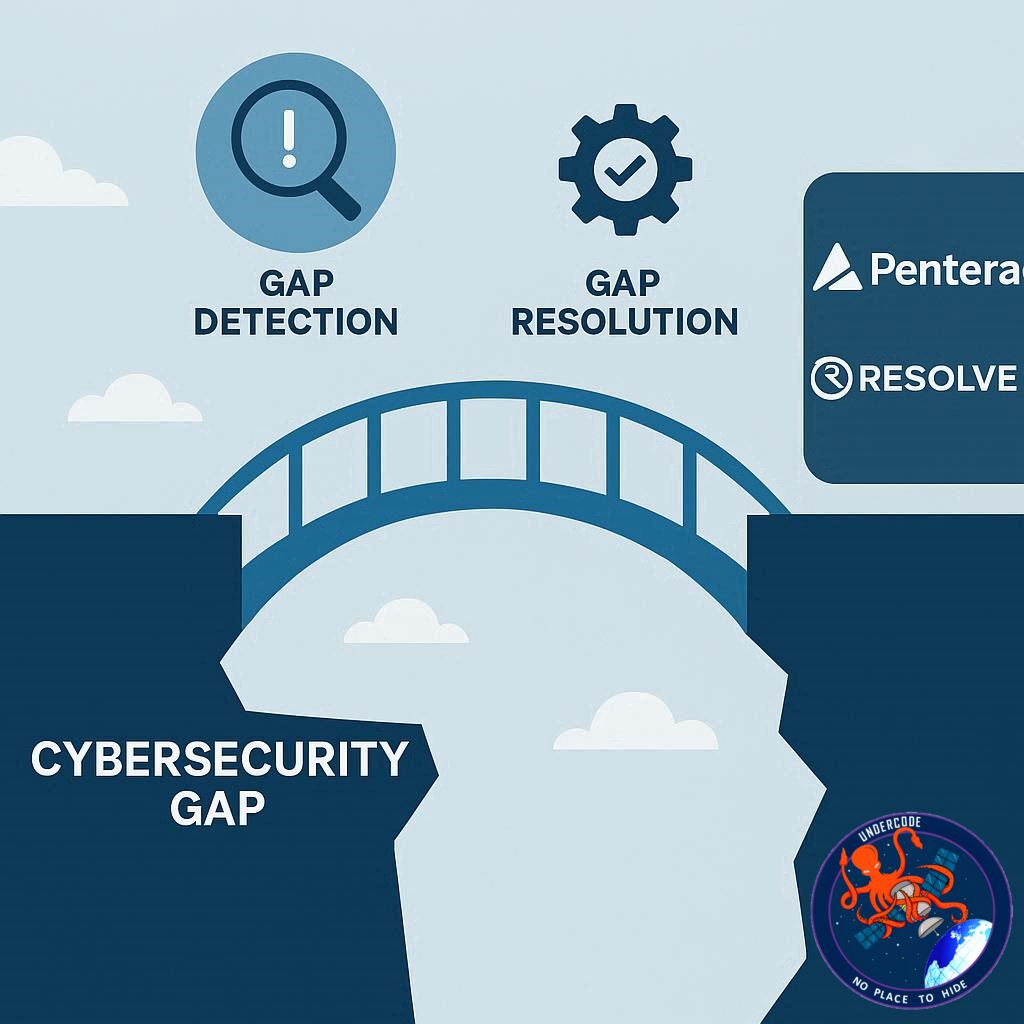
In today’s hyper-connected digital landscape, enterprises face a paradox — they are more equipped than ever with advanced detection tools, yet still fall short in resolving what they discover. Every day, critical vulnerabilities surface across cloud infrastructures, applications, and networks. The alarms sound instantly: five different tools — vulnerability scanners, XDR, CSPM, SIEM, and CMDB — each flag the issue in their own language. Yet amid the noise, one question lingers: Who will fix it, how fast, and how effectively?
This is where the real struggle begins — not in detection, but in resolution. While organizations can identify threats at scale, the path to remediation remains fragmented, slow, and often incomplete. The Continuous Threat Exposure Management (CTEM) framework sought to change that by providing a repeatable process for scoping, validating, and addressing risk. But even with CTEM in place, the operational bridge between detection and action remains shaky.
In most organizations, the flow of security alerts is a torrent. Teams are flooded with thousands of notifications each week — each differing in format, severity, and urgency. Security analysts must correlate this scattered intelligence, prioritize what truly matters, and manually assign fixes. The process consumes valuable time and often lacks feedback loops to confirm whether the applied fixes worked. The result? A dangerous gap between identifying a vulnerability and actually resolving it — a remediation gap that exposes enterprises to ongoing risk.
Pentera, a leader in security validation, recognized this persistent weakness. Their solution, Pentera Resolve, transforms cybersecurity from an endless game of alert management into a streamlined cycle of validate, remediate, and verify.
From Detection to Action: Redefining the Security Workflow
Pentera has long been at the forefront of validating real-world cyber risks — safely emulating attacks to reveal which vulnerabilities are truly exploitable in a company’s environment. But their latest leap forward is Pentera Resolve, a platform designed to connect the dots between insight and execution.
Unlike traditional tools that stop at alerting, Pentera Resolve operationalizes security findings. It automatically converts validated vulnerabilities into structured remediation tasks, routed directly to the right teams through systems they already use — ServiceNow, Jira, or Slack. Each issue is enriched with business context, prioritized by real risk level, and assigned without human bottlenecks.
The system is powered by AI, which means it doesn’t just identify problems — it understands them. It automates triage, correlates exposures with business impact, and tracks every fix from start to finish, creating a verifiable audit trail. This ensures not only that vulnerabilities are addressed but also that every step is measurable, reportable, and repeatable.
For enterprises struggling with alert fatigue and manual coordination chaos, Pentera Resolve introduces a new rhythm: one unified loop where validation and remediation coexist seamlessly. It is no longer about detecting threats faster — it’s about closing the loop faster.
What Undercode Say: The Real Impact Behind Pentera Resolve
The introduction of Pentera Resolve marks a critical evolution in how cybersecurity operations are structured. For years, the industry has obsessed over visibility — better dashboards, deeper analytics, more alerts. Yet visibility alone never reduced risk. What Pentera understands — and few others have truly addressed — is that operational integration is the missing ingredient in modern security.
In essence, Pentera Resolve is a platform that turns intelligence into action. By blending automated validation with embedded remediation workflows, it creates what could be called a “living security ecosystem.” Every alert transforms into a tangible task, every task carries traceable accountability, and every resolution is verified in real time.
This approach resonates deeply with the broader challenge facing enterprise security teams: scale. Manual processes, however rigorous, cannot match the velocity or volume of digital threats. AI-driven orchestration — the kind Pentera Resolve employs — is not a luxury but a necessity.
What makes Pentera Resolve different is not just its automation but its philosophy. It acknowledges that cybersecurity isn’t merely a technical discipline; it’s an operational one. By placing remediation inside the same tools that business and IT teams already use, it breaks down silos that have long slowed response times. Suddenly, the conversation shifts from “who owns this vulnerability?” to “how fast can we fix it, and prove it’s fixed?”
There’s also a cultural impact worth noting. With validation and remediation living in the same cycle, teams gain shared visibility — security, IT, and compliance all operate from one source of truth. This reduces friction, clarifies ownership, and instills confidence in both process and outcome. It’s the difference between chasing alerts and mastering them.
Another powerful dimension is accountability. Every fix within Pentera Resolve is not just logged but validated post-remediation. This feedback loop ensures that “fixed” truly means secured, not just patched. The ability to re-test automatically elevates enterprise resilience, transforming reactive responses into proactive defense cycles.
From a strategic lens, Pentera Resolve also signals a shift in how the cybersecurity market will evolve. As threat landscapes grow in complexity, organizations will no longer evaluate tools by detection rate but by resolution efficiency. Platforms that can shorten the mean time to remediation (MTTR) will define the next frontier of cyber maturity.
In short, Pentera Resolve is not just another product — it’s an operational philosophy encoded into technology. It represents a future where security outcomes replace security intentions, and where every vulnerability begins and ends in the same ecosystem of trust, speed, and proof.
Fact Checker Results
✅ Pentera Resolve integrates remediation workflows directly into validation cycles.
✅ AI-driven automation reduces manual triage and accelerates ownership assignment.
✅ Post-fix validation ensures every vulnerability is truly resolved.
Prediction 🔮
Pentera Resolve will likely become the cornerstone of next-generation cybersecurity operations. As enterprises embrace continuous validation and remediation, traditional siloed tools will fade into obsolescence. In the next few years, the term “remediation gap” may disappear entirely — replaced by platforms that not only see the threats but solve them.
🕵️📝✔️Let’s dive deep and fact‑check.
References:
Reported By: thehackernews.com
Extra Source Hub (Possible Sources for article):
https://www.pinterest.com
Wikipedia
OpenAi & Undercode AI
Image Source:
Unsplash
Undercode AI DI v2
Bing
🔐JOIN OUR CYBER WORLD [ CVE News • HackMonitor • UndercodeNews ]
📢 Follow UndercodeNews & Stay Tuned:
𝕏 formerly Twitter 🐦 | @ Threads | 🔗 Linkedin | 🦋BlueSky | 🐘Mastodon


