
Listen to this Post
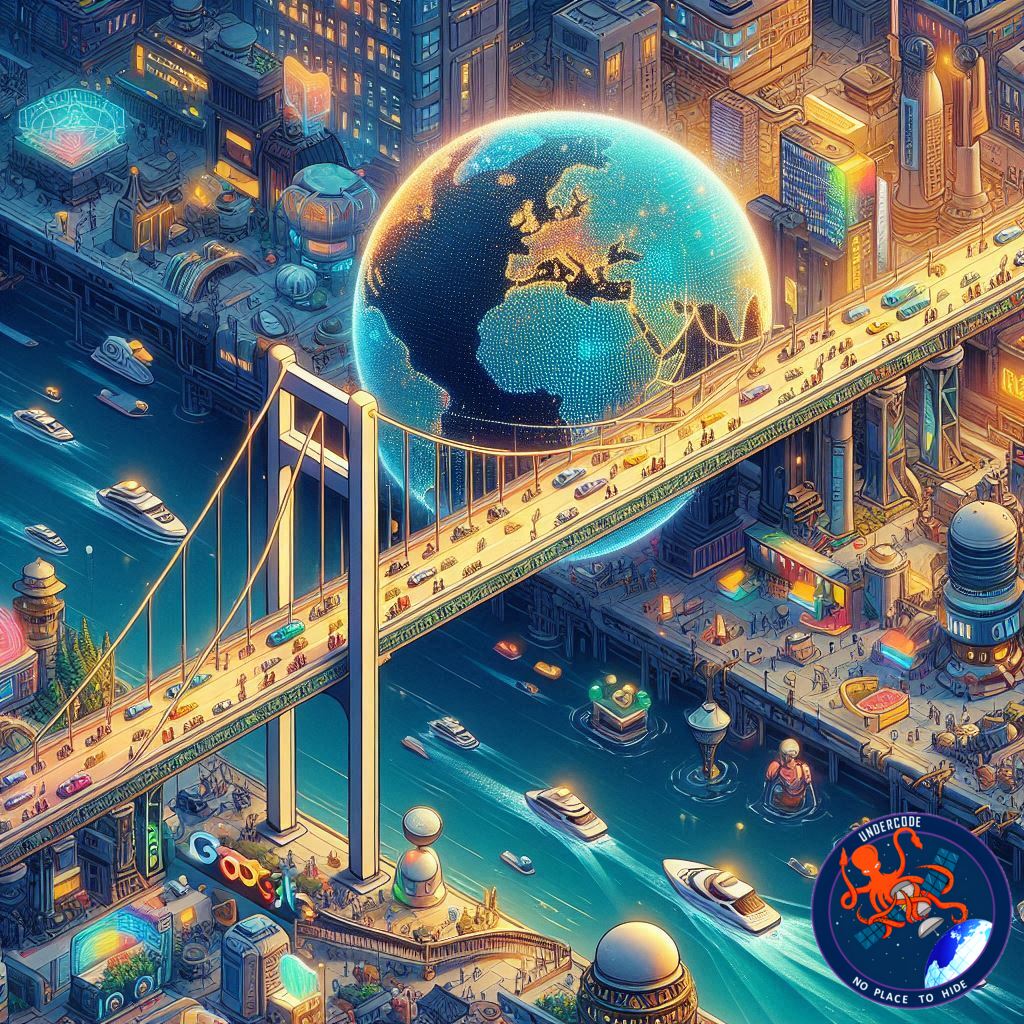
Building an Inclusive Future with AI Starts with Infrastructure
At the heart of the 2025 Global Digital Summit (GDS2025), held by Nikkei in Japan, Google Vice President Brian Quigley delivered a compelling speech that struck a nerve across governments and tech industries. His core message? Without equal access to digital infrastructure, especially in underserved regions, the world risks creating a deepening AI divide—a rift where only the well-connected benefit from the transformative power of artificial intelligence.
Quigley’s words carry weight, as he leads Google’s network infrastructure strategy, with a focus on global subsea cables and connectivity. His speech was more than a corporate presentation—it was a call to action.
the Original
Brian Quigley, VP at Google, spoke at GDS2025, warning that regions lacking proper network infrastructure risk being left behind in the global AI revolution. He emphasized the need for joint public-private efforts to develop infrastructure and foster talent in order to prevent the emergence of an “AI divide.”
Google has been active in this space, investing in four undersea cables connected to Japan since 2010 and working with local partners like KDDI to expand terrestrial connectivity. These infrastructure investments have enabled the construction of large-scale data centers in Japan and support services like YouTube.
Quigley highlighted Google’s collaborative projects in regions such as the Asia-Pacific and Southern Africa, including a recent initiative in Tuvalu, where a new undersea cable—funded by Japan, the U.S., and Australia—was completed in December 2024. These efforts are designed to ensure these areas aren’t excluded from AI-driven social transformation.
He also stressed the importance of nurturing AI talent. Google has invested \$120 million in programs such as “Grow with Google” and the “Global AI Opportunity Fund” to boost digital literacy and offer training in AI.
In closing, Quigley reaffirmed
What Undercode Say:
Brian Quigley’s statement is not just a PR moment—it’s a seismic warning about a new kind of inequality that could fracture societies even further. While much of the AI conversation revolves around regulation, safety, and opportunity, the physical realities—cables, data centers, routers—are often ignored. And that’s where the true bottleneck begins.
🛰️ Infrastructure: The Hidden Backbone of AI
In the AI era, infrastructure is destiny. Without reliable and high-speed internet, nations cannot run large models, access cloud services, or even use basic AI-powered tools. It’s a misconception to think that AI lives in the cloud—it lives in subsea fiber, server racks, and latency maps. If developing nations don’t have this baseline, no amount of policy talk will matter.
🌍 A Two-Speed World
Google’s investments in Tuvalu and South Africa signal a recognition that the next billion users must be part of the AI revolution—not just passive consumers but active participants. The danger is clear: the West and parts of Asia could move ahead at lightning speed while others stagnate. That’s not just unethical—it’s geopolitically dangerous.
🧠 Talent Without Access Is Powerless
Yes, Google is pumping millions into training programs, but what good is digital literacy when there’s no access to modern infrastructure to apply it? Training and tech must go hand-in-hand. It’s a classic case of teaching someone to fish in a pond that’s been drained.
🤝 Government-Industry Synergy Is Crucial
One of the most powerful takeaways is the emphasis on public-private partnerships. Governments alone can’t build cables, and tech firms can’t negotiate cross-border policy. Real AI equity needs both sectors operating in tandem, especially in volatile or underfunded regions.
🇯🇵 Japan as a Digital Gateway
Japan’s role is pivotal here. It acts as a launchpad for wider connectivity in Asia, and its collaboration with Google and KDDI shows how local-global synergy can work. Japan is not just a market—it’s a bridge between global infrastructure giants and regional needs.
🔍 Fact Checker Results
✅ Google has confirmed its four major subsea cable investments in Japan since 2010.
✅ The Tuvalu project is documented and funded through partnerships with U.S., Australia, and Japan.
✅ The “Grow with Google” and AI Opportunity Fund programs have disbursed over \$100M globally.
📊 Prediction: AI Divide Will Reshape Geopolitics by 2030
If current infrastructure inequalities persist, we’ll see new global hierarchies form—not just based on GDP or military strength, but on AI capability access. Expect rising tensions between “AI-rich” and “AI-poor” nations, with increasing migration of talent, digital colonization concerns, and regional digital sovereignty movements. By 2030, countries without robust digital backbones will not just be behind—they’ll be digitally irrelevant.
References:
Reported By: xtechnikkeicom_705e96abe73bb76ff0426c57
Extra Source Hub:
https://www.instagram.com
Wikipedia
OpenAi & Undercode AI
Image Source:
Unsplash
Undercode AI DI v2


