
Listen to this Post
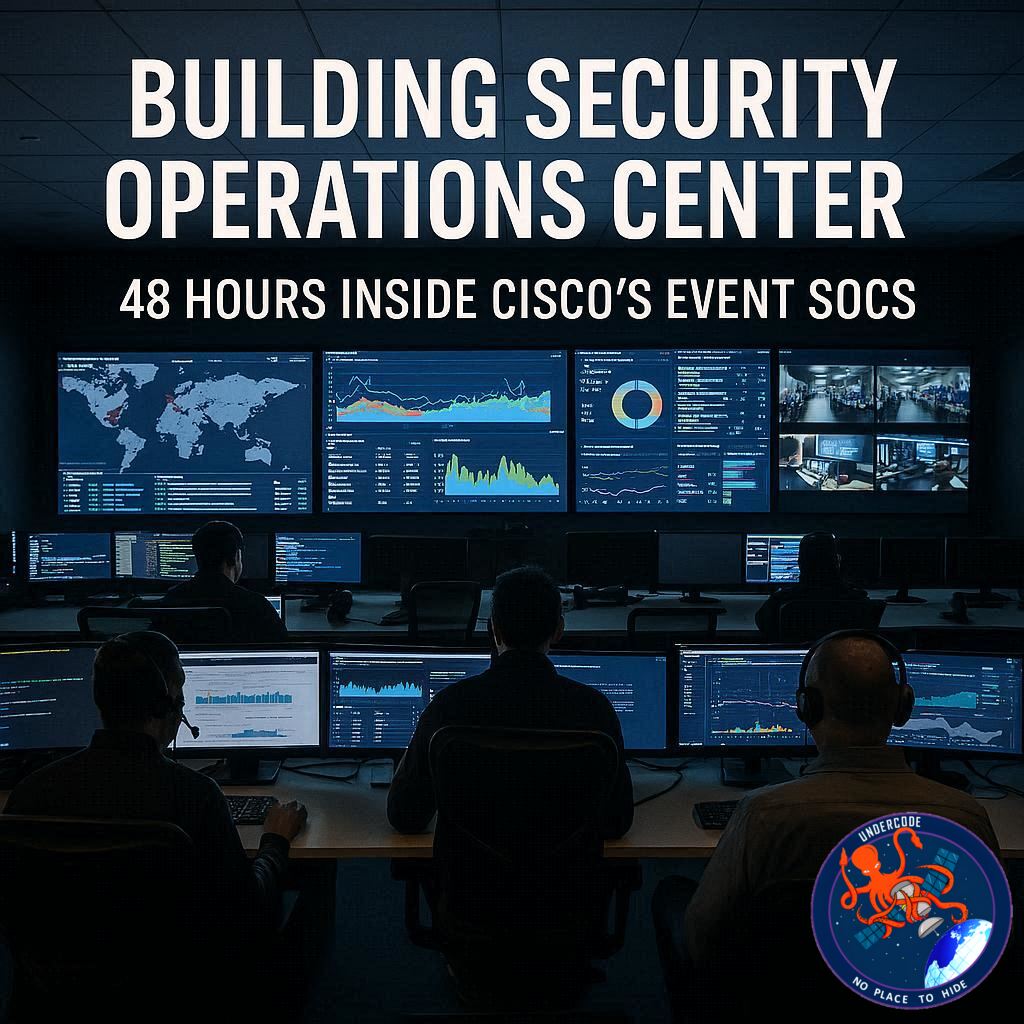
In the fast-paced world of cybersecurity, some of the most intense operations happen behind the scenes at conferences like RSAC™, Black Hat, and Cisco Live. Imagine being tasked with building a fully operational Security Operations Center (SOC) in just 48 hours—and then securing a network as large and chaotic as a small city, teeming with hackers, researchers, and thousands of devices, many of them compromised. This is the daily reality for Cisco’s Event SOC team, and now they’re giving the public a detailed look at how it’s done. With the launch of their new Cisco Event SOCs website and the release of the comprehensive Reference Architecture & Operations Guide, security professionals can finally access the strategies, tools, and operational wisdom that have kept these temporary cyber-fortresses resilient under extreme conditions.
Summary of Cisco Event SOC Operations
For years, Cisco has quietly turned hotel ballrooms and convention centers into high-functioning SOCs, defending against constant cyber threats in environments where control is limited and traffic must keep flowing. Traditional security guides often assume months of preparation, full endpoint control, and strict blocking policies—but Cisco’s Event SOCs operate under very different constraints: high background noise, BYOD devices, and the need to maintain attendee experience while preventing breaches.
The new Cisco Event SOCs hub provides an inside look at these operations. Visitors can explore the “SOC-in-a-Box” blueprint, which outlines the portable hardware stack and cabling setup that enables full visibility within two days. Real-world metrics illustrate the scale of the work: billions of packets analyzed and thousands of suspicious files detonated in a single week. Behind-the-scenes videos and podcasts provide a glimpse into the collaborative work of SOC analysts, showing how complex threats are identified, prioritized, and mitigated in real-time.
At the heart of this launch is the Cisco Event SOCs: Reference Architecture & Operations Guide, a technical manual designed for rapid-response security. It details the SOC operating model, showing how Cisco XDR handles high-speed triage, while Splunk Enterprise Security enables deep threat hunting and correlation. The guide emphasizes integration, illustrating how Cisco Secure Firewall, Cisco Secure Access (DNS), Endace packet capture, and third-party intelligence work together to create a unified defense.
A key differentiator is Cisco’s selective response strategy. In environments where “block-by-default” is not feasible, the team prioritizes containment of critical infrastructure while keeping attendee systems operational. Continuous innovation is also central: lessons from each event feed into an OODA (Observe, Orient, Decide, Act) loop that automates workflows and enhances future detections.
By sharing staffing models, configurations, and operational practices, Cisco hopes to help security teams transition from reactive firefighting to proactive resilience. The guide is relevant for CISOs quantifying risk, SOC managers reducing analyst fatigue, and network engineers bridging the gap between NOC and SOC operations.
What Undercode Say:
Cisco’s Event SOC model is more than a temporary solution; it’s a blueprint for rapid-response security in unpredictable, high-pressure environments. The modular “SOC-in-a-Box” approach demonstrates that portability and scalability are critical, especially in events or enterprises where network variables are constantly changing. By combining high-speed triage (Cisco XDR) with deep analytics (Splunk Enterprise Security) and a diverse ecosystem of integrated tools, the team achieves visibility and response capabilities that traditional SOCs can struggle to match.
The selective response methodology is particularly noteworthy. Rather than relying on blanket blocking, which could disrupt critical operations, the SOC prioritizes protection based on risk, preserving business continuity while neutralizing threats. This approach reflects a broader trend in cybersecurity: moving from rigid policies toward dynamic, intelligence-driven defense strategies.
Cisco’s emphasis on the OODA loop highlights an operational maturity rarely documented in public resources. By capturing lessons from each event and automating detection and response workflows, the team creates a continuous improvement cycle. This is a practical demonstration of proactive defense, where incident handling evolves into predictive threat management.
The public availability of the Reference Architecture & Operations Guide signals a shift in the industry toward transparency and knowledge sharing. Security is often siloed, but Cisco’s approach encourages collaboration, standardization, and the adoption of best practices across organizations. It also provides smaller or resource-limited teams with a model to scale operations quickly without sacrificing resilience.
The guide also bridges the gap between theory and practice. Security teams often struggle with translating policies into actionable workflows; Cisco’s documentation provides concrete examples, configurations, and metrics, empowering teams to measure performance, validate strategies, and reduce operational risk.
For enterprise security managers, the Event SOC model demonstrates how temporary deployments can scale into long-term operational improvements. Lessons learned from these high-intensity environments can inform regular SOC operations, improve detection capabilities, and optimize resource allocation.
Moreover, the hub’s multimedia content—video tours, podcasts, and real-world metrics—provides a rare opportunity to see analysts in action. This transparency demystifies SOC operations, making advanced techniques accessible to a wider audience. Analysts can learn collaboration tactics, triage prioritization, and incident response strategies in ways that traditional documentation cannot capture.
In essence, Cisco’s Event SOC initiative represents a convergence of agility, innovation, and intelligence-driven defense. It offers a replicable framework for organizations facing unpredictable threats or dynamic network environments.
Fact Checker Results:
✅ Cisco Event SOCs are deployed at major conferences like RSAC™, Black Hat, and Cisco Live.
✅ The Reference Architecture & Operations Guide is publicly available for download on the Cisco website.
❌ The SOC does not assume “block-by-default” environments; it uses selective containment strategies.
Prediction:
🚀 Expect more organizations to adopt modular, rapid-deployment SOC strategies inspired by Cisco’s Event SOC model.
🔍 Increased transparency in SOC operations will drive broader adoption of intelligence-driven, selective-response security.
🌐 Event-driven SOC operations may become a standard testing ground for enterprise security innovations, influencing global SOC best practices.
If you want, I can also create a condensed, high-impact version of this article optimized for social media or newsletter distribution, which highlights the key insights in under 600 words. Do you want me to do that?
🕵️📝✔️Let’s dive deep and fact‑check.
References:
Reported By: blogs.cisco.com
Extra Source Hub (Possible Sources for article):
https://www.reddit.com
Wikipedia
OpenAi & Undercode AI
Image Source:
Unsplash
Undercode AI DI v2
Bing
🔐JOIN OUR CYBER WORLD [ CVE News • HackMonitor • UndercodeNews ]
📢 Follow UndercodeNews & Stay Tuned:
𝕏 formerly Twitter 🐦 | @ Threads | 🔗 Linkedin | 🦋BlueSky | 🐘Mastodon


