
Listen to this Post
🎯 Introduction: The New Frontier of Trust and Technology
Artificial Intelligence is rewriting the rules of innovation, but behind every algorithm lies a deeper question—can we trust what we build? As AI grows more powerful, the conversation has shifted from excitement to accountability. “Responsible AI” is no longer a buzzword; it’s a business necessity, a moral framework, and a survival strategy. From PwC’s latest survey to real-world lessons across industries, the emerging truth is clear: teams that weave responsibility into AI development aren’t just protecting their brands—they’re building the future of trust in technology.
🌍 The Modern Mandate: Building AI That Serves Humanity
AI is moving fast, but responsibility is what ensures it moves in the right direction. According to PwC’s recent study of 310 executives, more than half now place responsibility for ethical AI directly in the hands of their frontline teams—IT, engineering, data, and AI specialists. This shift marks a profound change. Responsible AI is no longer just a compliance checkbox; it’s now about quality enablement and strategic trust-building.
The idea is simple but transformative: embed responsibility at every stage, not bolt it on later. PwC’s recommended “three lines of defense” model—where frontline teams build responsibly, the second line governs, and the third audits—creates a layered ecosystem of accountability. This structure allows AI to scale safely while maintaining oversight.
But the biggest challenge remains turning principles into processes. Half of the surveyed leaders admit they struggle to translate lofty ethics into repeatable workflows. Around 61% have succeeded in embedding responsible AI into their core operations, while 21% are still training teams and developing governance frameworks. The rest—roughly 18%—are still laying the groundwork, defining foundational ethics policies and risk controls.
Beyond policy, however, lies a deeper cultural issue: speed versus safety. Enterprises crave predictability, but AI—especially generative models—introduces unpredictability. Jake Williams, a former NSA hacker, notes that many large organizations are scaling back AI projects due to inconsistent outputs and unclear risk management. Some projects are being re-scoped, others abandoned entirely. The tension is palpable: innovation demands boldness, but responsibility demands restraint.
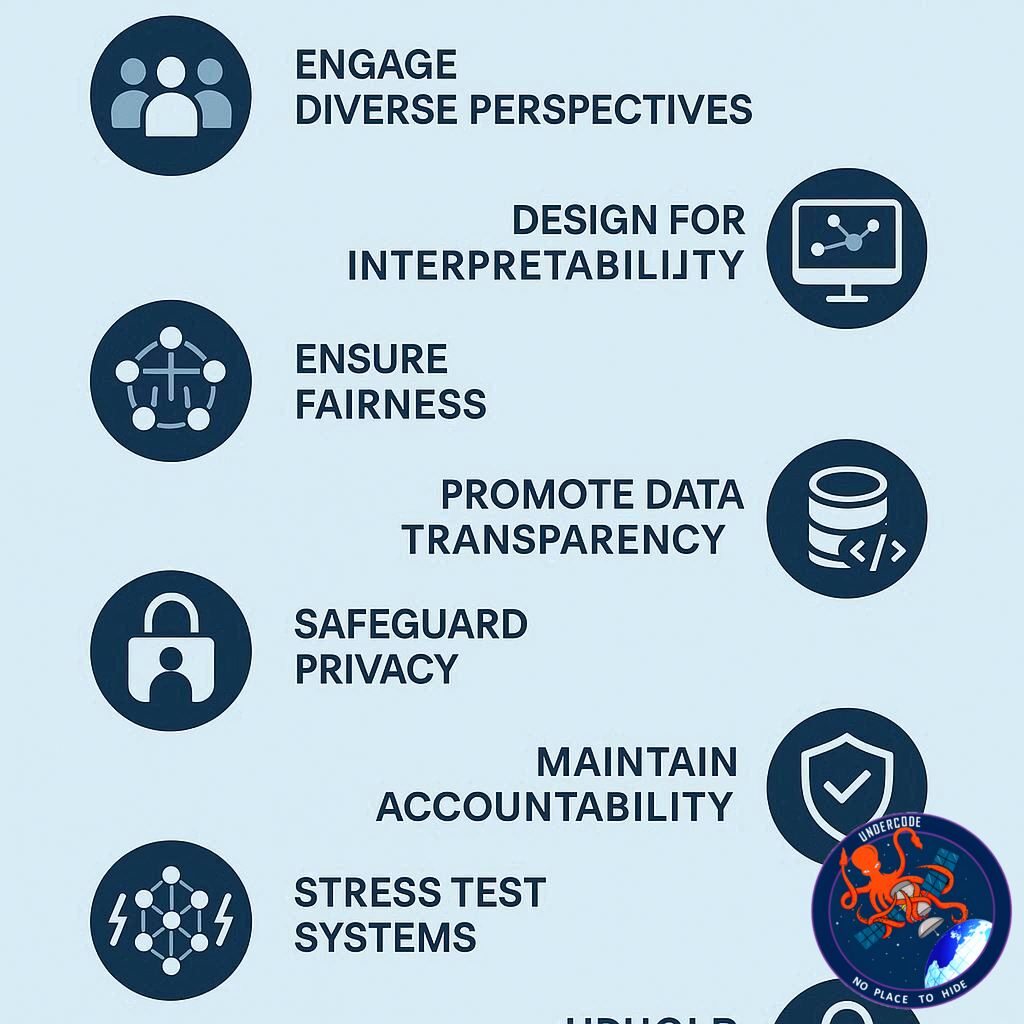
Industry experts have distilled this into eight core practices that separate responsible innovators from reckless experimenters:
Embed responsibility early—from design to deployment.
Give AI a purpose, not just a playground.
Start with ethics, using clear policies and transparent communication.
Make responsibility part of every role, just like cybersecurity.
Keep humans in the loop, ensuring oversight never fades.
Avoid reckless acceleration, prioritize explainability over speed.
Document every decision, creating an auditable trail of accountability.
Vet your data, ensuring it’s clean, unbiased, and ethically sourced.
These aren’t just rules—they’re the scaffolding for sustainable AI. By treating governance as an enabler rather than a barrier, organizations can build systems that are both innovative and trustworthy. The companies that get this right won’t just survive AI disruption; they’ll define its next chapter.
💭 What Undercode Say: The True DNA of Responsible AI
Responsible AI isn’t a technology problem—it’s a culture problem disguised as a technical one. The most forward-thinking organizations understand that ethics can’t be outsourced to a compliance team. It must live inside the very fabric of their innovation process.
Embedding responsible AI from the start means reimagining how teams think, not just what they build. Every data scientist, engineer, and executive must learn to balance curiosity with caution. Responsible AI is not about fear; it’s about foresight. It’s about asking, “Should we?” before “Can we?”
The PwC framework’s brilliance lies in its simplicity. The three lines of defense reflect how modern enterprises must function in a world of fluid risks. The first line—builders—holds immediate power and accountability. The second line—reviewers—ensures that innovation aligns with values. The third—auditors—brings an external lens, ensuring the entire system maintains integrity.
But what truly differentiates successful responsible AI efforts is intentionality. Tools and frameworks are important, but without a clear moral compass, they’re meaningless. For example, a company can train models to detect bias, but if leadership rewards speed over scrutiny, bias will win every time.
The future of responsible AI also lies in cross-disciplinary collaboration. Engineers alone can’t solve ethical dilemmas. Philosophers, sociologists, behavioral scientists, and even artists should have a voice in shaping machine behavior. After all, AI doesn’t just process data—it influences human decisions, shapes markets, and molds culture.
Transparency is another pillar. Documenting every model decision is not just an operational necessity; it’s an ethical one. The public is losing patience with black-box systems that make life-changing decisions without explanation. Responsible AI will only thrive when its reasoning is as visible as its results.
Lastly, data stewardship is becoming the ultimate differentiator. In an age of data poisoning, misinformation, and synthetic media, controlling and cleansing your data is equivalent to defending your brand’s credibility. Organizations that vet their training data and maintain strict privacy standards will outlast those that chase quick wins.
In short, responsible AI is not a destination—it’s a discipline. It’s a living ecosystem of governance, transparency, and trust. And as AI continues to infiltrate every aspect of society, responsibility will no longer be a luxury; it will be the new standard of excellence.
🔍 Fact Checker Results
✅ PwC’s 2024 survey confirms 56% of AI responsibility now sits with IT and data teams.
✅ Experts emphasize embedding ethics from design to deployment, not as an afterthought.
❌ No credible evidence supports that most AI firms have mastered full-scale responsible AI implementation yet.
📊 Prediction
Within the next 3–5 years, responsible AI will evolve from policy jargon to a competitive advantage. 🌍
Companies that operationalize ethical frameworks will dominate industries through public trust and brand loyalty. ⚙️
Meanwhile, those who ignore responsible AI will face mounting regulatory, reputational, and financial fallout. 💥
🕵️📝✔️Let’s dive deep and fact‑check.
References:
Reported By: www.zdnet.com
Extra Source Hub (Possible Sources for article):
https://www.twitter.com
Wikipedia
OpenAi & Undercode AI
Image Source:
Unsplash
Undercode AI DI v2
Bing
🔐JOIN OUR CYBER WORLD [ CVE News • HackMonitor • UndercodeNews ]
📢 Follow UndercodeNews & Stay Tuned:
𝕏 formerly Twitter 🐦 | @ Threads | 🔗 Linkedin | 🦋BlueSky | 🐘Mastodon


