
Listen to this Post
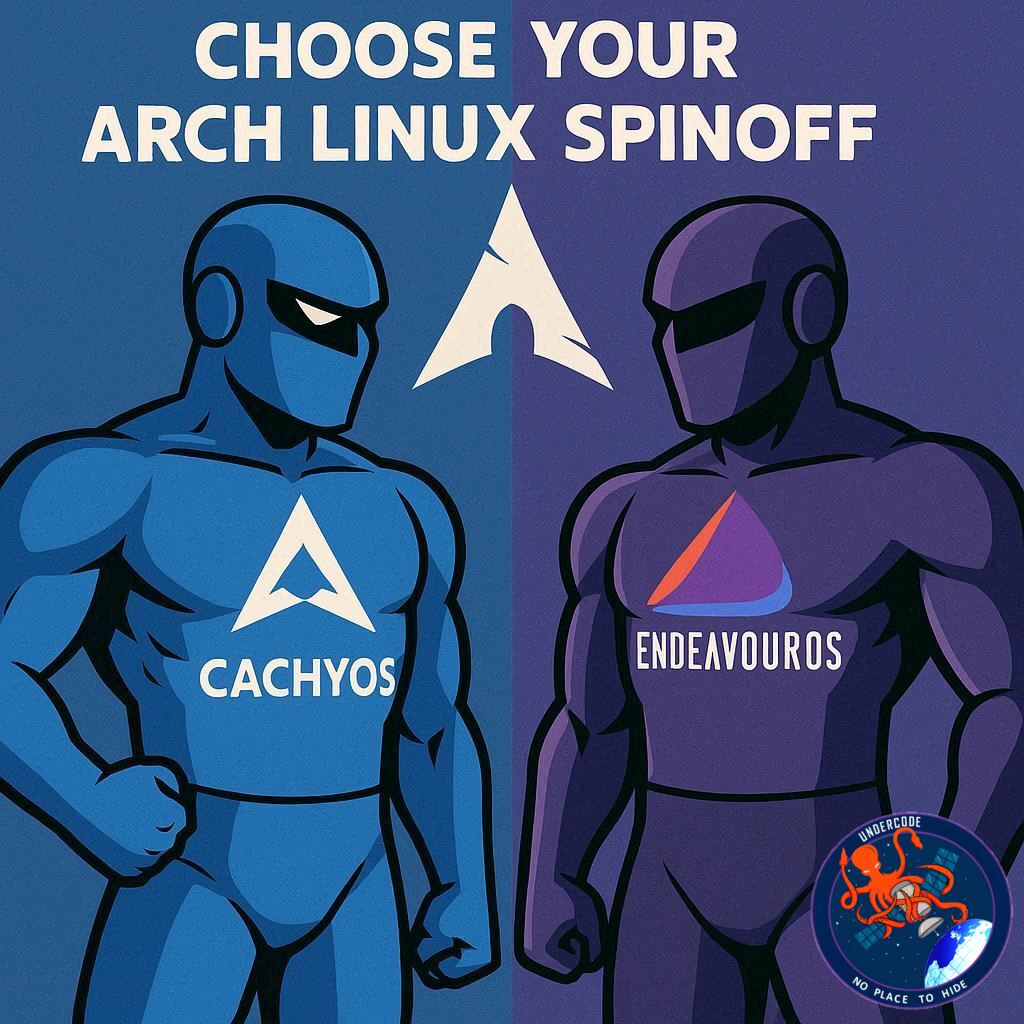
Arch Linux has long been celebrated—and feared—for its power, flexibility, and complexity. While seasoned Linux users revel in its bare-bones philosophy, newcomers often struggle with the command-line-heavy installation process. That’s where Arch-based spinoffs come in, aiming to make this legendary distro more approachable without sacrificing its speed and customization. Among these spinoffs, CachyOS and EndeavorOS stand out as two of the most compelling options. But which one is right for you? This article breaks down the differences, performance, and user experience of each to help you decide.
CachyOS: Speed and Performance at the Forefront
CachyOS is the newer contender in the Arch spinoff ecosystem, and its primary focus is speed. The distribution delivers a snappy performance that few others match, thanks in part to its default use of the Btrfs file system and optional support for the XFS file system during installation. XFS, a mature journaling file system, not only boosts speed but also ensures system stability during unexpected shutdowns, making CachyOS resilient under heavy usage.
Performance optimization doesn’t stop at the file system. CachyOS gives users the freedom to select from a wide range of desktop environments during installation, including KDE Plasma, GNOME, XFCE, i3, LXQt, Mate, Budgie, and even more niche options like Hyprland and Wayfire. Lighter desktop environments such as XFCE, LXDE, or Mate further enhance system speed. On top of that, the distro features the linux-cachyos kernel with the BORE scheduler (Burst-Oriented Response Enhancer), offering advanced performance tuning right out of the box.
CachyOS also emphasizes convenience and usability. Its packages are compiled with aggressive optimizations, including -O3, x86-64-v3/v4 instruction sets, Link Time Optimization (LTO), and Profile-Guided Optimization (PGO). A Calamares-based graphical installer simplifies setup, while a custom welcome app helps manage updates, packages, and system tweaks. Snapper integration allows effortless system rollbacks, pre-compiled Nvidia and ZFS modules prevent update breakages, and the built-in GUI package installer makes software management straightforward. Combined with rolling release updates and gaming optimizations, CachyOS offers a blend of speed, flexibility, and accessibility that’s hard to beat.
EndeavorOS: Clean, Elegant, and Community-Driven
EndeavorOS takes a different approach, prioritizing a clean and aesthetically pleasing Arch experience over raw speed. It defaults to KDE Plasma but allows a range of desktop environments, including GNOME, XFCE, Cinnamon, MATE, Budgie, LXQt, and LXDE, alongside several lightweight window managers like Sway, Qtile, BSPWM, Openbox, and Worm.
Installation is straightforward, particularly for NVIDIA users. EndeavorOS automatically detects NVIDIA GPUs and installs the appropriate drivers, saving users from the often complex manual setup. While it may not match CachyOS in raw speed, KDE Plasma performs smoothly, and the overall system remains responsive.
EndeavorOS maintains minimal preinstalled software, providing a bare-bones base that users can customize without unnecessary bloat. Essential tools include a Calamares GUI installer, the welcome app, yay for AUR management, and driver management utilities. FirewallD is enabled by default, enhancing system security, and users can benefit from a vibrant community forum and subreddit for guidance. Octopi, a GUI package manager, is available via the AUR and is recommended for ease of software installation. New releases include updated kernels, Mesa drivers, and improved NVIDIA support, ensuring hardware compatibility and modern performance.
Choosing Between CachyOS and EndeavorOS
The choice ultimately depends on what matters most to the user. If blazing speed, extensive desktop options, and an intuitive GUI installer are priorities, CachyOS delivers a highly optimized, ready-to-use Arch experience. Conversely, if a clean, minimal system with elegant aesthetics, strong community support, and automated driver management is more important, EndeavorOS shines. Both offer excellent entry points into the Arch ecosystem, and either can be tailored to suit intermediate or advanced Linux users.
What Undercode Say: An Analytical Perspective
CachyOS and EndeavorOS demonstrate how Arch-based distributions can balance performance, usability, and customization in different ways. CachyOS is clearly engineered with speed as its defining feature. Its combination of a high-performance kernel, aggressive compiler optimizations, and the option to use XFS positions it as an ideal choice for power users and gamers who want a responsive system out of the box. The variety of desktop environments and window managers makes it adaptable for both minimalists and visual enthusiasts, while tools like Snapper and the CachyOS Package Installer reduce the friction often associated with Arch Linux. In essence, CachyOS attempts to “upgrade” Arch Linux itself for those seeking performance without sacrificing accessibility.
EndeavorOS, by contrast, adopts a philosophy closer to vanilla Arch: minimal default installation, user-driven customization, and community engagement. The automated NVIDIA driver installation solves a critical pain point for many users, and the focus on clean base installations makes it a flexible platform for specialized workflows. While it lacks the out-of-the-box speed enhancements of CachyOS, it provides a more controlled, predictable environment where users can build a system exactly to their needs. Its reliance on community tools and forums underlines the importance of support networks in modern Linux adoption.
Comparing the two, CachyOS appeals to users prioritizing performance and immediacy, while EndeavorOS caters to users who value clean architecture, modularity, and community-driven support. Both distros highlight the evolution of Arch Linux spinoffs: they are no longer merely “simpler Arch” but fully realized ecosystems that cater to different user philosophies.
Another consideration is long-term maintenance. CachyOS’s rolling release model ensures cutting-edge software, which is excellent for enthusiasts but may occasionally introduce instability. EndeavorOS also follows a rolling release model but emphasizes stability through careful AUR and kernel management. Security features like default FirewallD in EndeavorOS suggest a greater emphasis on system hardening, while CachyOS’s focus remains on raw speed and desktop performance.
In terms of user learning curves, CachyOS abstracts many command-line tasks into GUI tools, making it accessible to newcomers without compromising the Arch philosophy. EndeavorOS, while approachable, assumes a slightly higher familiarity with Linux fundamentals, especially when customizing a minimal installation. Both distributions, however, reduce the intimidation factor traditionally associated with Arch Linux and prove that powerful, customizable Linux systems can be approachable without diluting their advanced capabilities.
Finally, these spinoffs indicate a broader trend in Linux development: performance optimization and usability are no longer mutually exclusive. CachyOS and EndeavorOS demonstrate that distributions can be both fast and user-friendly, or clean and modular, giving users a choice aligned with their priorities rather than compromising one for the other. The continued evolution of Arch spinoffs like these also ensures that Arch Linux remains relevant, attracting both experienced users and newcomers seeking high-performance alternatives to mainstream distributions like Ubuntu or Fedora.
Fact Checker Results
✅ CachyOS uses Btrfs by default and optionally supports XFS.
✅ EndeavorOS automatically installs NVIDIA drivers during setup.
❌ Neither distribution is limited to a single desktop environment; both offer multiple options.
Prediction
🚀 CachyOS is likely to gain traction among gamers and performance-focused users due to its speed optimizations and wide desktop support.
🌱 EndeavorOS will continue growing as a stable, clean base for those who prefer modular, community-driven Arch systems.
⚡ The competition between these spinoffs could push both to innovate further, improving performance, installer tools, and user-friendly features in future releases.
🕵️📝✔️Let’s dive deep and fact‑check.
References:
Reported By: www.zdnet.com
Extra Source Hub (Possible Sources for article):
https://www.instagram.com
Wikipedia
OpenAi & Undercode AI
Image Source:
Unsplash
Undercode AI DI v2
Bing
🔐JOIN OUR CYBER WORLD [ CVE News • HackMonitor • UndercodeNews ]
📢 Follow UndercodeNews & Stay Tuned:
𝕏 formerly Twitter 🐦 | @ Threads | 🔗 Linkedin | 🦋BlueSky | 🐘Mastodon


